SOMETHING WAS revealed about my choice of restaurants, or my friend’s, the other day, when he said he was unfamiliar with “natural wines”.
For a few years, almost everywhere I’ve dined that’s warranted a sommelier has thought its food warranted natural wines.
Defined with appropriate imprecision, natural wines require the least possible intervention from growing to bottling (with only sulphur likely to be added). It is more than organic, since the actual making is also minimal interference, and can often be biodynamic.
In ABC’s Landline coverage of three years ago, Adelaide professor of oenology Vladimir Jiranek lost me by defending added yeast as “only” like using dried bread yeast from the supermarket. Had he never appreciated carefully-made sourdough bread?
Many higher-tech makers are inclined to scoff that natural wines have “faults”, and command undeserved prices, although others appreciate the variety, and satisfying texture.
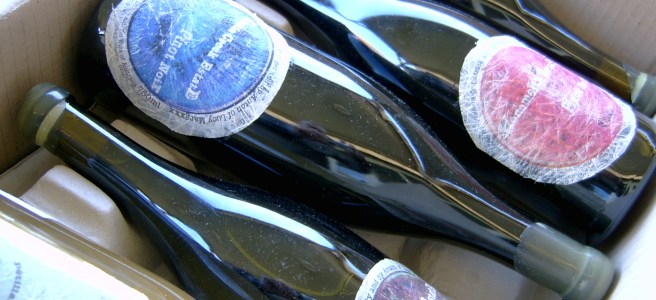
Before I explain the Aladdin’s cave reference, here’s Anton van Klopper of Lucy Margaux wines in the Adelaide Hills.
What do I think of his wines?
They definitely feel crafted, and made from grapes, which is saying more than might seem, because conventional wine can taste more like, well, wine. These edge a little towards craft beer or cider. Having opened only two bottles so far, I can confirm their deliciousness, which is again saying more than might first appear. They are really nice to drink. Whatever the faults, I failed to notice them (not minding some cloudiness). Whether they would ever reach the sublimity of a great Bordeaux, I am not sure, but, then, old Bordeaux were made more this way.
I should confess how I came by a veritable cave of Lucy Margaux wines. Anton and colleagues are about to open a restaurant a short drive out of Adelaide. It’s called the Summertown Aristologist.
You might be aware that Jennifer Hillier and I used to operate the Uraidla Aristologist, a little further (1.4 kms) up Greenhill Road. Anton recently sent us a box each as a goodwill gesture.
Since I anticipate getting across not long after the new Aristologist’s opening, I shall report further.
I haven’t laughed as much for a long time as on Census night 2016. The internet sarcasm almost converted me to lifelong tweeting.
We tried to get through for an hour, with final responses suggesting we try again in two days.
The organisation behind #CensusFail graciously promised we wouldn’t be fined for being late.
The flood of social media comments included a photo of the IT cat inside the bureau’s pc, and suggestions they try turning it off and then on again. Others said these same people guaranteed to keep our data safe.
Undoubtedly the most historic tweet came from the man who, according to then Prime Minister Tony Abbott in 2013, had “virtually invented the internet in this country”:
We filled in the @ABSCensus tonight online – v easy to do. And so important for planning better Govt services & investment for the future
This is the Prime Minister that Albo predicted the other night might last a year!
According to the Sydney Morning Herald:
Census was delivered by technology company IBM using its Australian SoftLayer cloud. Figures from the Australian Government’s procurement agency AusTender show IBM was paid $9,606,725 in 2014 to design, develop and implement the “eCensus”.
IBM motto
That certainly cut the cost of scurrying Census collectors, although, as it turned out, the ABS shouldn’t have relied on IBM to handle the inevitable storm in the local cloud.
This morning, the ABS boss is trying to blame denial-of-service (DoS) attacks from “an international source”.
Kalisch says it all went smoothly, and they fended off three attacks, until a fourth about 7:30 pm, when they decided to shut the site down.
As if a government data collector mightn’t expect antagonism here or there.
But, as Age economics editor Peter Martin revealed this morning, the ABS has a “reckless” new culture at the top. (David Kalisch in so much trouble that I won’t go on about him, of all people, using “data” in the singular.)
The fact is that the ABS organised its own DoS flood of messages. That’s if we believe ABC News:
In the lead-up to census night, the ABS spent hundreds of thousands of dollars on load testing and said its servers could handle 1 million forms per hour.
Let’s do a simple sum. Let’s assume only 10 million forms. At one million per hour, that would take 10 hours, assuming everyone were nice and orderly.
Perhaps not unusually, we had a small party to upload our information. After something to eat and a Barossa red, we opened up the laptop about 8:20 pm. Annoyance eventually turned to social media hilarity, and we set a date for another Census party.
What did these people think? That they could insist that everyone was legally required to participate (as, apparently, television advertising kept reminding through the evening), and not expect an after-dinner rush?
Perhaps IBM staff assumed people would fill in their forms at work. Perhaps neoliberal bureaucrats have already abolished all life’s rhythms, ridding the world of penalty rates, at least in their heads.
WHY DOES the Australian hospitality industry dislocate Christmas by seven months (rather than six)?
My theory is that they borrowed the idea from the northern hemisphere, where Christmas seems merely silly in hot weather.
Although previously not unknown, the concept was popularised in late 1940 by a light-hearted Hollywood movie, Christmas in July. The main-title shows the letters of “CHRISTMAS” topped in snow, and “JULY” in flames.
So, it’s merely anachronistic fun, available to greeting card and other commercial interests.
The southern hemisphere shifting the seasons six months gets to the core of our being.
Plum pudding “at 100 degrees in the shade” is a recognised absurdity. But a summer Christmas upsets not only the foods. The seasonal mood is all out of joint.
Christmas is actually meant to bring the New Year promise that life might be a downer now, but it will soon re-awaken – the snow melt, and green shoots appear.
The familiar symbolism offers a glimmer of hope. Candles pierce the gloom. Yule-logs promise warmth. Fir trees stand out against the snow. Red baubles provide colour. Even family gatherings might lend some relief.
In An Alphabet for Gourmets (1949), M.F.K. Fisher observed under “F is for family” that “deliberately assembled relatives can be one of the dullest, if not most dangerous, gatherings in the world”. She saw no reason why “a given set of ill-assorted people, for no other reason than because it is Christmas, will be joyful to be reunited and to break bread together”.
Yet even she tried her family best at Christmas.
The depths of winter are so gloomy that the number of suicides might be expected to rise. It is the reverse, however. Records from various times and places show the highest suicide rate in late spring and early summer.
In Le Suicide in 1897, sociologist Emile Durkheim explained that longer sunlight allowed more social activity. As well as the days getting longer, activity intensified:
For the countryside, the Winter is a time of rest approaching stagnation. All life seems to stop…. In Spring, however, everything begins to awake; activity is resumed, relations spring up, interchanges increase …
The cities exhibited the same seasonal variation, although the worst of winter was attenuated by the bright lights. In summer, social activity, including suicide, “has more space to operate”. People rub up against one another more, sometimes abrasively, so that violent assaults also increase. And Durkheim concluded
… it is the density of human interactions, and not the environment that caused higher incidence of suicide in Spring or Summer
Depressed people can feel even further out of synch amid the social density and sunnier mood. They can be cast as misfits, not wanting to play beach cricket.
A genuinely wintry Christmas means everyone fears the worst, and might be pleasantly surprised. The darkness gives permission to cheering up.
COLUMNIST Annabel Crabb wrote yesterday about politics here and abroad being like a bad dream. Having called an unusual, winter election, Malcolm Turnbull has only snuck back as Prime Minister, along with racist One Nation. Nonetheless, we in Australia are probably not as dispirited as those in the north, whose summer shines bright with Brexit and Trump.
We can take heart that Preston Sturges’ “cunning and carefree” comedy, Christmas in July, was released, in time for winter, just after Franklin D. Roosevelt had easily won a third Presidential term.
New York Times movie critic Bosley Crowther advised:
As a post-election jog to national sanity, we recommend Christmas in July.
THE PREVAILING IDEOLOGY is so overpowering that it’s rarely named. So suggests George Monbiot in the UK Guardian. His recent column must have struck a chord, since it has been shared online 233,000 times with comments closed after 3964.
Monbiot identifies the “coherent philosophy” as neoliberalism.
According to the headline, neoliberalism is “the ideology at the root of all our problems”, and his new book How Did We Get Into This Mess? collects earlier columns that survey the devastation.
In Monbiot’s account, neoliberalism portrays “competition as the defining characteristic of human relations”. Among consequences, competition relies on quantification and ranking, which lead to a “stifling regime of assessment and monitoring, designed to identify the winners and punish the losers”.
As “something admirable” about the neoliberal project, Monbiot nominates the patient organising of a network of thinkers and activists, ready with a clear plan when the inadequacies of Keynesianism became apparent in the 1970s.
In turn, John Maynard Keynes made a comprehensive economic theory available when laissez-faire economics led to catastrophe in 1929.
From the success of both Keynesianism and neoliberalism, Monbiot draws a lesson that “it’s not enough to oppose a broken system. A coherent alternative has to be proposed.”
And so what is neoliberalism’s replacement? It’s not Keynesianism, which recommends stimulating consumer demand to promote economic growth, and consumer demand and economic growth are the “the motors of environmental destruction”.
Disturbingly, Monbiot finds that the “left and centre have produced no new general framework of economic thought for 80 years.” So, he issues a call:
For Labour, the Democrats and the wider left, the central task should be to develop an economic Apollo programme, a conscious attempt to design a new system tailored to the demands of the 21st century
This is where I step in.
I have come up with a general framework of economic thought. Taking an embarrassing number of years, the task has indeed felt like an Apollo program.
Apollo person
Seriously, I know a lot about neoliberalism, and have a sound response – to the extent of 100,000 words. If I haven’t posted on this blog for a while, it’s been putting the finishing touches to a complete draft.
Where to begin? The working title: Gastronomics: Because Meals Matter More than Money.
The book is a critique of not merely neoliberalism, because neoliberalism essentially institutionalises the narrow assumptions of mainstream economics. These axioms have become so ingrained that even leftish political philosophers and economists have difficulty breaking through the illusion, and my list of offenders spreads beyond the familiar Hayek and Friedman. As Monbiot ruefully observes: “We are all neoliberals now.”
Even Monbiot under-estimates neoliberalism’s capture of ideas, so that, to most of us, economics can seem to be something they do, when it is potentially the most caring of all disciplines.
Not that I have invented much. Instead, I offer the twin advantages of persuasiveness and surprise – by bringing a gastronomic focus to reasonably established economic and social theory, political philosophy, and intellectual history.
The answer to market fundamentalism is not some other fundamentalism, but is intrinsically complex. Not that this prevents clarifying the meanings to words and re-formulating basics.
To encapsulate the answer in one word, liberalism. Liberalism, not neoliberalism.
This is the liberalism of Hobbes, Locke, Smith, Brillat-Savarin and many others who used to know that meals matter.
HERE’S A RESEARCH question – is Christmas more enjoyed in the north than in the south?
In today’s column in Fairfax papers, Wendy Squires argues that any seasonal fun is spoiled by commercialism, family conflict and an ensuing “festive funk”.
That is an increasingly common view, and I sense a growing demand for a Christmas rethink.
Drawing attention to an additional post-Christmas funk, Squires’ column forced me to theorise further, and to suppose the clear benefits of a mid-winter Christmas over our present “shallow celebration”.
Australians have long enjoyed the “joke” that baked turkey and plum pudding are as unseasonal as Santa Claus’s thick coat and tinselly store Muzak. Historian K.S. Inglis pointed to the colonists’ tradition “to enjoy both the heavy Christmas dinner and the absurdity of it”.
Gastronomically, however, more has to be said.
Forget the birth of Jesus, and not merely because of falling church attendances.
Historians have difficulty estimating his birth year, let alone precise date. The choice of 25 December under Emperor Constantine borrowed the mid-winter festival, presumably because the beginning of the year would be appropriate for the beginning of Christianity, too.
Christianity’s local languor has left it too like a sentimental, Dickensian festival. Concentrating on family fun is triply two-edged. Firstly, which family? One practical solution has been for a couple to join one partner’s family for lunch and the other’s for dinner or the next day.
Secondly, it’s for the children, they say. But that should be year-round. Besides, Squires points to parents who just “spent the holidays aching for children in the custody of exes”.
Thirdly, as she reports, happy snaps of elderly relatives and wide-hatted kids on the beach are more than matched by negative stories – this year, one of her mates had a seemingly irreparable falling out with his brother, and a girlfriend’s “strained marriage” finally snapped.
To family woes Squires adds the “general malaise”. Falling into a festive funk, she tends “to ponder what I haven’t, rather than embrace what I have”. She laments another year passing, and flagellates herself for what she didn’t achieve.
And worst of all I make that terrible and oh so common mistake of thinking everyone else’s life is better than mine.
People then return with their holiday stories – about broken families, and about noticing “the empty chair of a lost loved one” – and she realises that “many of those happy snaps I envied should have been captioned ‘help!’”
Squires recommends accepting the Buddhist belief that “life is suffering”. I prefer the formulation in my dear friend Suzie’s long-term email signature, which I suspect she restored especially for the season:
Be kind, for everyone you meet is fighting a great battle. ~ Philo of Alexandria
My love for Brillat-Savarin rivals M.F.K. Fisher’s, and is helped by him tackling such downers as “The end of the world”, which is “Meditation 10″ in Physiology of Taste.
In “Meditation 14”, Brillat-Savarin argues dolefully that table-pleasure compensates for hunger, thirst, and pain. He asserts:
Humanity is incontestably, among the sentient beings that populate the globe, that which is inflicted with the most suffering.
His evidence is people’s unprotected bodies, poorly shaped feet, inclination to war and destruction, and a mass of maladies such as gout, toothache, acute rheumatism and strangury. In his view, the fear of all the pain pushes people to give themselves up to the “small number of pleasures which nature has allotted”.
My suspicion is that contemplative festivity works better when it’s cold, and meals are made from thinning flocks and from fruit preserved in puddings. Christmas thinking is helped by the faint cheer of carols and baubles, attempting to keep close for warmth, and the prospect, however distant, of fresh shoots.
Our Christmas made more sense a year ago in Germany when cantatas and Christkindlmärkte seemed to challenge the cold and dark.
Even and, indeed, especially in a secular state, Christmas ought to arouse what the Christian emperor wanted, new beginnings. New Year’s Eve is beaten hands down by Christmas’s gift-giving, family reunions, intense commercialism, and whatever remains of religious thought.
But we need renewal in the right season. Those Antipodeans who move to a “Christmas in July” are on the right track, trying hard to get even colder and more drab than with a six-month shift to June.
We should not have to mourn among young bodies dashing into the surf. Daylight saving was not introduced to serve melancholy. A world flowing with white peaches, raspberries and, further north, mangoes provides pure pleasure, leaving scant room for reflection.
Plum pudding at a jolly Australian Christmas, 1875
If you haven’t caught up with Please Like Me, don’t start with “Christmas trifle”. But, as a fan, you would have marvelled at the season’s finale – fewer laughs, but an artistic triumph.
Episodes have been built around a food or drink, so that Series 1 started with “Rhubarb and custard”, and, after running through such items as “French toast” and “Skinny latte”, we recently reached the especially brilliant “Coq au vin”, in which the household planned to kill and eat Adele, whose unanticipated crowing was waking the district.
For the Series 3 ending, the writer-star Josh Thomas told the sitcom’s
characters some home truths about their characters, snatched the bowl of Christmas trifle from the table, and ate it alone with his dog on a park bench.
Josh’s parents, partners and house-companions are quite likeable, usually, but Christmas typically brings out the worst in everyone … I get grumpier than ever.
Not that I should be overly blamed because, just this year, in the space of a few days, I heard about two, separate, extended families whose tensions became so overwhelming that members were opting out of the Christmas gatherings entirely, while a third complainer spoke of the opposite problem, being unilaterally informed that this year was the turn of the partner’s family.
On top of family difficulties, add the manufactured stress of gift-giving … frenzied shopping … increased traffic … haphazard parties … interrupted routines … pretend snow … inappropriate cooking … and I can think of more. More usefully, I can suggest a solution.
Apparently, one strategy is to think of the family as someone else’s: they then seem merely eccentric, rather than disturbed. That might reduce family but not retail stress.
My better suggestion is a quiet champagne on Christmas night. That’s with no more than one or two other people, sitting on a park bench with a bit to eat. With this anti-party to look forward to, the whole season can prove less rigorous than anticipated.
I adopted the anti-party ritual about 30 years ago, waiting in Wellington Square in North Adelaide for the Christmas tree lights to turn on every 25th, and it has usually seemed to work, so that I have often enjoyed the season almost as much as professed enthusiasts.
I leave Wellington for five years, the flat white adjusts, and I’m not convinced it’s for the better.
In late 2011, I extolled the flat white as the Antipodes’ greatest contribution to world gastronomy.
As Australians living in New Zealand for seven years, we found milk coffee, perfected – blending the best of both textured milk and espresso.
But, with change the only constant, on last month’s trip back to Wellington, flat whites seemed disconcertingly inconsistent, and certainly no longer typically in the distinctive, tulip cup.
I should quickly report excellent versions at Lamason Brew Bar, and one day we even had the dream-team – Dave Lamason and Dan Minson – at the machine together. Paul Schrader retained the tulip cup at the eternally-wonderful Nikau Cafe. And our daughter had an excellent barista lesson from Longe Nguyen.
Inconsistency might have come from complacency, because I don’t think I’ve overly romanticised the scene five or so years ago (or perhaps my home-barista skills have improved?). However, at least for changing the cups, we might try blaming Jeff Kennedy. After he sold his L’Affare coffee business, he launched Acme coffee cups in 2011. These filled a gap left when Italian firm ACF went out of business, along with their pastel colours.
Within two years, Acme (made in China) cups dominated New Zealand cafes and moved into Australia, US, UK and elsewhere. The thicker, lighter, larger-handled cup shapes include a tulip, but that is now deemed a “long black” cup, with flat whites shifted into the wider, straighter-sided shape (left). At least the volume remains the same (around 150 ml).
At the risk of sounding stuck-in-the-mud, novelty can be over-done. Some things are classics, requiring only ever mere tweaking. We need some comfortable predictability to the day, especially with our coffees. Our “conservative” tastes mean we often want the same drink we’ve grown up with.
In a complicated world, I have to admit that flat white coffees earlier benefited from change. New Zealand took world leadership in espresso-making when it still lacked an entrenched coffee culture in the 1990s. The new roasters searched the world for the best, and improved on it, especially the Australian flat white. Meanwhile, the long-established coffee cultures of France and the U.S. are only slowly admitting improvements, including flat whites.
Change or no change? Predictability or novelty? Comfort or disruption? Nothing like being unsettled by a transmogrified flat white to bring sobriety – as a smart pair warned in 1848:
Constant revolutionising of production, uninterrupted disturbance of all social conditions, everlasting uncertainty and agitation distinguish the bourgeois epoch from all earlier ones … All that is solid melts into air, all that is holy is profaned, and man is at last compelled to face with sober senses his real conditions of life, and his relations with his kind.
To interpret: an excellent cup of coffee reminds that, just as conservationists are the new conservatives, neoliberals preach eternal disruption.
That’s their word – “disruption”. The new Australian plutocrat Prime Minister, Malcolm Turnbull, whose wealth multiplies in a Cayman haven, carries on about disruption as “our friend”. We must embrace our “disruptive environment”.
Turnbull is hailed for replacing Tony Abbott’s three-word slogans, getting them down to one in this case. But the problem all along has been the ideology.
In his first speech as Prime Minister in September, even before he had got his certificate from the Queen’s representative, Turnbull committed his government to “freedom, the individual and the market”. A foodie welcomes choices, healthy bodies, and laden market benches, but Turnbull meant no such things.
His three ideals explicitly reaffirmed the neoliberal agenda: freedom at the expense of equality; the individual against the collective; and the market to replace democracy.
I feel unhappier with the system, and less welcoming of disruption, as the years go by. But I can always make a true, consoling cup …
Unsuccessful NZ flag contenders – featuring sheep and hokey-pokey ice cream
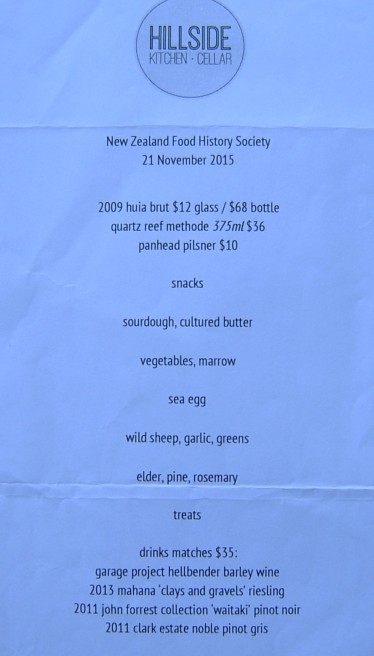
AN EXCEPTIONALLY GOOD meal stimulates not just conversation, but thought. The recent dinner for the Wellington Symposium of Gastronomy at Hillside Kitchen and Cellar encouraged reflections on the distinctive, at least to an outsider, Kiwi aesthetic.
Admittedly, I’m only a partial outsider, having lived in Wellington from mid-2000 to the end of 2007, but that provided preliminary data for ruminations on the notable contrasts, culturally, with Australia.
Hillside is a tiny café-restaurant in Thorndon, near the centre of the New Zealand capital. It runs from breakfast until dinner, and was chosen for the symposium by Duncan Galletly, who had previously rated the place:
interesting, brave, cerebral and simply delicious. On Saturday we did a mr creosote and ordered “one of everything please” – asking for wine “that was interesting”.
Of twelve plates all except one, the bluenose, were brilliant and the fish was still good by any standards… [etc]
For confirmation of the “cerebral” quality, check out chef Asher Boote’s comments on Hillside’s website. He exposes himself every meal, but for a reason:
The one true reward in this profession is not the pay (for this is always crap), it’s being a facilitator of a good time, creating a reason for people to sit down, stop for a bit and be with each other
The symposium menu narrowed down to: snacks; sourdough, cultured butter; vegetables, marrow; sea egg; wild sheep, garlic, greens; elder, pine, rosemary; treats. And the courses got progressively better.
I would happily have had more of the delicious marrow dip with raw vegetables, all placed in a bone, split length-wise. Real-seeming seaweed, sea urchin and other sea creatures arrived under a halved, boiled egg.
Next was the “wild sheep”, cooked sous-vide, pulled and pressed into a block. One person meanly described it as looking like “Spam”.
The plate of elderflowers, crunchy bits and rosemary cream “quenelle” was perfect, in anyone’s language … likewise, the final, tiny “treats” of mint marshmallow, strawberry meringue and mascarpone fudge proved yet again that this kitchen can cook.
But back to the block of “wild sheep”. Along with the split bone and “sea egg”, it aroused contemplation about the distinctive New Zealand style.
The Kiwi aesthetic is so ever-present that locals hardly notice. The numerous elements go beyond the prevalent black, reflecting the dark beaches and rocky outcrops, and the old-fashioned textures of wool and wood, and, importantly, permit flashes of brightness.
The boast of “Kiwi ingenuity” is said to involve “number 8 wire” – the softer, thicker, fencing gauge with which a bloke could mend anything. That’s the sheep farmer, who supported founding Calvinists in eschewing flashiness or pretension. The resulting non-style mixes with traditional, Pacific islander motifs and tattoos. The ever-present driftwood contributes randomness, while native rimu provides smooth, warm timber surfaces.
The drabness is comforting, and makes a backdrop for subtlety, along with drollery. Think farmer Fred Dagg (comedian John Clark), who in the 1970s always responded to a knock, “That’ll be the door.” More recently, the Flight of the Conchords took a similarly glum gleam into the wider world.
The Kiwi aesthetic shows in fashion, or perhaps avoidance thereof. Not only the hoodies, clothing is deliberately dressed down, although designers aim for well-made comfort. In any case, undue devotion to grooming would soon become windswept. Yet all that enables unapologetic touches of whimsy. Here in Wellington, the twist of a hem, flash of garish stocking or the natty dress of post-gothic dandies quickly makes street-wear fascinating enough for Bill Cunningham.
Red Peak
During our visit, friends received voting papers to select a new national flag. We are all now run by merchant bankers (think Australian PM Malcolm Turnbull and NSW Premier Mike Baird), and everyone seemed so angry at theirs (Prime Minister John Key) that they would rather keep the present flag, with no fewer than four Christian crosses, than let his campaign succeed. The four logos on the shortlist were so unloved that they had, belatedly, to be supplemented by “Red Peak”. It encapsulates the aesthetic, albeit unbalanced, so that the joy of the red volcano and white mountain push the grim black into a corner.
Wellington kitchen sink
I’m probably the first visitor to New Zealand to have photographed nothing but a kitchen sink. I snapped it as the best example of tonal-depressiveness-with-moments-of-brilliance. For many decades domestic benchtops were custom-made in stainless steel with the sink or sinks set in, sensible, sturdy and easy to clean. They look beautiful, set against rimu woodwork. More than that, however, with corners and splashbacks fitted to even the oddest room, they lend themselves to quirkiness. Unlike hard, polished white Caesarstone, the grey patina could not be more homely.
Such cultural references were made by the central dishes at Hillside the other night. While I heard secondhand that a huddle of senior restaurant reviewers grumbled a bit about the meal, I suspect they missed an aesthetic more noticeable to the outsider. The Kiwi aesthetic – exemplified by the decorated bone, the slices of underwater life in a dark pool of broth, and the equally grey slab of sheep, hidden amid the green.
As fate would have it, a few days later, artist and cabinet-maker Duncan Sargent told me about his sculpture at Lower Hutt. It’s a properly engineered geodesic dome with a timber plank through it. The Hillside meat dish was much the same – intricate cooking stuck through with a sheep block.
SINCE THE FIRST Symposium of Australian Gastronomy, which I instigated in 1984, the serious interest in growing, cooking and dining has only exploded, fragmenting into talkative clusters of scholars, chefs, social activists, greenie growers, and more.
With only one-fifth of the available population, the gastronomic symposiums we got going in New Zealand in 2001 have arguably had a better prospect of holding together.
The recent gathering in Wellington returned to more eclectic interests, rather than specifically culinary history. The “Diversity” theme attracted an appropriate variety of papers with the nearly two dozen topics including aprons, Sunday school picnics, dining alone in foreign cities, and Wellington’s nearly lost Chinatown, around the corner.
Founder of Peoples Coffee, and keen promoter of fair trade, Matt Lamason has turned his mind to the benefits of training prisoners and ex-offenders in what New Zealanders call “hospo” (hospitality industry). Archeologist Dave Veart provided expert illumination of the ancient Maori farms further threatened with “development” outside Auckland. Exemplary cookery writer Lois Daish explained her adulation of predecessor Patricia Harris (1910-2003), who proved prickly when they actually met.
Phil Cook argued that “craft beer” is not novel, but very, very old; two Iranian postgraduate students Amir Sayadabdi and Saman Hassibi analysed the massive changes in Norwegian cookery books since the 1960s; and a commander in the NZ Navy, Karen Ward, investigated predecessor Captain Scott’s fatal provisioning for the race to the South Pole.
Medical academic Duncan Galletly might even exceed me in gastronomic obsessiveness. The colours of the covers of his journal, The Aristologist, borrow from lollies – the first from Violet Cream, and the latest pale green from “The Snifter – now extinct. Some lament its passing … other do not”.
Galletly’s scientific presentation this meeting was entitled, “Zomato – Zero to connoisseur in 11 easy kilograms”. Zomato is a restaurant review site, based in India and expanding quickly worldwide through the logics of mobile phones, social media and finance – purchased companies include Urbanspoon. As Duncan explained:
For this paper, over a period of six months, I ate and drank at, and reviewed, approximately 200 restaurants and cafes to achieve what Zomato describes as “connoisseur” status, becoming one of the “most respected members of the foodie community”.
Even more gloriously than judging that amateur restaurant rankings are justifiable alternatives to established guidebooks, Duncan Galletly had published so many reports that he had beaten Taylor Finderup as top Wellington foodie.
Taylor Finderup
In the call for conference papers, Duncan had asked for unusually long abstracts of “about 500 words”, which might provide enough reading of my “How big was John Locke’s spice drawer? An inquiry into whether liberalism favours, diversity, equality or both”.
Basic catering was provided in the function room at Prefab, the popular new venue of Jeff Kennedy (formerly of L’Affare). We unavoidably missed the Friday dinner at Giulio Riccati’s Cicio Cacio in Newtown, but did squeeze into the Saturday dinner at Asher Boote’s Hillside Kitchen and Cellar in Thorndon. I’ll explain my enthusiasm, not shared with everyone, in a separate post.
The next NZ symposium is projected for August in Auckland with an “Aesthetics” theme, and the Twentieth Symposium of Australian Gastronomy is tentatively planned for Melbourne from the evening of 2 December until morning of 6 December 2016.
LABOR FRONTBENCHER and “economics brain box” Andrew Leigh enjoys the same lunch every day in his Parliament House office, Canberra. A staff member, Jennifer Rayner, confirmed “it’s pretty well the only thing I’ve seen him eat.”
Training an average hour daily for marathons – he has run three so far this year – Leigh told television journalist Annabel Crabb: “I run a lot, so I can basically eat what I like.”
And so what is his “usual”? His daily indulgence is peanut butter. Every lunchtime, Andrew Leigh spreads his canola margarine and peanut butter on a white bread roll.
Why smooth rather than crunchy peanut butter? inquired Crabb. “I can eat it more quickly.”
The former economics professor organises his life according to cost-benefit analysis, he explained, and peanut butter “tastes good, and doesn’t take long to prepare”.
Why then devote so much time to running marathons? Crabb countered. He must get pleasure from them, he decided.
The senior politician said his grandfather, Methodist minister Keith Leigh, had celebrated his 50th birthday by running 50 miles, which is almost two marathons, back-to-back. He died shortly after, running up Mount Wellington in the snow, a route that Andrew Leigh repeated in his grandfather’s honour on 17 November.
Leigh’s lunchtime interview is Episode 13of Annabel Crabb’s Canberra Al Desko, which is an online companion to her Kitchen Cabinet, a series in which a politician cooks the main course, Crabb brings a dessert, and they chat.
Her culinary reports have been condemned as “fluff” that “humanises” politicians. But such a reading certainly does not work for de-humanised Leigh. He must come near the top of the list of politicians Crabb showed to be manifestly uncomfortable in the kitchen.
Under the heading, “Junk food journalism: Why Annabel Crabb’s Kitchen Cabinet is toxic”, Amy McQuire expressed her “disgust” (New Matilda, 29 October 2015). This was not my main complaint that Crabb’s vegetarianism unfairly narrows the menu. Rather, McQuire reported that the show was “about as nutrient rich as the majority of her desserts”.
For McQuire, the show represents the “insidious spread of propaganda, soft interviews with hard-line politicians”. The interviews coat “with sugar frosting” the “numerous acts of structural violence” by some of the most powerful Australians.
Agreed, her kitchen visit with former hardline border protector, now Treasurer, Scott Morrison, showed him to be not quite as freaky as I had originally thought, but that was pretty freaky. As usual, Crabb was much sharper than “fluffy”, leaving my companion fuming at Morrison’s shallow, self-satisfied theology. In her defence, Crabb does not over-grill her cooks in the manner of the 7:30 Report, but brings out their natural flavour. The politicians’ openness in the informal setting is Crabb’s own defence.
Incidentally, if we believe in “structural” forces, then Morrison surely showed himself to be victim of capitalism, authoritarianism and chauvinism, all wrapped up in the Shirelive church’s prosperity gospel.
Furthermore, Crabb’s “humanising” is indiscriminate, revealing Greens leader Richard di Natale to be a culinary star, reaching back into his Italian roots to make salami and pizze. Sharing Ricky Muir’s beloved campfire showed the four-wheel-drive and wheelie enthusiast to be an unusually earnest politician (for whom fellow Senator di Natale also admitted admiration).
Fairfax television critic Ben Pobjie found it “easy to be nauseated by last week’s KC [Kitchen Cabinet] episode, wherein Annabel had a spiffing old time cooking with Scott Morrison, trading amiable banter while carefully avoiding the topic of irredeemable evil. Crabb is generously acting as a bonus PR arm for Australia’s parliamentarians.” I go along with Crabb’s belief that she’s helping democracy, rather than joining in its typical trashing.
Law academic Sarah Keenan discovered that the show “reproduces a culture of white Australian entitlement to master and consume any and every cultural product, regardless of who it belongs to”. She went on: “As Crabb and Morrison joyfully prepare and eat the food [samosas] of the very people Morrison prevented from entering Australia, they perform their white Australian entitlement to own and consume what does not belong to them.”
Anticipating the bush tucker of Indigenous politician Nova Peris, Keenan predicted: “Crabb will devour the food hungrily, remark upon its delicious flavour and allow the nation to keep unsavoury topics like structural racist violence off the table.”
Like many of the show’s politicians, these critics reveal frighteningly little appreciation of the gastronomic basis of life. They have fallen victim to the same dehumanising institutions and inhospitable policies as the ascetic Andrew Leigh, spreading his peanut butter, not offering any to his guest, and then even refusing to eat in front of the camera because eating would not look “attractive”.

 SOMETHING WAS revealed about my choice of restaurants, or my friend’s, the other day, when he said he was unfamiliar with “natural wines”.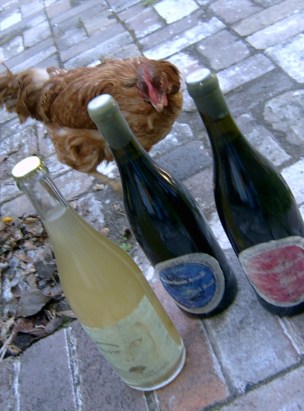


 Perhaps not unusually, we had a small party to upload our information. After something to eat and a Barossa red, we opened up the laptop about 8:20 pm. Annoyance eventually turned to social media hilarity, and we set a date for another Census party.






 To family woes Squires adds the “general malaise”. Falling into a festive funk, she tends “to ponder what I haven’t, rather than embrace what I have”. She laments another year passing, and flagellates herself for what she didn’t achieve.








 The Kiwi aesthetic is so ever-present that locals hardly notice. The numerous elements go beyond the prevalent black, reflecting the dark beaches and rocky outcrops, and the old-fashioned textures of wool and wood, and, importantly, permit flashes of brightness.
 The drabness is comforting, and makes a backdrop for subtlety, along with drollery. Think farmer Fred Dagg (comedian John Clark), who in the 1970s always responded to a knock, “That’ll be the door.” More recently, the Flight of the Conchords took a similarly glum gleam into the wider world.


 Meals Matter