 The other night I commemorated the anniversary of my conscientious objection case. This was a court hearing to determine that I actually held beliefs that prevented me from being conscripted for the Vietnam War. It was a while ago, but as you might imagine, trying to establish beliefs under cross-examination jolted me enough not to forget (existential threat does not permit complexities).
The alternatives of win or gaol loomed so large that, even three decades later, an exhibition on so-called National Service at the Australian archives in Canberra just made me laugh. For there was the tiny wooden Tattersall’s gambling casket from which they drew our life-and-death birthday marbles. And there was a typewritten letter from Minister for the Army Malcolm Fraser sending off young people with corrections scrawled in pen.
The other night was the anniversary of the day we were summoned back to hear the magistrate’s verdict on the evidence provided by me and two witnesses. My father Christopher and uncle Lawrence confirmed talking to me over the years about the issues. Both had fought in WWII, my father still saying it had been the right thing to do, and his brother believing he should have refused.
I have previously written that their father (my grandfather Alex) departed London for South Australia, never to return, based on his trench warfare experiences. Mind you, the strength of my views probably came even more from my mother; with two brothers and young husband away, she suffered at home.
Several supporters had warned against appearing without a lawyer, especially in front of a magistrate who by then had a string of knock-backs to his name. But I was only 20.
On that day, the magistrate entered, summarised my case, stopped, and, without mentioning anything asserted by the newbie barrister challenging me, found my case justified, and left the courtroom. I remain convinced he changed his mind half way through his prepared statement.
I was not going to gaol for refusing to train to kill. I was not, like so many peers, to

participate directly in death and destruction. Instead, my father took us out to dinner at the Fiddlers Three in Cremorne, where I was allowed to order anything I wanted – duck à l’orange and chocolate mousse.
On this anniversary, with my usual dinner companions at the Hannah Gadsby show (confronting in a different way), what was I to do? Celebrate alone at home with a bottle of red?
In the end, I decided to try the nearby Returned Services League club…
The club is decorated with medals, and a Tasmanian artist’s depiction of various WWI soldiers doing their thing (set number 962 of a run of 1000 prints). A glass case inside the entrance displays a book, whose pages would seem to be turned every two days to name soldiers to be remembered.
And the club has lots of poker machines, and bright lights and jangling sounds. Originally, at such clubs, ex-soldiers recalled dead comrades, but gambling facilities have subsidised expansion into mini-Trump casinos. Members, including presumably now even former enemies, can lose themselves in spinning images.
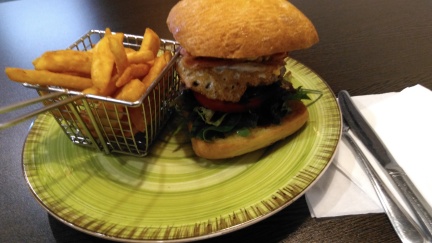
The club was surprisingly big and busy. As well as the Gallipoli lounge, poker machines reach into the “Kokoda Terrace outside smoking area with comfortable seating and table service”. The main dining is the “All You Can Eat restaurant – Buffet 88”. I went to the smaller, almost empty Poppies Cafe for the largest hamburger with the lot and chips that I’ve been served.
Many young men (mainly men) died for this, and others returned so damaged that their PTSD afflicts partners, and is passed on to the next generation. My grandfather, uncle and mother remain right.


 Paris secrets, or at least the dining we’ve enjoyed these past five weeks, with the added test of wanting to return.
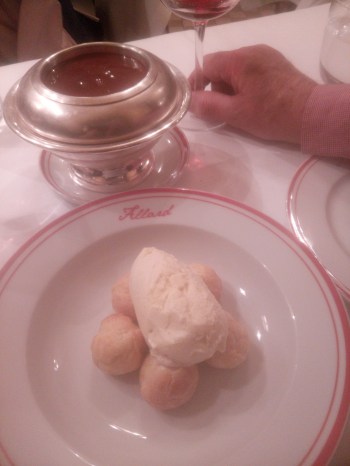 Nearly 40 years ago, I dined Chez Allard, a then one-star bistro founded in 1932. Monsieur Allard (by then, the son, André) recommended sharing the frogs’ legs, because they were the real burgundian ones, and recommended against their famous specialty of duck and olives, because duck and turnips were briefly in season. Just accept our carafe red, he reassured. I probably had profiteroles. And the meal in a then near-empty bistro was magnificent, the duck among the best things I’ve ever eaten.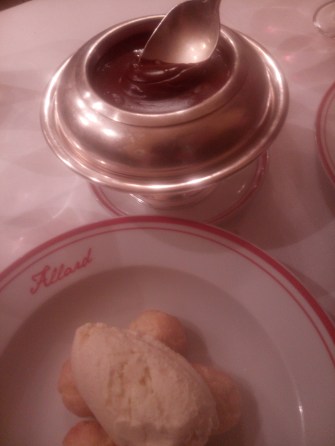
 To engage in some national stereotyping, Italians are “exuberant and spontaneous”, Americans are “enthusiastic and demanding”, and Japanese are “delicate and discreet”.
 Another interesting national difference is meal times. Most nationalities lunch around noon or 1 pm. With a bit more of a spread, breakfast is usually 7:30 – 8:00, but with some expected even earlier. I’m with Germans here, though, because they breakfast seriously, preferably between 8:30 and 10:00.
 Tonight, Paris switches off daylight saving, and I’m again confused about turning clocks back/forward. Do I or don’t I get an extra hour’s sleep?
 My temerity in telling someone the other night about being a “new friend” occasioned further pondering.
 A couple of older women work on laptops, and one is now on a mobile – she has a friend, or maybe it’s work. A young tourist couple come in for double consumption – photographing their breakfast, before touching it. Are these zillion photos as expendable as Zuckerberg’s 75 million followers?
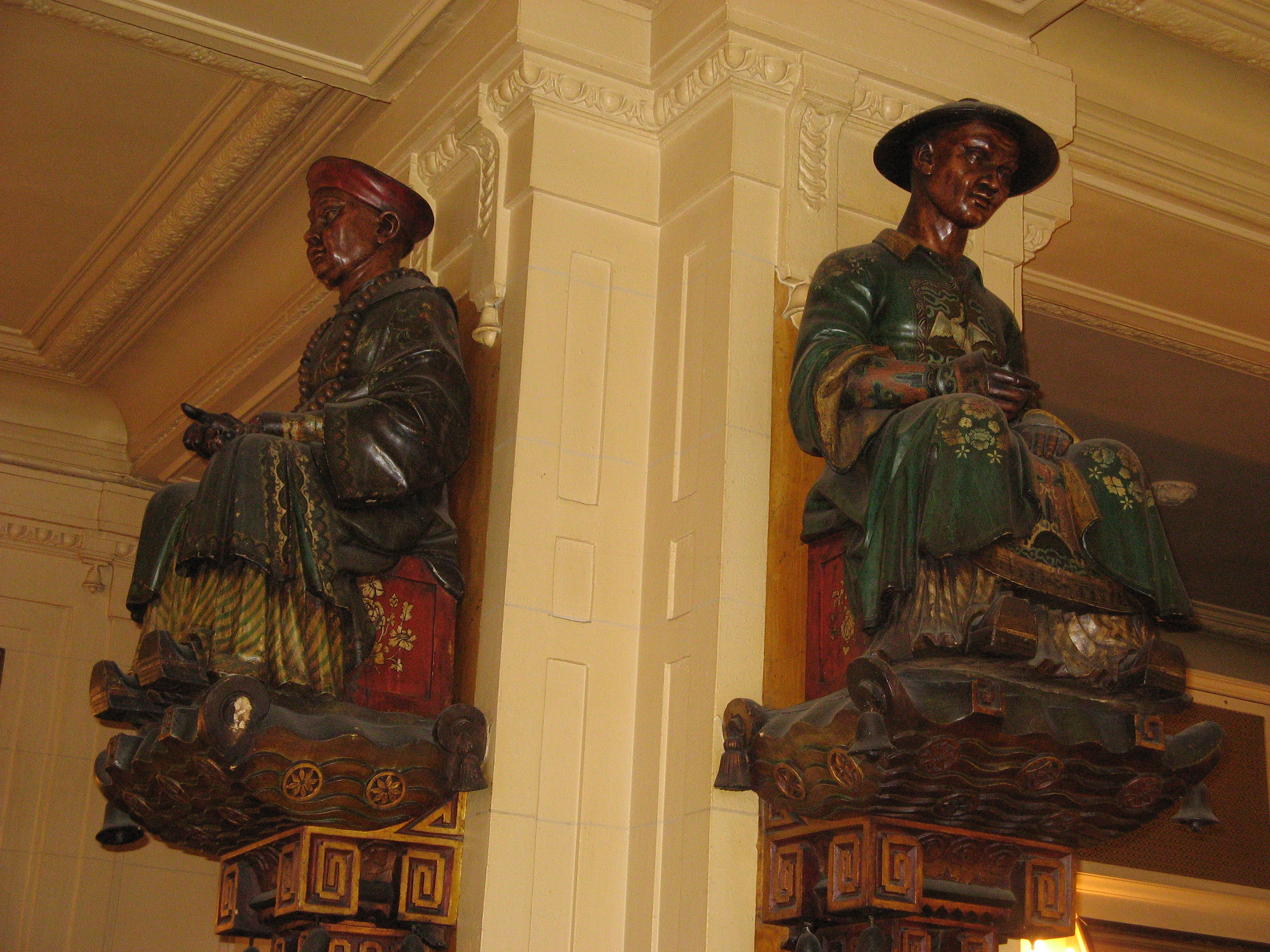 How odd, a tour group files in a side entrance and out through the heavy revolving door (which waiters manage with a packed tray on the arm), photographing the carvings of the two oriental-looking magi, their backs permanently turned on each other. My impression is that tour groups often lead to lasting friendships, people having taken meals together.
 Have I told you about my introduction to Paris? This was probably in late-summer 1973. Whatever the exact date, it was a warm night. I’d been anxious on the Channel ferry, on the trains and in the Metro, where my jitters were worsened by my first submersion in a foreign language. I came up at the Cité stop, walked around the corner, found my former journalist colleague, who showed me my couch under the apartment window, which I opened to the summer evening in the Place Dauphine.
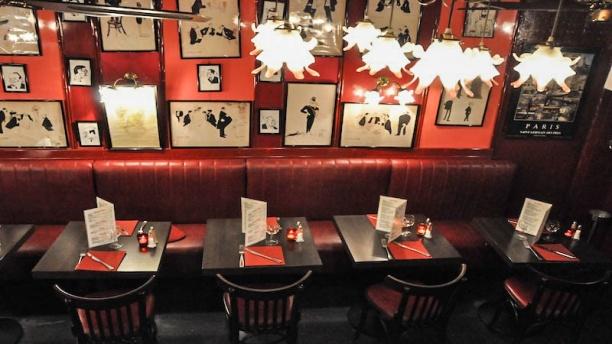 As a restaurateur, I cannot deny having loved our regulars. We had a couple who came fortnightly, for years. They drove quite a distance from a beach suburb, and plainly enjoyed each other’s company. We kept Table 8 for them.
 Paris has relatively high cultural density. Even modest cafes, bistros and restaurants are meant to be run correctly,
  “The past three years have seen an unremitting ideological war on knowledge, inquiry and, significantly, cultural memory,” she writes, citing cuts to scientific bodies, universities, research programs, museums, archives, galleries, the ABC, National Library’s Trove, and, of her special concern, grants to small arts companies, and individual practitioners.
 She couldn’t imagine a similar institution in Australia – “a centre with comparable resources, devoted solely to the development of writing for theatre … The imagination stops dead. It is simply an impossible thought.”