Symposium of Gastronomy, Wellington

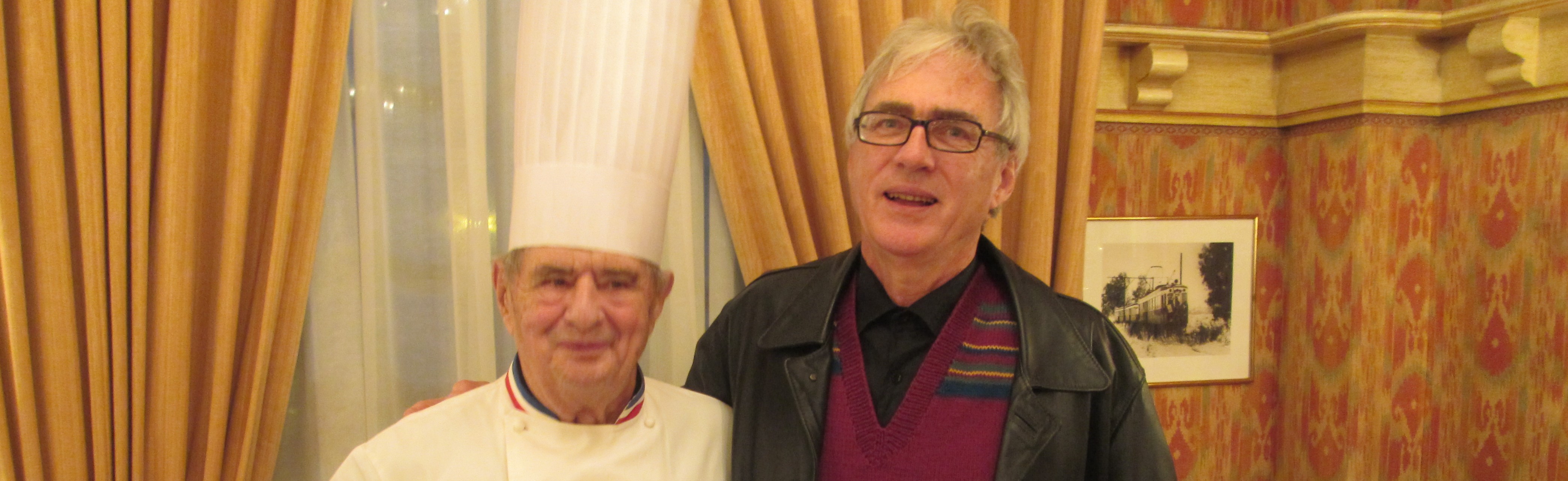
Duncan Galletly
Duncan Galletly

SINCE THE FIRST Symposium of Australian Gastronomy, which I instigated in 1984, the serious interest in growing, cooking and dining has only exploded, fragmenting into talkative clusters of scholars, chefs, social activists, greenie growers, and more.

With only one-fifth of the available population, the gastronomic symposiums we got going in New Zealand in 2001 have arguably had a better prospect of holding together.

The recent gathering in Wellington returned to more eclectic interests, rather than specifically culinary history. The “Diversity” theme attracted an appropriate variety of papers with the nearly two dozen topics including aprons, Sunday school picnics, dining alone in foreign cities, and Wellington’s nearly lost Chinatown, around the corner.

Founder of Peoples Coffee, and keen promoter of fair trade, Matt Lamason has turned his mind to the benefits of training prisoners and ex-offenders in what New Zealanders call “hospo” (hospitality industry). Archeologist Dave Veart provided expert illumination of the ancient Maori farms further threatened with “development” outside Auckland. Exemplary cookery writer Lois Daish explained her adulation of predecessor Patricia Harris (1910-2003), who proved prickly when they actually met.

Phil Cook argued that “craft beer” is not novel, but very, very old; two Iranian postgraduate students Amir Sayadabdi and Saman Hassibi analysed the massive changes in Norwegian cookery books since the 1960s; and a commander in the NZ Navy, Karen Ward, investigated predecessor Captain Scott’s fatal provisioning for the race to the South Pole.

Medical academic Duncan Galletly might even exceed me in gastronomic obsessiveness. The colours of the covers of his journal, The Aristologist, borrow from lollies – the first from Violet Cream, and the latest pale green from “The Snifter – now extinct. Some lament its passing … other do not”.

Galletly’s scientific presentation this meeting was entitled, “Zomato – Zero to connoisseur in 11 easy kilograms”. Zomato is a restaurant review site, based in India and expanding quickly worldwide through the logics of mobile phones, social media and finance – purchased companies include Urbanspoon. As Duncan explained:

For this paper, over a period of six months, I ate and drank at, and reviewed, approximately 200 restaurants and cafes to achieve what Zomato describes as “connoisseur” status, becoming one of the “most respected members of the foodie community”.

Even more gloriously than judging that amateur restaurant rankings are justifiable alternatives to established guidebooks, Duncan Galletly had published so many reports that he had beaten Taylor Finderup as top Wellington foodie.

Taylor Finderup
Taylor Finderup

In the call for conference papers, Duncan had asked for unusually long abstracts of “about 500 words”, which might provide enough reading of my “How big was John Locke’s spice drawer? An inquiry into whether liberalism favours, diversity, equality or both”.

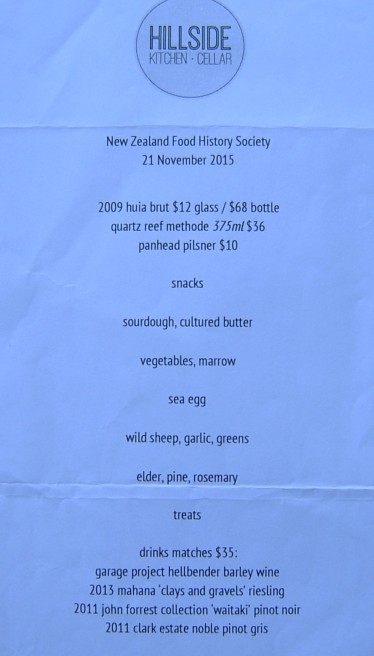
Basic catering was provided in the function room at Prefab, the popular new venue of Jeff Kennedy (formerly of L’Affare). We unavoidably missed the Friday dinner at Giulio Riccati’s Cicio Cacio in Newtown, but did squeeze into the Saturday dinner at Asher Boote’s Hillside Kitchen and Cellar in Thorndon. I’ll explain my enthusiasm, not shared with everyone, in a separate post.

The next NZ symposium is projected for August in Auckland with an “Aesthetics” theme, and the Twentieth Symposium of Australian Gastronomy is tentatively planned for Melbourne from the evening of 2 December until morning of 6 December 2016.

Ten reasons you’re needed at table

SV300354 (2)

1. To be polite

… which means coming to the table as soon as called, because the cook probably has hot food ready and/or needs urgent assistance. Showing enthusiasm will be rewarded

2. As a platform

… for actual conversation. More important than social media,* chit-chat is at the heart of good living, socialisation, civilisation and word of mouth

3. To look silly

… it’s not necessary to hold bad manners dinners. Just check out, between mouthfuls, others chewing

4. To be sophisticated

… there can’t be much more to get on top of

5. For seduction

… at table together … the fundamental test of compatibility**

6. To be a family

… as Brillat-Savarin said, some couples might sleep in separate beds, but they can always share the  table, and have an endless topic of conversation: the previous meal, this, and the next one

7. For health

… solitary dining shortens life expectancy

8. To join the human race

… because, as James Boswell decided, we’re the cooking – i.e., meal-making – animal

9. For pleasure

… and, nearly forgot …

10. For physical sustenance.

* I couldn’t resist composing a listicle or list-article – rhymes with “popsicle”

** Try searching “marriage compatibility” – the results are dominated by astrological, numerological and other such sites. Sexual compatibility used to be the thing. It must be meals’ turn

War and peace, and Anzac theatricals

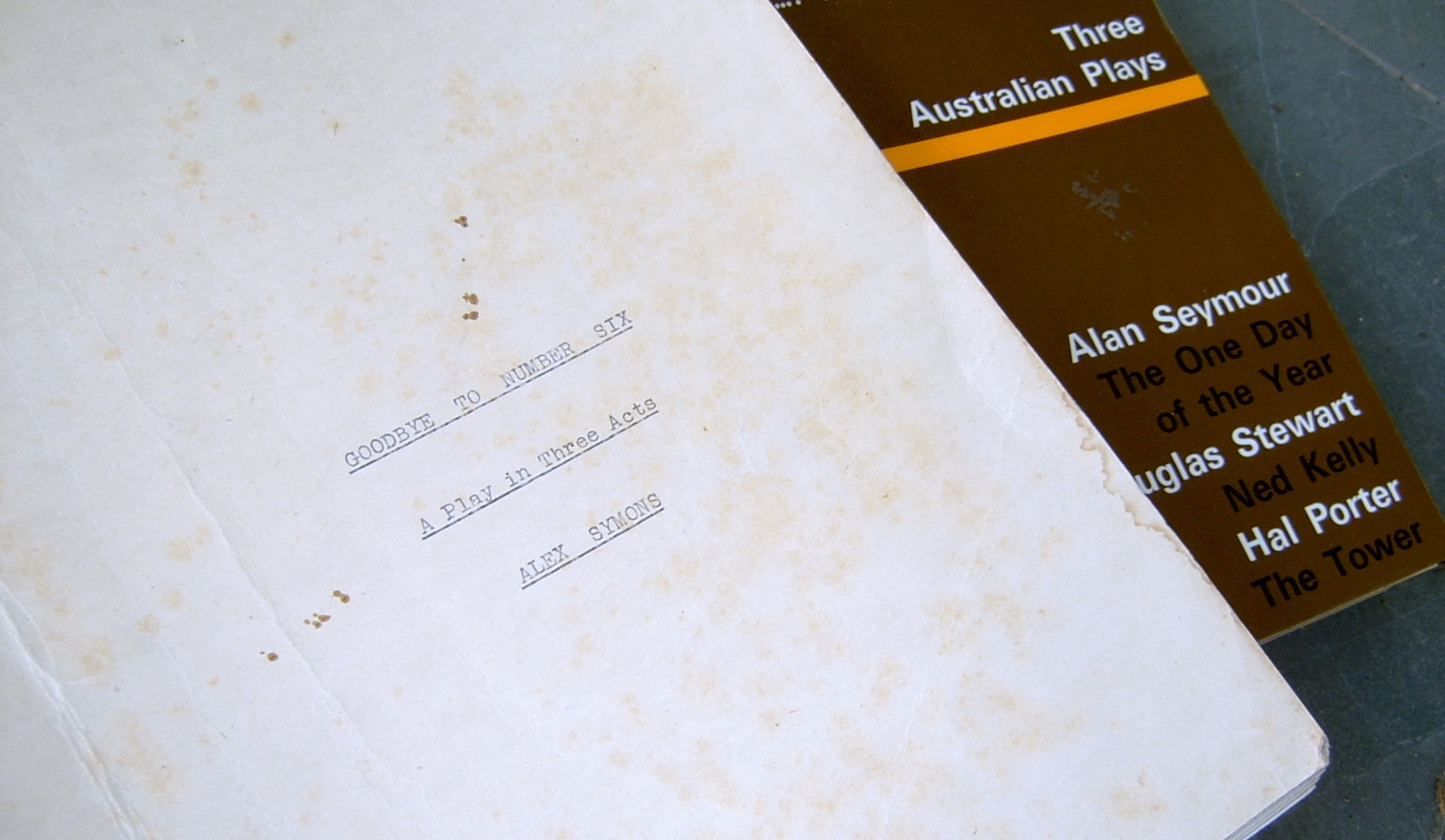
WE DID A READING recently of a play I was always told was mere escapism. The drama SV300309 (2)turned out to be slightly more significant than that, being set in an old mansion whose staff gently meet clients’ escapist fantasies, such as a trade union leader working on, and never finishing, his revolutionary tract. A ballerina dances late in the proceedings.

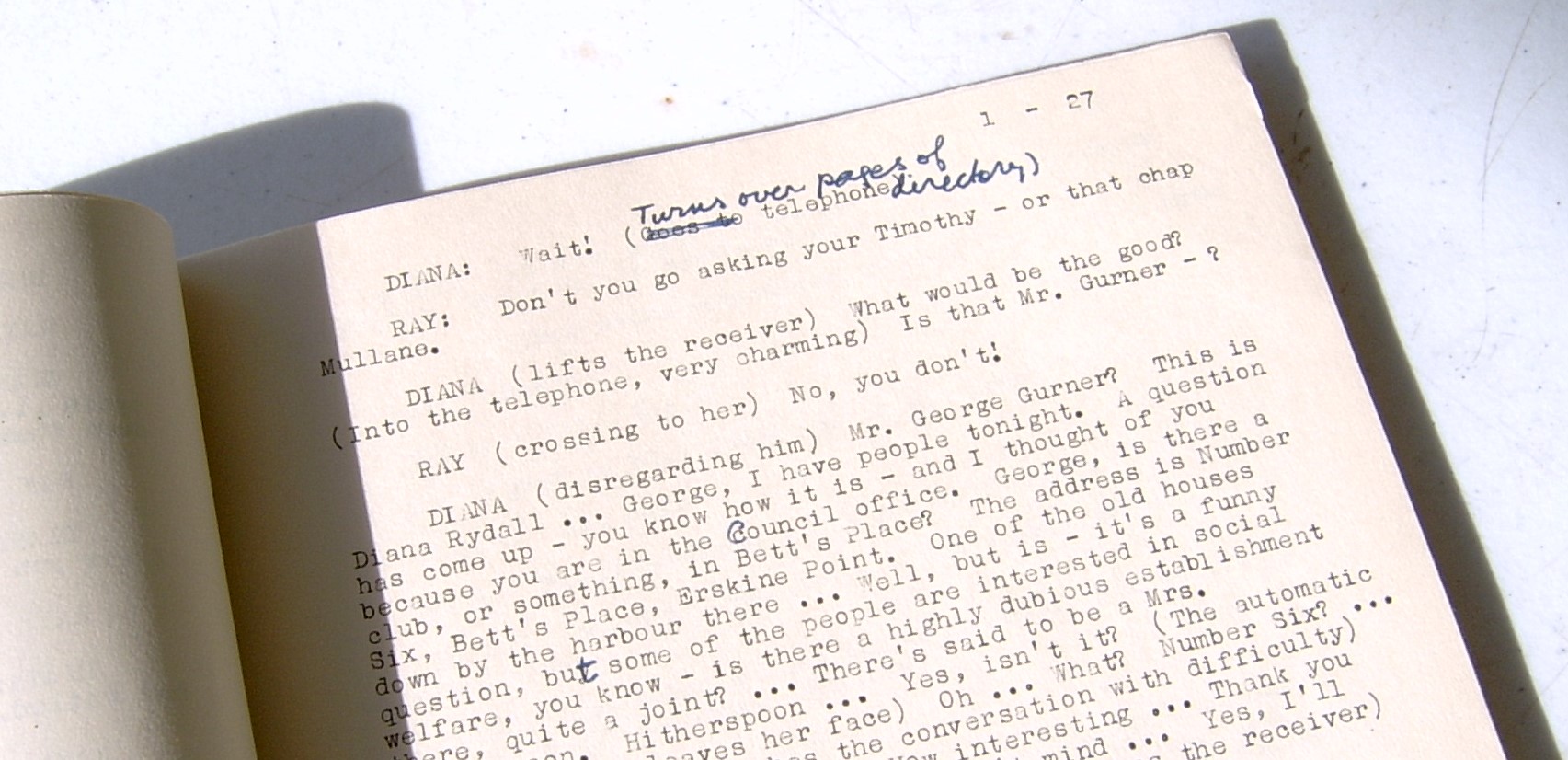
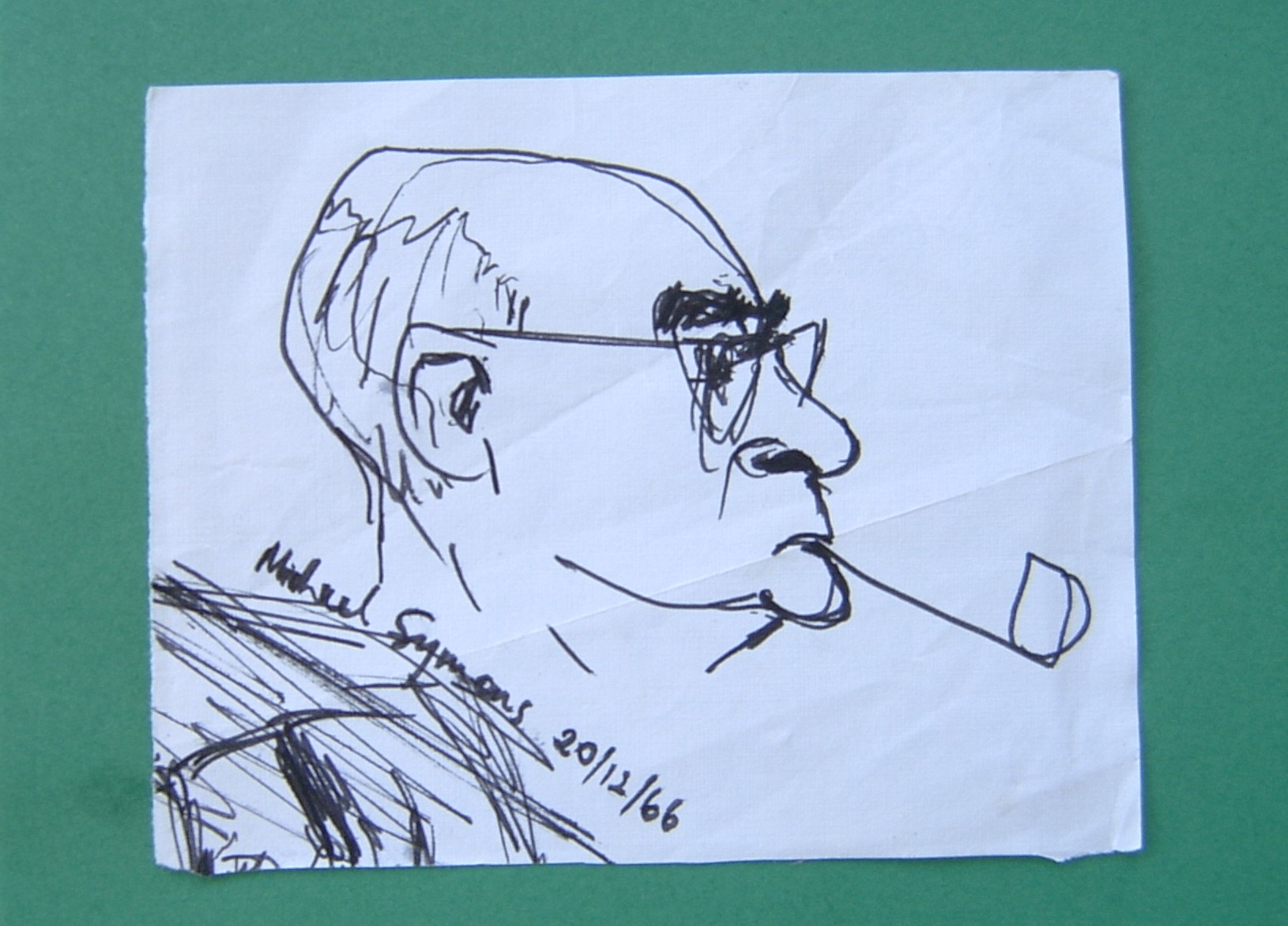
The play won the first Adelaide Festival of Arts play-writing competition in 1960. I was young, but enjoyed that short opening season, which was probably its last, until we gave Goodbye to Number Six its recent airing. Our interest came from its author being my grandfather, Alex Symons.SV300315 (3)

Detracting from family pride, however, the play had only won and been performed because the conservative board running that first festival had over-ruled the experts’ recommendation, which eventually proved to be one of Australia’s most enduring plays, Alan Seymour’s The One Day of the Year.

SV300311 (2)I attended the world premiere of that, too, put on by many of the same Adelaide theatricals some months later. We bumped into my grandparents during interval, and I still recall my grandfather’s silence, which took me many years to really understand.

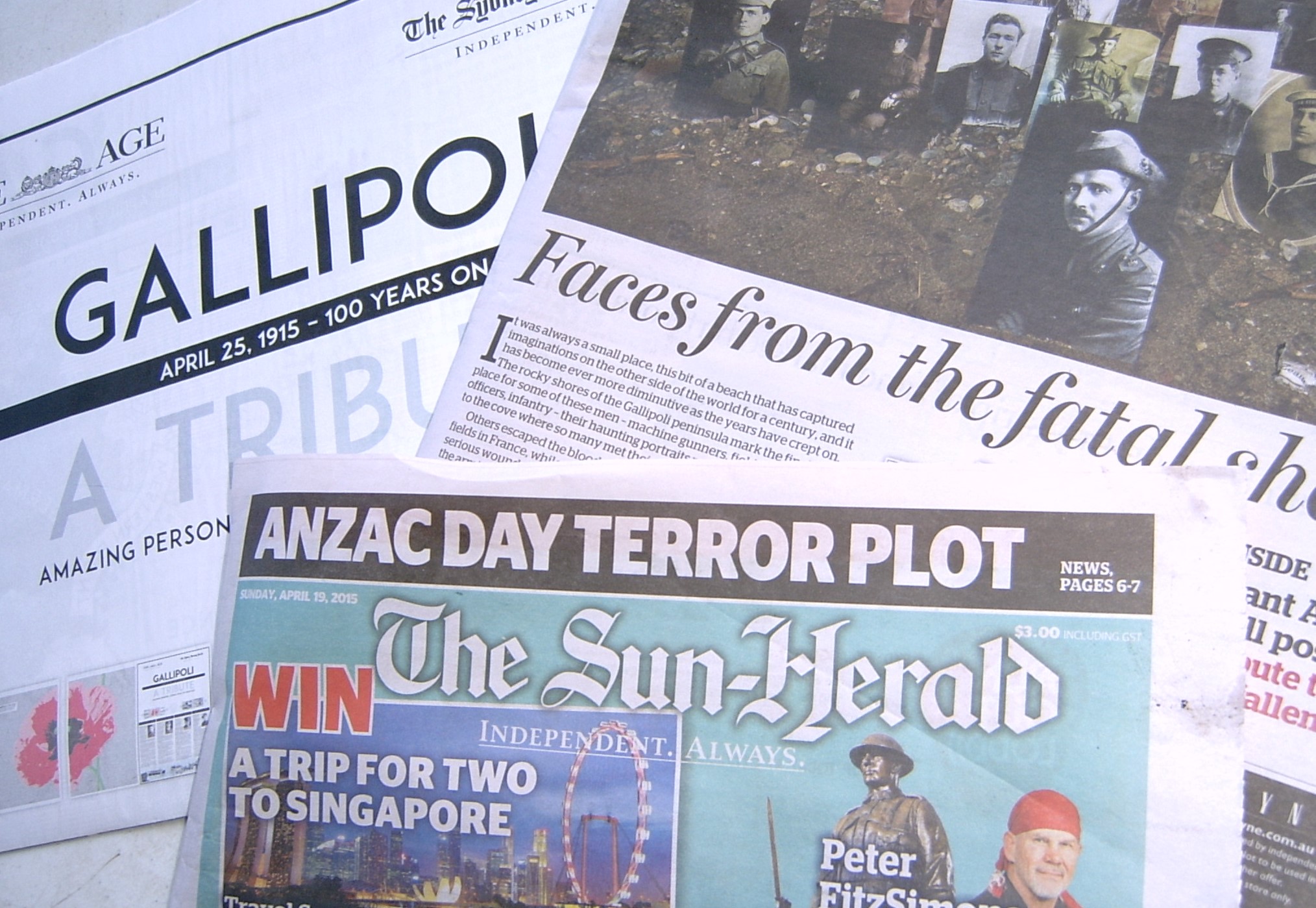
The One Day of the Year is a clash between father and son over Anzac Day celebrations. By the 1950s, the national holiday (25 April) had come to represent drunken diggers (by then, veterans of at least three wars). Anzac day officially commemorated the failed and deadly campaign by Australian and New Zealand troops sitting helplessly from 25 April 1915 to 9 January 1916 on the Gallipoli peninsula in Turkey.

What were they doing there? A good question.

Encouraged especially by Prime Ministers Bob Hawke and John Howard, Anzac Day has in recent years become a massive, national festival. Thousands clamour for the limited tickets to the dawn service at Gallipoli itself. On the eve of this year’s centenary of the landing, our unpopular Prime Minister Tony Abbott urged everyone to get to a dawn service to show “our defiance of those who would do us harm [read “terrorists”] and we’re supporting our country’s [newly-invented “Judeo-Christian”] values and our armed forces [including those I am now sending back to Iraq]”.SV300319 (2)

Some veterans would never go near such a bun fight, including my grandfather, who was awarded a Military Cross and endured a year’s surgery that still left metal in him. The death and destruction were sufficiently painful that he left London in 1922 to live in South Australia, never to return.

No-one recalls Alex Symons ever speaking about his experiences of the so-called Great War, except for once to his daughter, Janet. Just back from an Anzac Day service during that next conflagration, she asked why he never attended. He looked pained and answered, according to my aunt’s memoir:

“It was all about the killed and the killing.” When he had to lead his men “over the top” from the trenches in the Somme the majority were killed. He and one other were wounded and lying in the mud for 48 hours before being rescued. … he said he had to live with that, knowing how many men were killed and that the action had not been of any value.

In South Australia, he became the much-loved General Manager of the SA Housing Trust, and retreated into writing “escapist” plays and a musical, several performed.

Alex’s son, my father, went off to the Second World War and only ever attended Anzac commemorations as a radio commentator. But he was beaten in any contempt for arms by my mother, whose two brothers had been psychically damaged, one of them a young fighter pilot who became a problem alcoholic, and who always went to Anzac Day reunions. In fact, when unable to work and living with us, he went to daily reunions. He was a lovely guy, his life ruined and shortened.

I could hear my mother’s anguish when I read the other day how all “9 acres of guns” had to be made non-operational, with the firing pins removed, at the annual convention of the right-wing front-group, the U.S. National Rifle Association. That’s the NRA that wants loaded guns in schools to protect from guns – a policy of “mutually assured destruction” (or MAD).

A libertarian Senator believes Australia is a “nation of victims”, unable to protect themselves with weapons. He spoke in response to the Martin Place siege, in which two hostages were killed, one by police fire. Leyonhjelm’s case seemed even sillier when, a few days later, in a Walmart in Idaho, a two-year-old killed his mother with her gun that he found in front of him in her shopping cart. From the killing rates, the highly armed U.S. is by far the greater “nation of victims”.

Whatever way it came down to me, I was left loathing militarism, an opponent of the Vietnam War, another distant venture to which a conservative Australian government sent young citizens. When I say “citizens”, 20-year-olds were conscripted but we had to wait another year to vote. It’s the half-century anniversary of that, too, by the way.

This present Anzac carry-on is not all chauvinist belligerence and calls for more “defence” spending. I have tried to avoid media coverage, but it is wall-to-wall, and I have found plenty of genuine sorrow for the killed, maimed, and forgotten. The notable absence, however, is discussion about how to end the barbarity. Where’s the pacifism?

From my reading, many libertarians genuinely oppose war. The “free” (ha-ha) market is the only legitimate power, they believe, making the military as invalid as any other non-market force. They manage to ignore, however, enormous “market” pressures from the military-industrial complex that President Eisenhower warned against in 1961.

They also detest world government, which I am not convinced might not be an improvement on self-appointed sheriffs in continuous action (Groundhog Day meets High Noon).

Not very gastronomic, I hear you say. Where are the meals? Yes, that’s the point.

You may call it escapism, but I retreat from the horrors of war and unlimited growth (more on another occasion) to meals. Meals matter, SV300305 (2)and importantly as a rejection of armaments.

Meals are the antithesis of war. Enemies make peace at the table. The genuinely free market is not going to spontaneously combust. The land flowing with milk and honey is no scorched earth.

I contemplated such matters when planning my small birthday dinner on what also happens to be Anzac Day. It’s also the 50th anniversary of conscription for Australian males turning 20, as mentioned earlier.

It should be an anti-armaments dinner, I decided. But meals are intrinsically anti-armaments, swords left at the door.

So, I’ve just collected some anti-war buttons to be worn by diners who want.

Why do we cook?

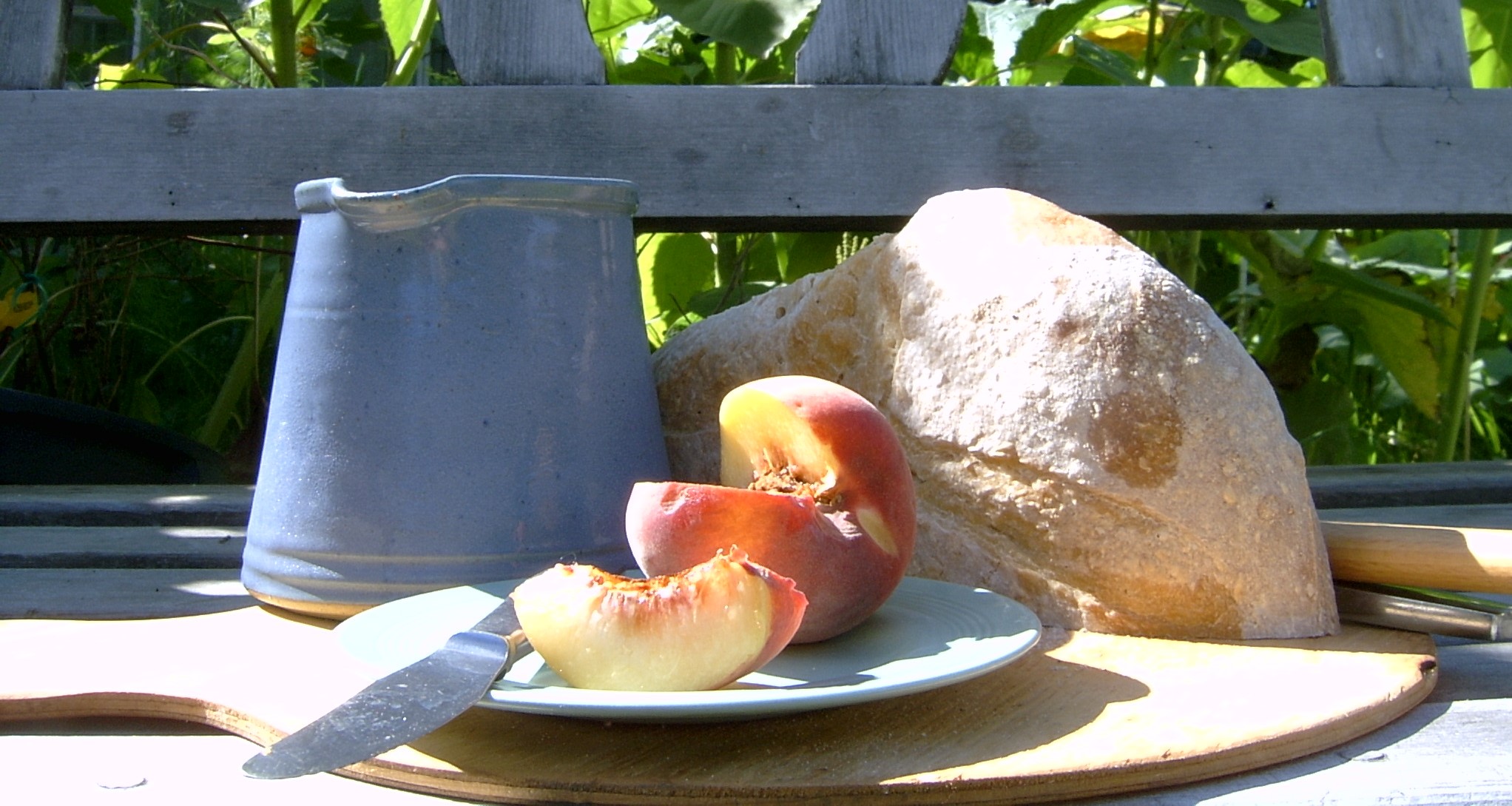
IMG_0317 (2) Many of us enjoy cooking, especially with good produce, and perhaps with a glass of wine. But why do human-beings cook in some anthropological sense? Why could James Boswell call Homo sapiens the “cooking animal”?

For such a fundamental question, it has been left surprisingly unanswered. Too often, cooking has been ignored as “women’s work”, “drudgery”, “leisure” or “indulgence”. For too long, scholars went along with Plato’s warning against cooking as pandering.

Anthropologist Claude Lévi-Strauss might have written about the “raw” and “cooked” in the 1960s, but somewhat mysteriously. Cooking expressed human cultural structure, or something. Still, he started gastronomic reflections on the slow road back to academic respectability.

In recent years, two books have promoted versions of what might be termed a “transformational” theory of cooking. Where Lévi-Strauss saw cooking as a “language”, evolutionary biologist Richard Wrangham wrote about the energy advantages of cooking as a form of pre-digestion. His Catching Fire: How cooking made us human (2009) thus aligned with the dictionary meaning, “to prepare (food) by heating”. Heat transforms raw ingredients to make them more digestible in Wrangham’s case, or possibly also tastier or more expressive. As the subtitle indicates, Michael Pollan’s Cooked: A natural history of transformation (2013) went along with fire.

The flame is important for me, too, but not as basic as the knife – I often put down the glass of wine to pick up a knife. The knife fits another, and more basic, theory of cooking. This is distributional. According to this approach, the cook’s essential duty is dividing up the food among the diners. This makes the “cooking animal” much older than the fire-maker, taking cooking back to the beginning of the stone age, and the sharp flint.

The importance of food sharing for the human story was the topic of my book, originally published in 1998 and currently available under the title A History of Cooks and Cooking (http://www.press.uillinois.edu/books/catalog/87xzf7wp9780252025808.html ). That’s where others found the Boswell’s “cooking animal” quote, without them always transmitting the beauty of the distributional theory.

The distributional foundations had already cropped up occasionally, and were touched on by Launcelot Sturgeon in his Essays, Moral, Philosophical, and Stomachical in 1822. I’ve since read a claim that Sturgeon might have been the nom-de-plume of Charles Lamb, but, whatever the case, look out for the clever pair of essays, “On the physical and political consequences of sauces” and “On the importance of forming good connexions; and on the moral qualities of the stomach”.

I can see how a transformational theory would appeal especially to anthropologists in their fascination with culture. The refinements are often highly civilising. However, the more social slant of distribution should attract sociologists, and also economists. That’s because the distribution of food at the meal is the concomitant of the distribution of labour. The often-quoted early section of Adam Smith’s Wealth of Nations on the division of labour could hardly by more gastronomic.

My next book is all about that.

Epicurus, Brillat-Savarin, and meal matters

Meals MSV300071 (3)atter … why that name?

A surprising number of meal-related blog titles are occupied. Another difficulty in settling on a name is that, while some people actually used to consider meals a narrow topic, my publications have already roamed over such matters as:

  • other writers who endeavoured to make a diner’s sense of the world, such as the ancient Greek philosopher Epicurus and physiologist of taste Brillat-Savarin;
  • the problem of the “cooking animal”, namely, why do we cook? My book on cooks recommends a distributional theory – cooks share food around – against the much more common transformation claim;
  • two centuries of food industrialisation, explaining the horrors of Australian cuisine, until the heavy marketing of finished meals from the 1960s eventually revived interest;
  • Australian and New Zealand cakes and biscuits;
  • The flat white coffee as the greatest Antipodean gastronomic invention, and much more.

Adding to that, my next book is a critique of economics, based on the fact that meals matter more than money.

So, Meals Matter

[Update: With its publication in 2020, Columbia University Press promoted that manuscript’s subtitle “Meals matter more than money” to the book title, Meals Matter, making the blog name fortuitous]