Doomed to disruption

Capitalism has abandoned neoliberalism and gone disruptive

FOLLOWING perestroika and glasnost and the collapse of the Soviet Union in 1991, capitalism’s boosters trumpeted “liberty” worldwide. Demanding liberation for all, a new Pax Americana would make everywhere safe for corporations.

Under big money’s global message of freedom, such left-liberal political leaders as David Lange, Paul Keating, Bill Clinton, Tony Blair, Helen Clark, Kevin Rudd and Barack Obama pushed progressive cultural reforms with particular support for racial, women’s, gay and other rights.

The trap was that the “rights revolution” in such areas as feminism and multiculturalism provided cover for the corporate capture of government. Under the banner of neoliberalism, the same leaders pushed through deregulation, fiscal “rectitude”, lower corporate taxes, “flexible” job markets, outsourcing, lower trade “barriers”, individual responsibility, etc.

In the flurry of freedom, cultural liberation was outmatched by the bolstering of corporate power.

With governments now firmly in its grip, capitalism moved from neoliberalism to “disruption”. Facebook boss Mark Zuckerberg instructed: “Move fast and break things”. Powerful corporate leaders from Zuckerberg, Musk and down asserted their sacred right to do what they wanted – AI, rockets to Mars, armaments, opioids, drill, baby, drill…

Writing about the “disruption machine” in the New Yorker in 2014, Jill Lepore observed that innovation had become “the idea of progress stripped of the aspirations of the Enlightenment, scrubbed clean of the horrors of the twentieth century, and relieved of its critics”.

Long-time Silicon Valley reporter Kara Swisher (Washington Post, 15/02/24) had “watched founders transform from young, idealistic strivers in a scrappy upstart industry into leaders of some of America’s largest and most influential businesses.” With few exceptions, “the richer and more powerful people grew, the more compromised they became.”

Upon Trump’s election as President, digital CEOs rushed for an audience, Swisher reported:

“There was a heap of money at stake, and they wanted to avoid a lot of damage the incoming Trump administration could do to the tech sector. … they also wanted contracts with the new government, especially the military. … More than anything, they wanted to be shielded from regulation, which they had neatly and completely avoided.”

The “invisible hand” of money unleashed disruption (and corruption), and broke pay parity, democracy and civility (not forgetting nature). Along with that, fewer and fewer billionaires supported left-liberal causes, preferring to boost their own fortunes by backing think-tanks and increasingly authoritarian ideologies.

Right-wing populists blamed the “politically correct”, the “woke”, university-educated “elites”, and mysterious liberals who controlled the “deep state”. Raising the “cloud of confusion”, Murdoch opinion-leaders baited their opponents until seeming actually to believe environmental degradation was an esoteric belief, and supporting women of colour impoverished white men.

Historian Ellen Schrecker has charted how the unprecedented invigoration of American universities during the Sixties eventually rebounded, when the right both attacked universities’ “liberalism” and corporatised them (in her studies of universities’ Lost Promise (2021) and Lost Soul (2010)).

Those endeavouring to save the welfare state, worker rights, universities, democracy and the environment have been tempted to display militancy. Israel’s brutality has now prompted campus protests in the Sixties manner.

Caution is warranted, nonetheless. Given how abusive politics suits aspiring demagogues, supporters of left/progressive/Green politics should prefer exposing the sin of over-commitment over indulging in it. Rather than shout back, the liberal left could usefully resort to honesty and openness, and appreciate complexity.

Arguing the benefits of civilised society also means understanding politics more deeply than as just warfare (“class struggle” already proved insufficient).

Contesting the authoritarian appeal of “the strong always win” means re-discovering lost principles. Countering disruption requires a return to something more like Enlightenment political philosophy, seized and shattered by capitalism.

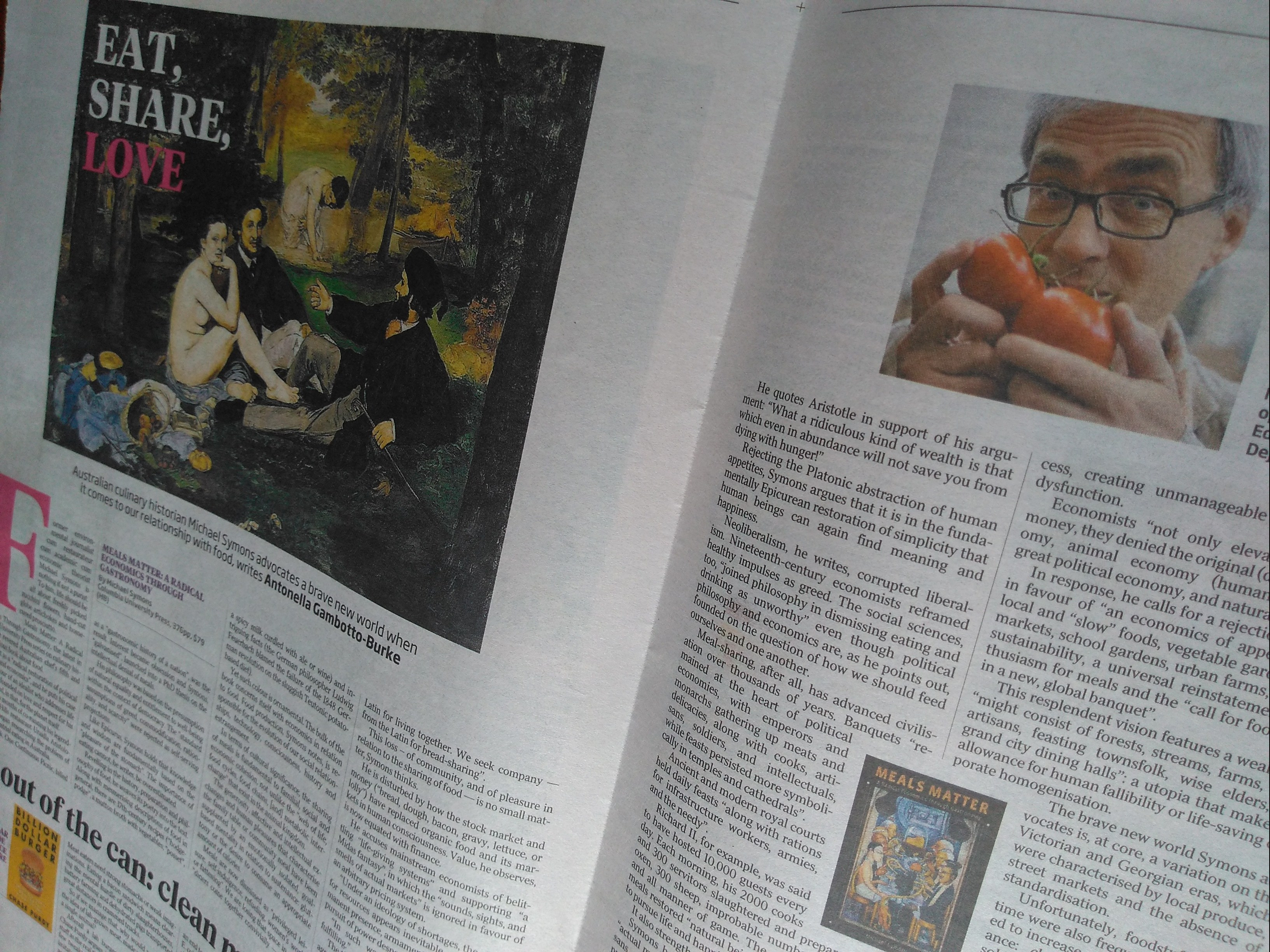
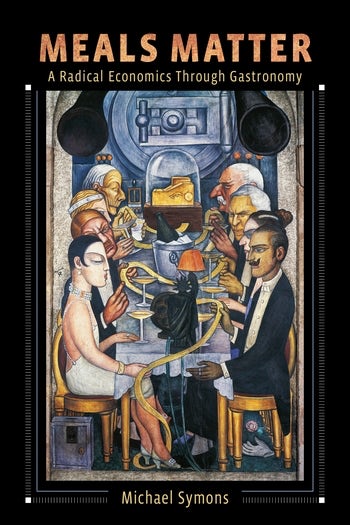
The pre-capitalist basis of radicalism is described in Meals Matter: A radical economics through gastronomy (Columbia UP, 2020). The book also shows how money’s polemicists borrowed selectively from liberal-democratic arguments, and trampled on them.

Grassroots change comes from care and conversation at and about meals (at their different levels)

Australian Blak activist Natalie Cromb has just advocated, with “violence all around us”, for “reimagining our communities to be as they should be – caring, nurturing, healthy, happy and with enough”.

The centre can be radical. Look what happened at the recent Australian election

THE POLITICALLY COMMITTED often decry the “centre” as wishy-washy, and as cosying up to the other side. But, being less ideological, the centre can be more radical.

Just one piece of evidence is the recent electoral success of “community independents”, whose pronounced liberalism produced policies more radical than either main party, left or right.

Liberalism? Corporate capitalism has rewritten our political language (chronicled in Meals Matter), and that necessitates being more open to rethinking liberalism.

The liberalism of its often-acknowledged founder, John Locke, tends to live on with so-called “small-l” or “left-” or “social-” liberals, who have multiplied over recent decades.

They eschew extremes, and yet have become such a threat that the right’s “culture warriors” have ridiculed them variously as “chardonnay socialists”, “latte liberals”, “smoked salmon socialists”, “gauche caviar”, “Toskana-Fraktion”,  “Salonsozialist”, “yuppies”, “politically correct”, “chattering classes”, “bobos”, “educated classes”, “liberal elite”, “inner-city greenies”, “mad left”, and on and on.

These liberals are committed to everyday, kitchen-table reality, which is perceived through practical experiences and face-to-face conversations, and informed by learning, with a consequent embrace of equality, tolerance, and democracy. Combined with the rejection of high authority and ideology and other extremes, these liberals are definitively radical in the sense of getting back to material basics.

The recent rise of so-called “teal” independents has been explained as “professional women” rejecting “merely” climate inaction, political corruption, and mistreatment of women.

They are better identified as genuine liberals, unimpressed by the Coalition’s obfuscations on global warming and women. Disturbed by political corruption and capture, they are determinedly “community” candidates, and I have already described their “kitchen table conversations” – grassroots exercises in interpersonal respect and participatory democracy.

Community independents belong to a centre that’s definitely not a weak compromise, not at least in terms of climate action, political integrity and gender equality.

Their policies are reliant on facts and expertise, not ideology, suggesting radicalism that’s not extreme, but literally getting to the root of the matter (deriving from Latin radix radicis).

Max Chandler-Mather

Likewise, the Greens would appear to have somewhat furled their wilderness and class war wings, and boosted their liberal radicalism. “People have lost faith in a political system that puts the interests of a few big corporations ahead of the rest of us,” according to Max Chandler-Mather. So, he ran “the biggest grassroots campaign in Greens’ history”, and won the Brisbane seat of Griffith.

Unusually for an Australian campaign, they established themselves as community carers by, for example, building a community garden on Defence land being disposed of to a developer. Their volunteer teams used some of the garden’s produce when helping out during covid lockdowns and after floods.

Historically, the major Australian parties – Labor and Liberal – represented the interests of the working class and bosses, respectively, although both always contained liberal elements.

Labor outgrew the class war with the Whitlam revolution of 1972, although its liberal leadership then fell in with neoliberalism. Labor’s agenda remains hypnotised by “jobs, jobs, jobs”, which is sunny way to support corporate capitalism.

We might be lucky, and the new Labor government might get behind the common-wealth of health, social justice, infrastructure, environment, education, research and the arts. But that means standing up to capitalist rule by profit.

Perhaps Labor needs to become the Labourer/Worker/Housekeeper/Carer/Professional/ Artisan/Farmer/Small businessperson/LGBTIQA+/Immigrant/Aged/Disabled/Indigenous/Abused/Student/Etc Party. A new name is not easy to come up with… Perhaps “Commonwealth Party”?

The “Liberal” name is already taken by the occasionally liberal party of Robert Menzies, but whose main demand is “freedom” for money, and which now has to choose between becoming a “broad church” or a reality-inventing, fact-denying, cynical rump.

Likewise, the National Party has to decide between being a Country Party, concerned with increasingly perilous bread-and-butter rural issues, or Trumpian authoritarians.

Perhaps the party system is doomed, anyway, as a relic of hierarchies with “party discipline” under the Leader, announcing policy, allocating ministries, and making “captain’s picks”.

Rather than rely on backroom deals, sloganised messaging and last-minute hi-vis pageantry, Members and Senators might deliberate on the floor of parliament. Now that’s an idea.

The community independents have shown the way. And let’s not forget that a thriving democracy in a complex society requires a highly informed citizenry, and therefore strong public education, responsible media, and a committed and open public service.

With determination, it’s possible that a new centre might hold, and a radical centre at that.

To repeat, by “centre”, I do not speak of midway between two extremes, but caring, honest, informed and pragmatic “liberalism”.

Welcome to our kitchen table election

This Federal election is powered by Kitchen Table Conversations, a technique developed in Melbourne in the late 1990s and which has mobilised the constant political chatter around tables, in cafés and over drinks

THE “CLIMATE” INDEPENDENTS expected to win an increased number of seats on 21 May, and conceivably the balance of power, are propelled by KTC.

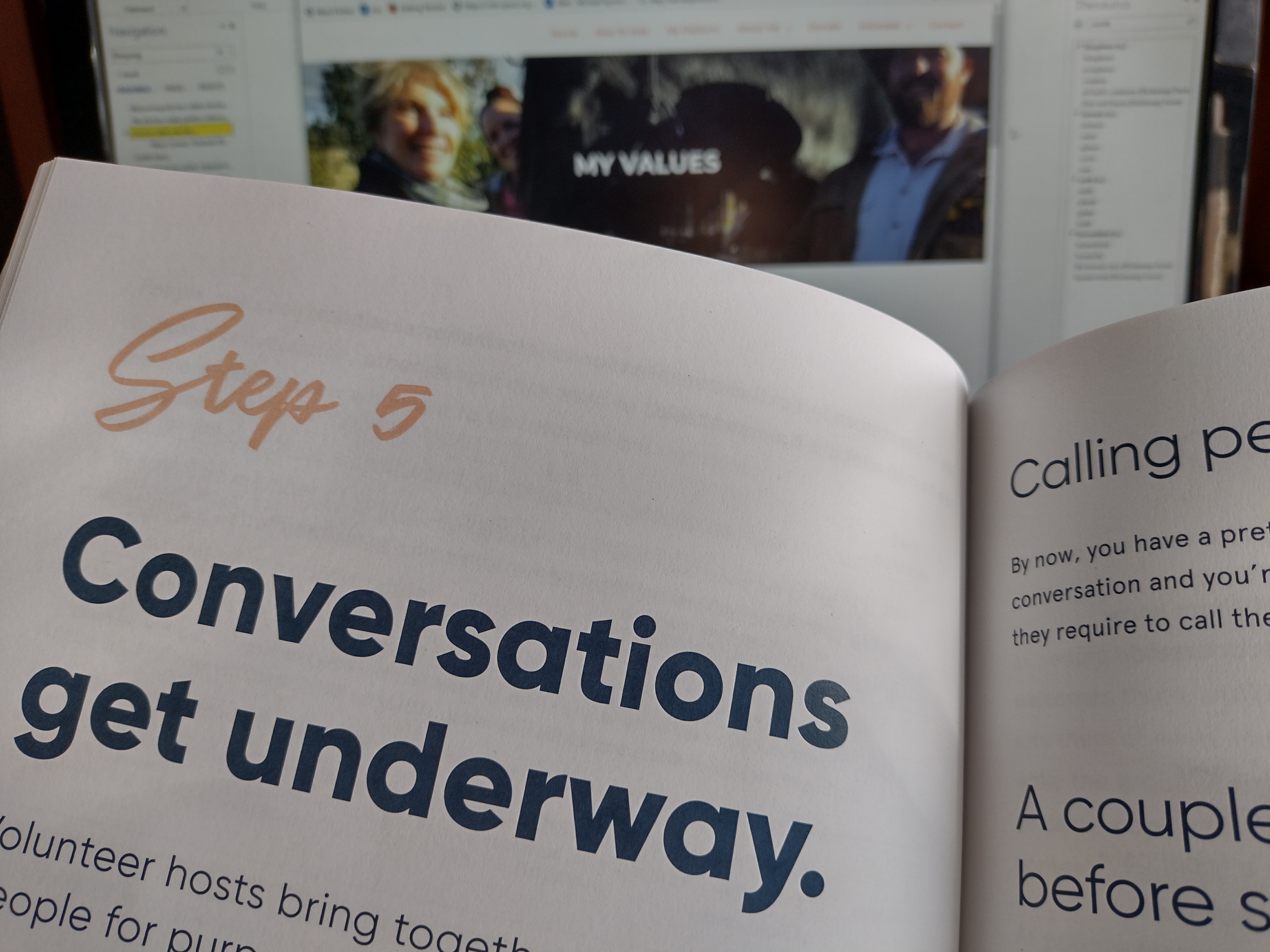
This is the mobilising technique of “Kitchen Table Conversations”. Self-selected hosts invite perhaps nine others around to discuss the political issues they find important, and to plan possible actions. A coordinating group collate reports from the kitchens to help find and inform a local candidate.

A relatively spontaneous, and still quite loose, movement is now significant in Australian politics (and I would like to learn about similar techniques elsewhere in the world).

Various “Voices 4”, “climate”, “teal” or “community” independents have sprung up in Coalition electorates, with voters disgruntled principally about lack of action on the climate emergency, and on an independent commission on corruption.

Behind that, kitchen-table activists respond to perceptions that political parties have failed participatory democracy.

While progressive on some core issues, participants thus far tend to be relatively comfortable, financially, so that campaigns lack neither professional access, nor funds.

Compiling a definitive list of KTC-propelled candidates proves tricky, initially because I have not checked through all possibilities. Climate 200 has published a list of those it supports, but others remain sufficiently independent as to refuse all outside funding. Other estimates suggest more than two dozen “teal” candidates. My attempted list (below) contains four up for re-election, plus eleven newcomers in city seats held by Liberals, and six rural candidates mainly challenging Nationals.

From Kitchen Table Conversations: A guide for sustaining our democratic culture, by Mary Crooks and Leah McPherson (2021)

The mechanism was adopted famously in the rural Victorian seat of Indi in 2013, when Cathy McGowan replaced Sophie Mirabella (and was succeeded by fellow independent Helen Haines). In like manner, in 2019, Zali Steggall spectacularly beat former Prime Minister Tony Abbott in Warringah.

KTC had originated even earlier, among women worried by the aggressive neoliberalism of Premier of Victoria Jeff Kennett as he closed schools, privatised government activities, and dismantled democracy.

Introducing a new booklet on the topic, Mary Crooks relates how, in 1996, she lunched with two friends (Sandra Hart and Angela Munro) at the Red Sage Café in Clifton Hill (Melbourne). “Despite the Kennett government being re-elected for a second term, we sensed a groundswell of community unease across Victoria,” Crooks recalls.

At a second meeting, Crooks took along an ad for the position of executive director of the Victoria Women’s Trust. She got the job, and developed the grassroots mechanism. The initial name of the “Red Sage Project” (after the café) was soon changed to Purple Sage to avoid political confusion (and setting off a palette of colours, often teal). Working with other respected community groups, the project engaged as many as 6000 women and men across the state “in a thoughtful deliberation of the key issues and the actions they could think about taking”.

The model very much belongs to the (traditionally womanly) domain of the kitchen table, and the treatment of women has remained prominent.

In the new booklet, Mary Crooks and Leah McPherson advise: “Hosts will need to provide some drinks and light snacks. This may be as simple as tea, coffee, and a packet of biscuits.” This contrasts with political candidates drinking a beer at the traditionally male pub (although photo-ops have lately included sipping tea in workplaces).

Crooks and McPherson accept that “Core Group” organisers might enjoy a proper meal for a post-mortem: “You may wish to organise a lunch or dinner together, share a drink at the pub or café, or enjoy a peaceful walk to decompress.”

These domestic get-togethers should be viewed as a deliberate alternative to the presently dominant conversations at board tables, business lunches and cocktail parties among politicians, billionaires and lobbyists, titillating each other with coal mines, highways, new airports, outsourcing opportunities, and cuts to public education. (For more on “state capture”, read this recent report.)

In pursuit of the “delicious revolution” in Meals Matter, I recognise meal conversations as the essential ground of democracy, because table chat covers not only regular meals past, future and present, but also the wider meals of schools, hospitals and aged care, and all that surrounds them – table talk naturally encompasses life’s essentials.

Political theorist Janet Flammang has written how everyday meals generate popular political consciousness.Even slightly more formality can be powerful. Like-minded experts and enthusiasts typically “socialise” at drinks and restaurant tables.

Courtly banquets were centres of political proposals and intrigue. Regicide has been plotted at aristocratic feasts, and so, too, revolutions have been planned in coffee-houses, and people’s victories celebrated in street banquets.

Some might defend digital media as furthering political discourse, but online chat drifts too far from social foundations in food sharing.

Politics emerges from the pleasure of the stomach, “especially through participatory democracy, in which everybody labors at everyday meals and converses, so that knowledge collects up and distributes”. The political economy is to be “rewritten by living well” (Symons, Meals Matter, 2020: 272-273).

Long live table politics!


The “community”, “climate”, “Voices 4” and “teal” independents seeking lower-house re-election are: Helen Haines in Victoria, Rebekha Sharkie in South Australia, Zali Steggall in NSW, and Andrew Wilkie in Tasmania.

As to newcomers in Liberal city seats, we’re speaking of at least: Nicolette Boele in Bradfield; Jo Dyer in Boothby; Kate Chaney in Curtin; Zoe Daniel in Goldstein; Claire Miles in Casey; Despi O’Connor in Flinders; Monique Ryan in Kooyong; Sophie Scamps in Mackellar; Allegra Spender in Wentworth; Georgia Steele in Hughes; and Kylea Tink in North Sydney.

Taking a swing at rural, mainly National seats, similar candidates include: Penny Ackery (Hume), Kate Hook (Calare), Suzie Holt (Groom), Hanabeth Luke (Page), Caz Heise (Cowper), and Rob Priestly (Nicholls).

The campaigns are unique to each electorate, but all wanting to “do politics differently”, and they generally feature climate action, and integrity in parliament, and they listen at kitchen table, fireside and pub get-togethers.

Mary Crooks

“Mesmerising” descriptions of food

Weekend Australian 2
Weekend Australian, Books, 8-9 August 2020

YOU MIGHT NOT expect to read a scholarly tome about economics for pleasure. But this is gastronomic economics. As the Weekend Australian reviewer announces:

Revelling in the history, preparation and philosophy of food, he weaves its poetry into the text. Along with mesmerising descriptions of food …

For gastronomic works, such as Meals Matter, hedonism is not only a topic, but also a method, which is one reason why, unlike standard economics texts, I open each chapter not with a graph or financial table, but with a meal description.

Weekend Australian 1

Another reason is that the book challenges orthodoxies across economic theory, legal theory, political philosophy, food studies, and more. In the face of such transgressions, the hope is that the opening meals start out from a shared need to eat.

Hearteningly, academic readers for successive publishers gave strong support. The back-cover endorsements come from professors in disciplines as varied as politics, economics, anthropology, and European history.

In the 1980s, the “gastronomy” label put off academics, but this has plainly changed.

Eating and drinking brings in everyone, or almost everyone, and so what about the general or “trade” audience? At least in the book’s first extended review, Antonella Gambotto-Burke finds it enjoyable, with “mesmerising descriptions” (Weekend Australian Review, 8-9 August 2020, pp. 14-15).


Unlike the usual, more scholarly review, Gambotto-Burke does not attempt to set out the argument. Rather, she picks out key points, and joins the radical celebration, recommending:

Meals Matter is a passionate and inspiring proposal for change.

Upskirting shows how porn culture has caused a breakdown in ...
Antonella Gambotto-Burke

Antonella @gambottoburke is a seasoned reviewer and author (her next book is Apple: Sex, Motherhood and the Recovery of the Feminine). Inevitably, in close to 1300 words, she gets a couple of things wrong. I’m no “naive” idealist (that’s the self-proclaimed economists); I have thought of myself as a restaurateur but never as a chef – that was Jennifer Hillier at the Uraidla Aristologist (maybe I should?); and life generally improved after Dickensian England, because that was an exceptional low point, whose miserable conditions and food adulterations were brought on by laissez-faire capitalism.

For the full review, try clicking on Gambotto-Burke’s twitter link.

But since the Murdochs keep their gems behind a paywall, I’d better give some more, fairly random snippets, firstly, about present disasters:

Meals are now dismissed as “privileged leisure, self-indulgence, refueling, women’s work, or fattening”.

He is disturbed by how the stock market and money (“bread, dough, bacon, gravy, lettuce, or lolly”) have replaced organic food and its markets in human consciousness. Value, he observes, is now equated with finance.

He accuses mainstream economists of belittling “life-giving systems” and supporting “a Midas fantasy”, in which the “sounds, sights, and smells of actual markets” is ignored in favour of an arbitrary pricing system.

Neoliberalism, he writes, corrupted liberalism. Nineteenth-century economists reframed healthy impulses as greed.

And, secondly, about doing better:

He sees it as a “radical restoration of political philosophy and economics”, and he puts his case with the fervor of an idealist who addresses life as a pleasure founded on love and respect for his fellow man and, in that, for the planet itself.

This resplendent vision features a wealth that “might consist of forests, streams, farms, clever artisans, feasting townsfolk, wise elders, and grand city dining halls”: a utopia that makes no allowance for human fallibility or life-saving corporate homogenisation.

Meals Matter is a passionate and inspiring proposal for change. Symons’s suggestion that the “festal core” of democracy needs to be resurrected is certainly correct. Pleasure, in our culture, has come to be synonymous with stress relief rather than passion or joy.

Similarly, there is no question that sustainability and compensatory materialism must be addressed on a global level. We desperately need more love and idealism, if tempered by the recognition that the future cannot be found in the past.


How to buy Meals Matter

9780231196024PURCHASE MEALS MATTER THROUGH YOUR favourite seller, several mail-order firms, or through Columbia University Press with a discount.*** E-books are instant.

***Here is the Columbia link to use the friendly promo code CUP30 for a 30% discount.

Meals Matter - Author with first copy
Author with first copy

My new book: A radical economics

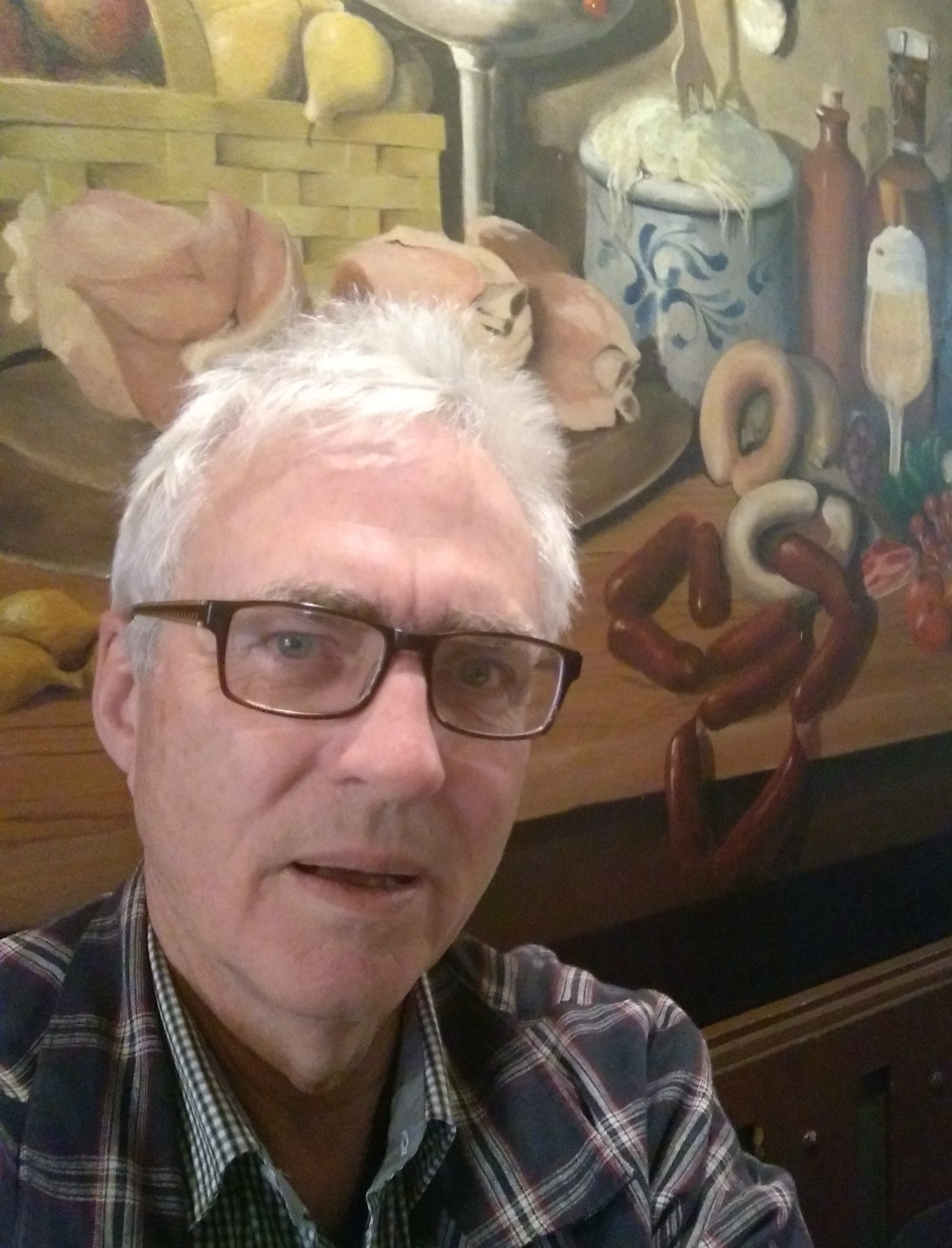
ACCOMPANYING Marion for a few academic weeks in Hannover, Germany, I have just sent off the final revisions to a manuscript that’s kept me busy for many years, being something of a magnum opus, well, that’s my story.

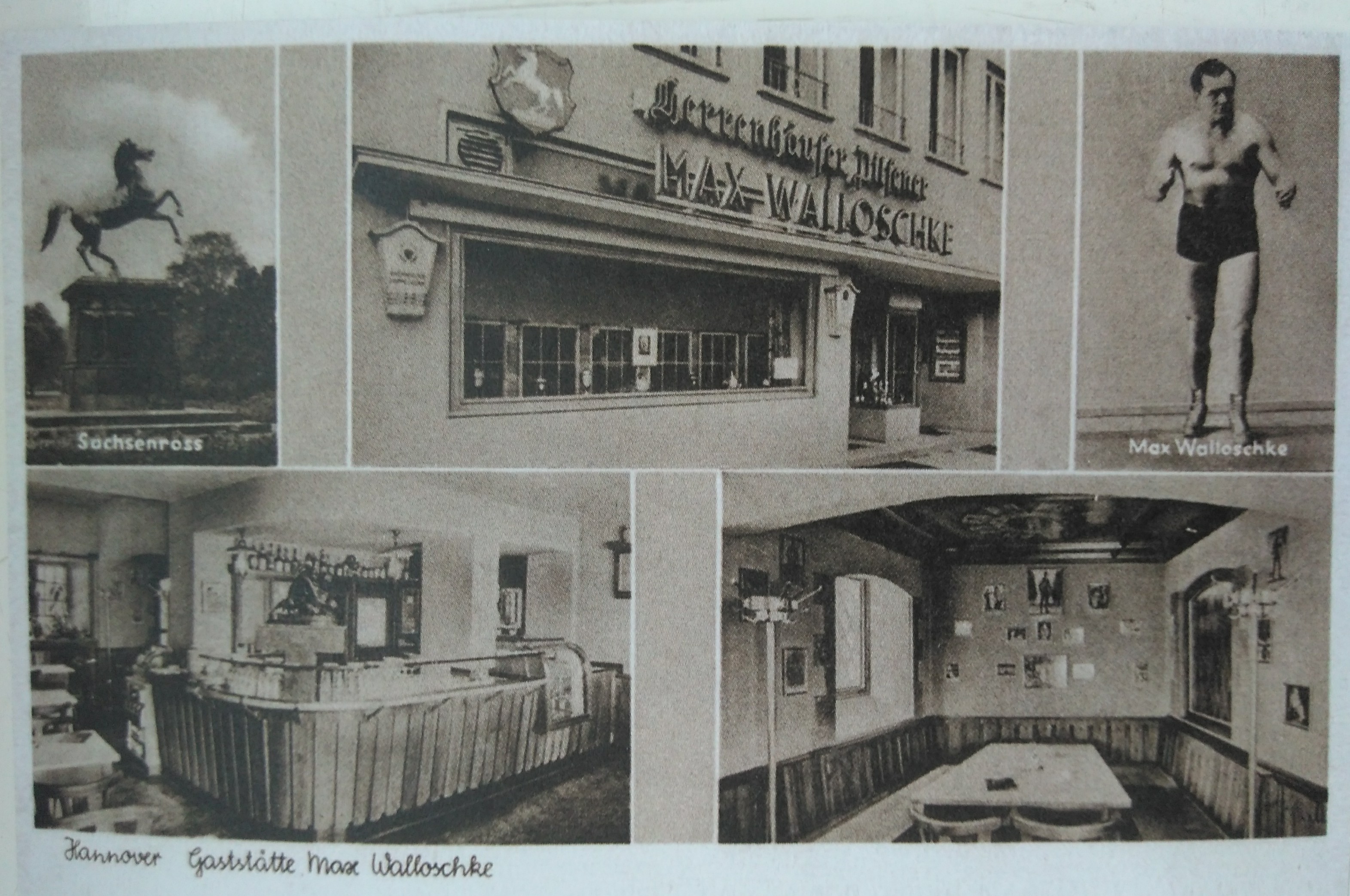
Snap at Max Walloschke
At Max Walloschke restaurant, Hannover

More later, but the title is Meals Matter: A Radical Economics through Gastronomy.

Columbia University Press brings it out in “Spring 2020”, which means (for readers outside such latitudes) in the first half of the year.

Many writers accept that mainstream economics needs replacing.

This book identifies the root cause of the problem, and explains what needs to be done, through Brillat-Savarin’s unduly neglected science of gastronomy.

Max postcard
Max Walloschke retired from wrestling and opened a Gaststätte in 1952

Just food?

Image result for carrot
Magic carrot?

Farmers markets, community gardens and other trendy food alternatives tend to “benefit mostly white, economically secure, and already healthy consumers”, complaims American “scholar-activist” Garrett Broad.

Well-meaning foodies might have recognised that low-income communities, especially those of colour, suffer “food deserts” of food insecurity and obesity, but they do little more than dream about boys and girls being transformed by tomatoes from the school garden…

According to Broad in More Than Just Food: Food justice and community change, such foodie advocates downplay or ignore “systemic injustice in the labor force and other barriers to community health”, leaving them to “reify a neoliberal philosophy of market-driven self-improvement, a strategy that unintentionally absolves the government of its responsibility”.

Elsewhere, he calls this the “magic carrot” approach.

Broad’s discussion is no doubt applicable to Australia, although I was remarking only the other day how the local, self-proclaimed “Organic Foodies” market entirely lacked yuppies and hipsters.

Garrett Broad

His own polemic also introduces apparently the U.S.’s largest grassroots food access initiative, run by the Black Panthers.

In the late 1960s, Panthers chapters across the U.S. turned from armed militancy to “survival programs” — survival pending revolution. The Party fed at least 20,000 children through a Free Breakfast program in the 1968-1969 school year.

His own interest was piqued by coming across Community Services Unlimited, Inc., founded by a chapter in the mid-1970s in South Los Angeles.

The trouble for me is that Broad, as a self-described privileged, vegan scholar, misunderstands the politics.

This blog is called Meals Matter because humans are the cooking animal, coming together to distribute food, and so labour, that is, to make meals.

Happier, healthier, more sustainable meals are certainly “more than just food”.

9780520287457

Broad argues for more community gardens, food co-ops, and so forth, because he wants More Than Just Food. However, in his case, he wants justice.

For him, food is expressly a mere “tool” or “means”. He had “set out to investigate the social justice potential of alternative food activism”.

The Black Panthers never wanted improved nutrition alone, he says. They used food as a conversation starter in favour of social and environmental justice. They built gardens, provided nutrition education, and improved access to healthy food “in the purpose of a much larger cause. They situated food as a vehicle for a more expansive, people-of-color-led social justice project”.

For him, food serves the struggle for social justice. However, what are the oppressive “political and economic systems”, if they are not the way we eat?

He fails to appreciate that justice is a higher cause, which means less basic, as argued by the sages. Fascinated how “ideologists turn everything upside-down”, Marx and Engels observed: “The judge, for example, applies the code, he therefore regards legislation as the real active driving force”. Like the legal eagles, Broad makes justice supreme.

But justice is merely a means, a vehicle for a much larger cause, meals.

His book’s opening epigraph quotes David Hilliard, former Chief of Staff of the Black Panther Party:

We’ve always been involved in food, because food is a very basic necessity, and it’s the stuff that revolutions are made of

Broad has to ask himself: what are revolutions for? Better meals. And better meals can be near at hand.

In their stirringly-titled essay, “Waiting for the Revolution, or how to smash capitalism while working at home in your spare time”, Gibson-Graham argued that, in terms of the numbers involved, and output, “the household sector can hardly be called marginal. In fact, it can arguably be seen as equivalent to or more important than the capitalist sector.”

They gave the piece another subtitle: “Why can feminists have revolution now, while Marxists have to wait?”

Alice Waters and other foodies have proposed school gardens and hands-on cooking, because better meals lead to better meals. Her “delicious revolution” is upon us.