Flipping dietary guidelines

AI fantasy of Trump toasting

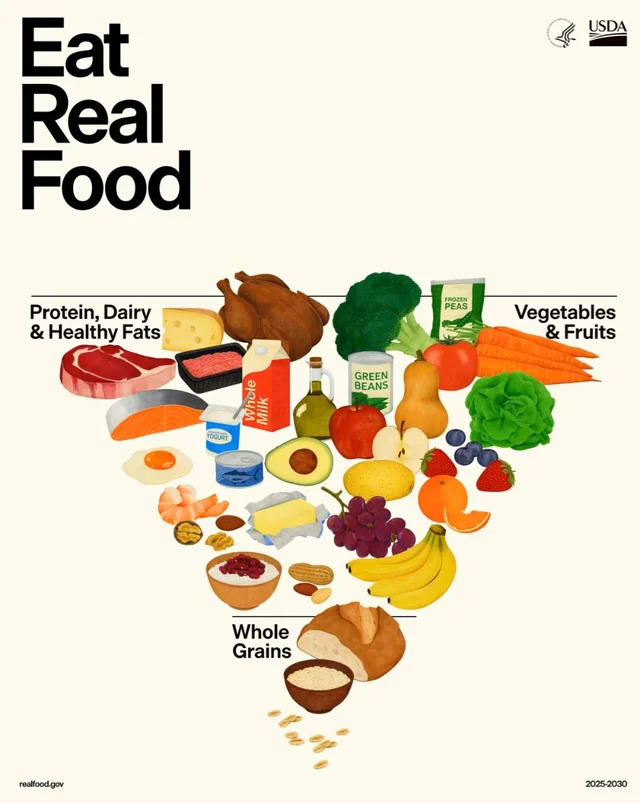
THE TRUMP Administration is “reclaiming the food pyramid” by turning the once familiar nutritional advice upside-down so as to laud meat and dairy. Whole grains and pulses are now squeezed into the sharp end balancing everything else precariously above.

The provocatively flipped dietary guidelines (7 January 2026) seek to dramatise the often fringe views of Trump’s Secretary of Health Robert F. Kennedy, Jr. Here, he gets the chance to encourage beef tallow, which McDonald’s abandoned in 1990 under health pressures (to the detriment of their fries).

The inverted hierarchy might snub mainstream nutrition but, in many way, the advice comes closer to foodie views. It’s hard to complain about the new instruction “The message is simple: eat real food.”

We can endorse a “dramatic reduction in highly processed foods laden with refined carbohydrates, added sugars, excess sodium, unhealthy fats, and chemical additives.” They also recommend: “Avoid sugar-sweetened beverages, such as sodas, fruit drinks, and energy drinks.”

Let’s not get carried away, because the guidelines continue to promote the idea of “good” and “bad” foods with next to no mention of social circumstances. The closest to advocacy of home cooking is the declaration: “Swap deep-fried cooking methods with baked, broiled, roasted, stir-fried, or grilled cooking methods.”

The advice has dropped any mention of alcohol’s involvement in cancer, because it’s “a social lubricant that brings people together”, medical influencer Dr Mehmet Oz explained at a White House briefing. He added that, while in “the best-case scenario, I don’t think you should drink alcohol,” it provides “an excuse to bond and socialize, and there’s probably nothing healthier than having a good time with friends in a safe way.”

Mind you, he might well be excusing after-hours drinks with the boys, rather than extolling the established health benefits of meals together.

Interestingly in this context, both Trump and Kennedy are teetotalers; Trump has never had a sip of alcohol – on the dying advice his older, alcoholic brother; and Kennedy finally sobered up after his arrest for heroin possession in 1983.

“Under President Trump’s leadership, we are restoring common sense, scientific integrity, and accountability to federal food and health policy,” the new guidelines boast. This hints at Trump’s original backing of Kennedy for campaigns that conspicuously repudiate “elites”.

Trump has delighted in offending experts. Yet just as Kennedy’s fringe medical views have often had some justification, even MAGA’s “deep state” conspiracy theories contain grains of truth. The reality here is the so-called state capture by moneyed interests. Corporations rule through armies of consultants and lobbyists, which has greatly compromised Democrat and other centre-left governments world-wide.

Free enterprise took over under the cover of “neoliberalism”, which let leftish leaders embrace racial, women’s, gay, scholarly, arts and other liberal causes. Unfortunately, the fundamental liberation was financial. With money unleashed globally, neoliberalism has given way to the ideology of winning.

Backed by formidable military power at home and abroad, Trump believes that the strong always win. He respects Putin and Netanyahu, but not wannabe strongman Maduro. Simply put, Trump is a fascist.

The imperial president is right about the strong winning, but the real response is strength in numbers. We need to restore John Locke’s plans for democratic republics, where the rule of law would displace the “state of war”. Locke envisaged physiological beings cooperating on mutual preservation through democratic economies. I have argued for this food-based radicalism in Meals Matter.

Locke’s arguments have been maligned and misapplied for three centuries. His common sense needs reinvigorating. Unlikely? To adapt Miley Cyrus, no pretending it’s not ending.

What the world needs now – cooking therapy!

Illustration: AI

PSYCHOTHERAPISTS have moved into “cooking therapy”.

Cooking therapy might help a person for whom the kitchen was a dangerous place when a child. Our bodies carry memories and meanings, including of meals. Couples can benefit.

More generally, chopping onions and listening to pots encourage mindfulness. Kitchen activities even work for aphantasics (like me), who do not visualise flowing streams for relaxation. Slicing potatoes keeps us in the here-and-now.

Counselling academic, and foodie, Michael Kocet taught a course on culinary therapy in Chicago in 2014. By then, cooking had also moved beyond psychotherapy. Psychosocial gains include socialisation, self-esteem and mental health.

Cookery schools promise improved health and welfare. Self-help books now include Charlotte Hastings. Kitchen Therapy: How to Become a Conscious Cook, and Debra Borden, Cooking as Therapy: A beginner’s guide to building mental wellness in the kitchen.

To quote Hastings: “The power of conscious cooking can shift us from the isolation of the individual journey into the security of human experience.”

Food therapy goes beyond the kitchen. Gardening proves beneficial, and the senses are even more involved when dining. The Epicurean “pleasure of the stomach” derives not least from the gut being the source of 95% of the body’s mood-lifting serotonin.

Beneath all this, cooking is the pivot of gathering up and sharing meals and so the basis of society, culture and civilisation. I have written books on that.

Meals put people back in touch with reality, which means ideologies necessarily put meals down. The early Christian Church persecuted Epicureans. Capitalism subordinates life to profit.

To re-ground health, welfare and happiness, we need meal therapy, society-wide!

Illustration: AI

The wondrous materiality of French movie, The Taste of Things

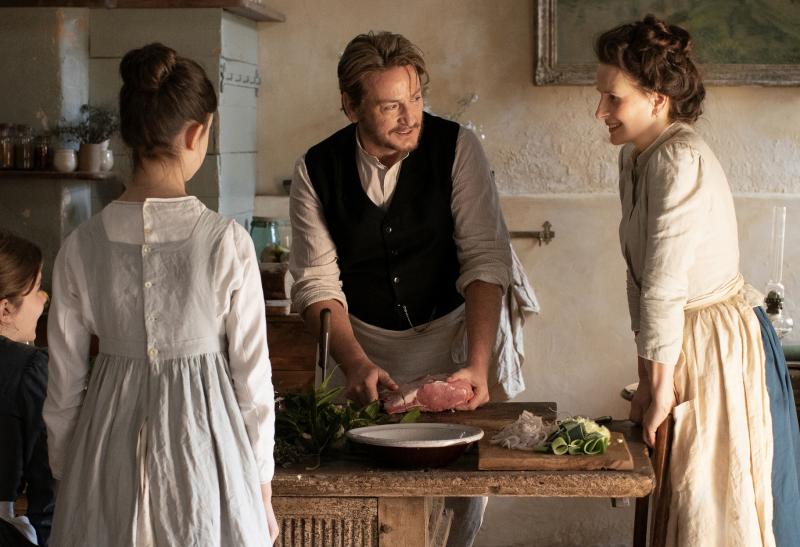
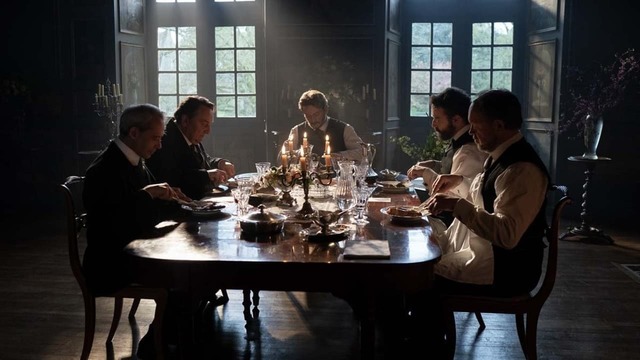
FOR TWO HOURS AND 14 MINUTES, the French movie The Taste of Things observes the preparation and eating of something like nine dishes.

The setting is a provincial chateau in the year 1885, and the focus is gourmet Dodin Bouffant and his cook, Eugenie – played by two considerable actors (and former partners), Benoît Magimel and Juliette Binoche.

Negative reviewers react against privilege and indulgence. The first kitchen scene of 40 minutes introduces an “extremely boring movie showing pots and pans and cooking complicated French recipes” (online comment). Some of the audience walk out.

It’s not perfect – I was mildly irritated by characters informing the audience by telling each other things they would surely already know. Some occurrences seem random – why introduce “electroculture” garden antennae?

Yet the movie is far more than foodie excess or cooking show. The great majority of reviewers are positive. What’s going on?

Musical clue

A clue comes from the absence of music – only used over the credits. Mind you, the Boston Globe reviewer was so seduced, he heard “a romantic score”, though conceding “everything you need to know is conveyed in actors’ eyes.”

The soundtrack relies on clink, clunk, chop, bubble, sizzle, footsteps, birds out the door and window, and occasional words, sometimes among Eugenie, Dodin and helper, as they move between garden, stoves and benches, and among Dodin’s select group of male gourmets, who love the cooking, and the host’s cellar.

“I never before had to direct a film with as much substantiality,” writer/director Trần Anh Hùng answered an interviewer.* “All that material reality is so compellingly expressive, it firmly anchors our characters in daily life. Music would have undermined that.”

Hùng normally likes music, he said, but here it would “bring something that is a little bit fabricated… I wanted it to be very real.”

(Please note, all you restaurateurs who think loud music and noise denote a good time.)

Materialist film-making

Instead of music instructing viewers how to feel, they form their own interpretations. Similarly, Hùng chose long takes, he said, as a way to slow down the pace and give the audience the chance to be a kind of writer, gaining “time to formulate several things” in their mind.

I describe the approach as materialistic, in that the movie carefully shows what’s actually happening at the physical level, among intimates. Emotions arise from mundane cooperation.

“Everything that you see on the screen is real, and everything that we cook for the film, we ate it. Absolutely everything,” Hùng said. He was advised by Parisian chef, Pierre Gagnaire, and the actors were assisted on-set by Gagnaire’s retired colleague, Michel Nave.

“For the crew, it was unusual, because they have done some movies with food. Most of the time it’s fake. To make it very beautiful, you add some different things in it to make it have different texture, color, everything. But here, for this movie, I didn’t want that. Because it’s not about the beauty of the food. But it’s more about showing man and woman at work in that kind of harmony.”

He told the crew the long opening cooking sequence was “my car chase scene”.

Hùng’s wife, Trần Nữ Yên Khê, an actor and this movie’s art director and costume designer, explained the need to just get the setting “right”, and leave the beauty to emerge. “Try to do something beautiful, and it comes across as decorative.”

Happiness

The movie sounds and looks beautiful, allows time for reflection, and so what is it “about”? The Taste of Things gets to the core of cooking and enjoying meals. Hùng extolls Brillat-Savarin, as does my chapter, “Brillat-Savarin’s quest for table-pleasure” in Meals Matter (2020).

Homeliness was suggested by the working title, Pot au Feu (changed in the French to Le Passion de Dodin Bouffant, after the Marcel Rouff novel on which the film is loosely based). Domestic bliss in some present-day kitchen might well have become boring, but French protagonists at the time of Escoffier could believably be immersed in good cooking.

Hùng wanted to “explore something rare in the cinema: conjugality. And even rarer when it works.” With kitchen movements choreographed like a ballet, he sought to show “harmony”.

The 20-year relationship of well-to-do gourmet and cook has confused some movie-goers, particularly since it really doesn’t develop. But the pair are contented with their lives, and Dodin is presumably not surprised when Eugenie refuses proposals of marriage. She only leaves her bedroom door unlocked when she chooses. She gains them the perfect daughter through other means.

The Taste of Things does move steadily towards inevitable sadness, but never with the forced highs and lows of an action movie or even romantic comedy, let alone “reality” tv.

Harmony without drama marks this movie out as beautifully unconventional. Nonetheless, it has a strong motive to show “merely” cooking, eating and companionship, even if that passes. It’s about happiness.

*Interview quotes from Santa Barbara International Film Festival, https://youtu.be/YN5Vy_3a5Ds, and from Gaumont publicity, https://www.perthfestival.com.au/media/h3kd4qcm/the-taste-of-things-press-kit.pdf.)

Dining with aphantasia

TO THINK I reached the age of 30 without knowing this.” I was considerably older than that incredulous online author when I learned about “aphantasia”, just a few days ago.

Aphantasia is the experience of “reduced or absent voluntary imagery”, that is, we aphantasics are not bothered by a “mind’s eye”, nor its equivalents for the other senses.

We are amazed to learn that, when “counting sheep”, many people actually watch imaginary sheep!

It’s a surprisingly late discovery for us aphantasics, and also for science. Psychologists wrote about it more than a century ago, including Fechner (1860), Galton (1880), Bentley (1899) and John Watson (1913). But then the topic disappeared.

Watson himself might have to take some blame by launching behaviourism’s avoidance of subjective experience in favour of external psychological observation, which would be ironic given how he was a non-imaginer.

This last is suggested by Bill Faw (2009), who arguably led the return to studies of “non-imagers”, the name he prefers for himself and others. In 2015, a neurologist came up with the seemingly catchier, “aphantasia”. Under whatever the name, the research remains rudimentary, especially in relation to the phenomenon’s fascination. For instance, published estimates of the proportion of aphantasics in the population range from 0.7% to 2 – 5%.

Many have discovered the condition when a therapist asks them to visualise. They remain puzzled when asked to, perhaps, put an intrusive thought on a floating leaf and watch it drift away. We recognise the condition immediately it’s described.

If I am asked: “Imagine the sun rising,” I get a glimpse, vanishing instantly, like keying in a password. An imagined apple might have some details, and at least seem red, but then I’ve seen standard depictions of apples since learning “A is for Apple”.

Given imagery’s presumed role in memory, non-imagers generally don’t have such strong recall of even recent events, people’s faces or the narrative of their own lives.

Recent research also shows, for example, that we non-imagers might draw a simpler version of a room from memory, but often with more spatial accuracy. Spatial memory follows separate brain pathways from object memory, and aphantasics would generally seem better at it.

No question but that human minds are varied.

My wife Marion and I discovered complementary experiences early in our relationship, but never pinpointed the underlying explanation. From the start, we knew that she’s much better with people’s names, and recall of events.

Whereas I could scarcely remember one line of poetry, she can recite not 10,000 lines, but 10,000 poems (only a slight exaggeration).

She enjoys novels, whereas I can’t arouse much enthusiasm (although maybe for Pride and Prejudice, which she supposes comes from Austen’s relative disregard for description).

We both enjoy movies – they don’t rely on visualisation. Mind you, I often get greater enjoyment than she does from movies based on her favourite novels – they are rarely quite as she imagined.

On the instruction “think of the colour red”, I get a fleeting impression, and move on. When I try to recall the smell of nutmeg, say, nothing happens. Marion has no such trouble.

Researchers referring to “visualisation, “imagination” and the “mind’s eye” betray a cultural priority for vision. Those with a vivid “mind’s eye” usually also have a strong “mind’s nose”, “mind’s ear”, “mind’s touch”, etc.

Reporting in 1880, the early researcher Francis Galton asked respondents to imagine “your breakfast-table as you sat down to it this morning – and consider carefully the picture that rises before your mind’s eye”. Some respondents saw the breakfast table “as well in all particulars as I can do if the reality is before me”. At the other end of the scale: “I recollect the breakfast table, but do not see it.” Galton did not report on other sensory recall, nor pleasures.

Delving into the absence of visual, auditory and other impressions raises questions about meals.

I’ve long been puzzled by the deluge of cookery pages. Why do we need yet another pavlova recipe? It turns out that where I might think “that’s a long list of ingredients”, Marion puts the ingredients together in her head, and decides if she’d enjoy eating the result.

Seemingly following my lack of olfactory recall, I have relative difficulty naming flavours, so that with wine, for instance, I struggle to find “vanilla notes”, “cedar” and “violets”. Instead of identifying particulars, I become immersed in compound sensations, starting with the wine’s “structure”.

That’s like meals as a whole. They are immediate. At a good meal, I am absorbed – engaged with the here-and-now of dishes, places, conversations and their connections. A good meal is complex, and hums. Existential.

Without intricate recall, I enjoy talking (yet again) about past stand-outs, and also look forward to the next experience. I always like to know something is planned.

I am now wondering about the act of writing. Just as some visual artists turn out not to visualise, but set images out in front of them, I love words on paper.

My books on cooking and economies contain numerous details, but these are meant to point to bigger concepts. Some readers might become preoccupied by descriptions, just as so-called “economists” might promote the simple mathematics of price, rather than absorb the full wonder of sharing the world.

Footnote: Research and writing on aphantasia has often been expressed in the negative – it is a “lack” or “disorder”. To quote a recent scientific paper, “visual imagery is absent or markedly impaired.” Even when protesting it’s not a disease, and citing examples of highly successful non-imagers, these same writers still focus on deficits. The very name aphantasia is pathologising.

That’s surprisingly easily turned around, so that one might say, for example, that many people – known as “phantasics” – suffer an overload of imagined sights, sounds, bodily states, and more.

George Herbert Betts reported on visual, auditory, gustatory, olfactory and other imagery in his 1909 study, and declared: “Very much of memory is accomplished without the use of imagery, and much of the imagery which accompanies memory is of no advantage to it.”

Questioning imagination’s importance for reading literature, he worried: “if a flood of profuse imagery should accompany the words as we read, interpretation and appreciation would be seriously interfered with.”

Without impediment, non-imagers engage with the factual and here-and-now, and think clearly.

Furthermore, aphantasia might be somewhat protective against PTSD, major depressive disorder, social phobia, and bipolar disorder (e.g., Cavedon-Taylor, 2022), given how these can be reinforced by visualising – flashbacks, or too vividly imagined dangers.

And yet, without leaping sheep, floating leaves or the sweet scent of vanilla, aphantasics might be exposed to other anxieties.

I am just beginning, and so is research generally.

For a sample:

Galton, Francis (1880), “Statistics of mental imagery”, Mind: A quarterly review, No. 19 (July 1880): 302-318

Betts, George Herbert (1909). Distribution and Functions of Mental Imagery (Columbia Univ. Contr. to Educ. No. 26.), New York: Teachers College, Columbia University

Cavedon-Taylor, Dan (2022), “Aphantasia and psychological disorder: Current connections, defining the imagery deficit and future directions,” Frontiers in Psychology, Published online 14 October 2022


Faw, Bill (2009), “Conflicting intuitions may be based on differing abilities: Evidence from
mental imaging research,” Journal of Consciousness Studies, 16(4), 45–68

Fox-Muraton, Mélissa (2021), “Aphantasia and the language of imagination: A Wittgensteinian exploration,” Analiza i Egzystencja 55 (2021)

Cavedon-Taylor, Dan (2022), “Aphantasia and psychological disorder: Current connections, defining the imagery deficit and future directions,” Frontiers in Psychology, Published online 14 October 2022
“Delicious” joins the great foodie movies

Words are the aspect of meals that helps their planning, description and acclamation.

Likewise, movies are additions – before, after, or with a glass of wine or popcorn –  that can also proclaim dining’s centrality to human existence.

Any good movie is bound to include meals. Charlie Chaplin shares his boiled boot in Gold Rush (1925). Katharine Hepburn and Spencer Tracy play battling barristers in Adam’s Rib (1949), so that George Kukor establishes their happy domestic relationship by them working comfortably together in the kitchen.

It’s not enough just to show pretty food to make a foodie movie – that’s like bringing in stars like Meg Ryan and Billy Crystal without actually establishing their love.

Foodie movies (initial list below) have to bring the whole world together, however fleetingly. As Italian cook Primo reveals in Big Night (1996): “To eat good food is to be close to God.”

Délicieux (Delicious) (2021)

Where does Eric Besnard’s new movie, Delicious, rate on the foodie scale?

Not up with Babette’s Feast, but what is? But it sits alongside, say, The Truffle Hunters (2020) and Pig (2021).

Some movie reviewers mustn’t be blessed with the “sacred fire” that Brillat-Savarin described, so that they “regard meals as hours of enforced labour, put on the same level everything that might nourish them, and sit at table like an oyster on its bed”. Accordingly, critics who found Pig merely a trite satire revealed they had missed the central, dramatic point.

In Delicious, another big, obsessive chef has also retreated to the woods, but, whereas Nicolas Cage’s recluse produces one overpowering meal, Grégory Gadeboi’s character ostensibly opens the first restaurant a few days before the French Revolution.

Not that Delicious even tries to be accurate in its details. By 1789, a new kind of dining had already emerged based on restoring broths or “restaurants”, served in private booths. Even more to the point, Antoine Beauvilliers had already brought aristocratic dining to the streets of Paris.

I talk about these developments, and explain why true restaurants are “open domestic households”, in Meals Matter.

Overall, nonetheless, through unashamedly fictional means, Delicious makes bigger statements about the fundamental importance of gastronomic pleasure, and its relationship to French foundation myths.

It is, for example, entirely believable that the French Church decried underground produce as further from God – chef Manceron combines potatoes and truffles in his little pastries that give the movie its title.

In anticipation of you catching Delicious, I won’t give more of the plot, except to disclose that Isabelle Carré, although not so well known outside France, is mesmerising.

Initial list of foodie movies:

Tampopo (1985); Babette’s Feast (1987); Chicken and Duck Talk (1988); Au Petit Marguery (1991); Like Water for Chocolate (1992); Eat, Drink, Man, Woman (1994); Big Night (1996); Chocolat (2000); Mostly Martha (2002); Sideways (2004); Ratatouille (2007); The Trip (2010); The Lunchbox (2013); The Truffle Hunters (2020); Pig (2021); Délicieux (Delicious) (2021)….

Postscript: Lock-down would appear to have unlocked ridiculous numbers of foodie movies. I’ve just noticed (September, 2022) a couple more that don’t in this case sound all that appetising, namely, Flux Gourmet and The Menu.

Add your favourite foodie movies in the comments.

Why do we cook? It’s all about sharing

IN 1773, JAMES BOSWELL called human-beings the “cooking animal”. Yet, for all the cooking we do, we rarely ask why. And when we do, the most common explanation is far too narrow, and even misleading.

Appreciating cooking’s basis in cooperation flips conventional representations of not only cooking, but the world.

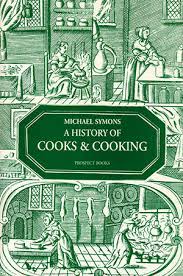
History of Cooks and Cooking, The Food Series by Michael Symons |  9780252071928 | Booktopia

Dictionaries head the disinformation. The Concise Oxford is typical, stating that to “cook” is to “prepare (food) by heating it”. Miriam-Webster suggests “to prepare food for eating especially by means of heat”.

Certainly, the verb “cook” often means using heat. But, as every cook knows, cooks do much more. Not merely standing at the stove, they freeze, pickle, and serve raw. They also weigh, count, estimate, clean, chop, slice, toss, beat, stir….

Before the actual preparation, they go shopping, run to the garden, open cupboards, and organise deliveries. Then they carry to the table, ladle, carve, arrange. Still smiling… wash up, take to the compost bin…

Even that is far from all cooks do, for they have taken formal or informal lessons, learned family recipes, made ethical choices, kept an eye on the budget, followed the festival calendar, and paid some attention to diners’ preferences. All this just to heat food?

While the assumption is often that heating improves taste, scientists such as evolutionary primatologist Richard Wrangham have claimed that such pre-digestion added to human efficiency (Catching Fire: How cooking made us human, 2009).

Paleoethnobotanist Kristen Gremillion explained in Ancestral Appetites: Food in prehistory (2011):

“The overarching benefit of cooking is that it acts as a kind of predigestion that extends the human body’s ability to extract nutrition efficiently, greatly increasing our ability to adapt to changing circumstances.”

As well as heating, Gremillion accepted other transformational techniques, including grinding, soaking and fermenting. Michael Pollan enshrined the idea in the title of Cooked: A natural history of transformation (2013).

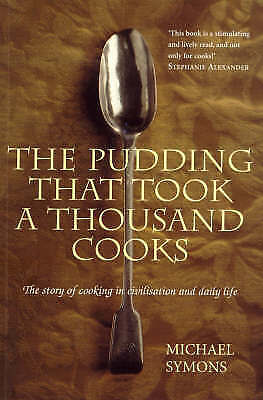
All interesting, but none of this goes far enough. A fuller picture emerges with a distributional theory. This is the key argument of my book, A History of Cooks and Cooking, which came out in 1998. (The original publishers called it, The Pudding that Took a Thousand Cooks, and it has always remained for me, Cooks Made Us).

The cooks’ more exemplary instrument is not fire, but the knife. Our ancestors were cutting with flints well before – a million years before – they tended flames. They foraged, sliced and chopped to share food, and that continues to this day.

Heating food might increase its nutritional potential, but distribution is at the heart of society and culture. The archetypical campfire or pot brings people together, so that cooks weave entire ways of life. Cooks create civilisation.

I picked out the three moments of cooking: acquisition, distribution and organisation. That is, cooks gather food, and then divide and share it around. Throughout, they work with cultural patterns.

By dividing up food, cooks divide up labour, central to economies, as I have now explored in Meals Matter: A radical economics through gastronomy (2020).

Being so fundamental to human existence is cooking’s problem. Giving ultimate value to the sharing of meals challenges self-proclaimed authorities, who have championed their great tasks of religion, war, finance, industry and scientific inquiry. “Preparing food by heating” is readily distanced as “women’s work”.

Threatened by grassroots insurgency, ruling ideologues have consistently trivialised cooking. Plato’s philosophical dialogues explicitly put cooks down. Money’s wondrous logic now demands obedience.

With the power preaching from the capitalist clouds, we must, together, restore everyday reality. A good start could be in dictionaries, Wikipedia, science, common understandings…

Subversive political philosopher John Locke explained in a letter from France in November 1678: “We are not born in heaven, but in this world, where our being is to be preserved with meat, drink, and clothing and other necessaries that are not born with us, but must be got.” That’s what cooks lead us in, together.

Stock photo
Cooks Made Us in its original guise, 1998

Now for something completely different … cheese savouries

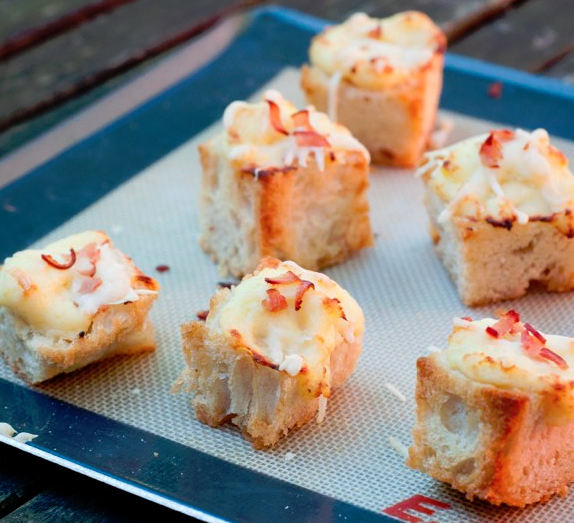
Mini croque monsieur bites on eatlivetravelwrite.comSOMETIMES THINGS fall into place so neatly as to be scarcely noticed. But I have never let myself forget the good fortune in discovering a simple savoury that we served to every customer from the first night of our restaurant in Tuscany in 1979 until Jennifer Hillier shut the doors on the Uraidla Aristologist seventeen years later.
The cheese savouries became minor celebrities, and various recipes have popped up in magazines and the internet over the years. Oddly enough, no-one seems to have revealed our source, until now.

To quote a recent correspondent with this blog:

Hi Michael – way back when living in Adelaide, I visited several times your lovely Aristologist restaurant in Uraidla – and so often reflect on the wonderful food that came to our table. I was wondering if your recipe for those lovely ‘cheese aperitifs’ that greeted us at the table as we began our evening was available in any publication? Sitting here in London on a grey morning, with this awful virus being the latest ‘panic’ we are facing, I was thinking how lovely it would be to be guided as to how to rekindle the taste buds with these lovely ‘bites’. If you could send me in the right direction, that would be wonderful.
with warmest wishes
Jill

A quick online search showed up this version, “Grown-up grilled tomato and cheese sandwiches” on the blog of Mardi Michels, now living in Toronto, and who admitted she first ate them “at the legendary Uraidla Aristologist restaurant in the Adelaide Hills, where I was fortunate enough to dine a few times when I was way too young to really appreciate it”.

Mardi has added tomato in Toronto


That’s Mardi Michels’s photo, here. She wrote about them again as “Croque Monsieur bites”, which is the photograph at the top. We only ever grilled them draped in grated cheese.

On the night before we opened the Cantina di Toia, we were still desperately seeking something to serve with a glass of the Fattoria de Bacchereto’s vin ruspo, the local, fresh, light, rosato-style wine that makes an excellent aperitivo. The best Sydney restaurant back then – Tony and Gay Bilson’s Berowra Waters Inn – would open with something with a glass of champagne. If such a welcome was good enough for them, it was good enough for us. Like them, we offered a fixed price meal (with several choices), which we thought of as a “licence for generosity” (a description Gay agreed with).

Il Libro della vera Cucina Fiorentina: Paolo Petroni ...

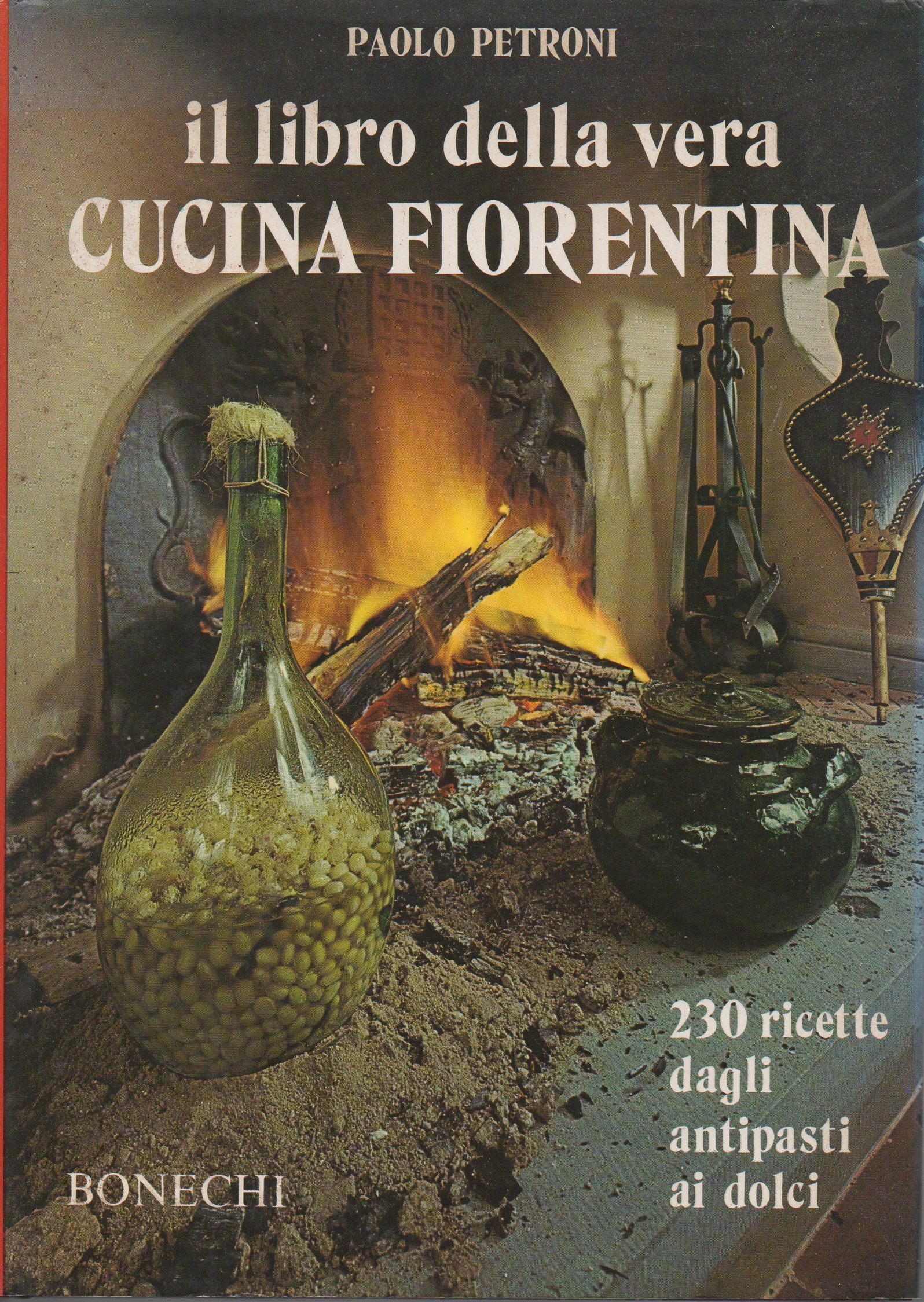
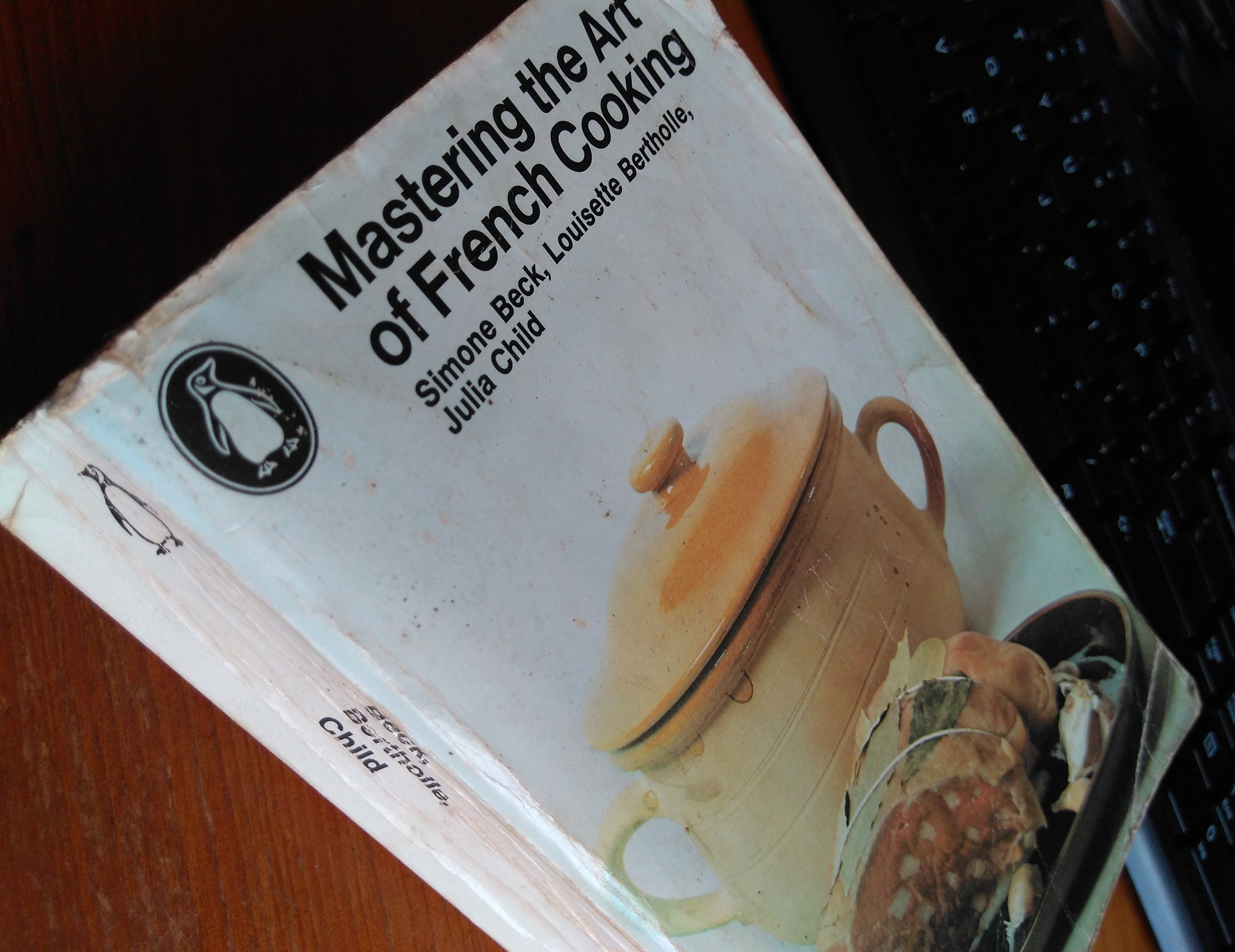
In desperation, where does a person turn? We loved Paolo Petroni’s serious local recipe book, but wanted something less familiar for our customers. Italians scarcely knew even basic French things like quiches, let alone the Antipodean Pavlova (both of which we served). So, I checked out Elizabeth David, Jane Grigson and Mastering the Art.

It was in this last that I found “Croûtes [Toasted Bread Cases]” on page 222 of the Penguin paperback edition. The selected filling became “Fondue au Gruyère [Cream Filling with Swiss Cheese]”, two pages later. I presume that was the original filling – in my head, it’s just a thick, white, cheese sauce. A béchamel, if you will.

To summarise our method: we purchased white, unsliced “supermarket” bread a day or two early (slightly older is easier to handle). Take off the crusts, then cut into approximately 4cm-thick slices, which are divided both ways, to come up with cubes. Next, the tricky bit. After doing this countless times, I became committed to a perfect, little, sharply pointed knife, with which I hollowed the cubes out exceedingly neatly. Brush with melted butter, and crisp a little in the oven until pale gold.

Meanwhile, you will have made a thick white sauce. That is, heat flour and butter in a saucepan to make a golden paste, add milk, slowly at first to stir out even the possibility of lumps. Add grated cheese. Following Beck, Bertholle and Child, we “enriched” with an egg yolk or two. (Did we grate in nutmeg? – not sure.) Fill the cubes, covered with a pinch more cheese, and brown them in the hot oven.

Think that’s right, Jill! It’s many years since we made them. But you now have the source recipe.

Cheese savouries Mastering

The cone of corporate creepiness

Plums in cone 2
Zwetschgenpflaume in market cone

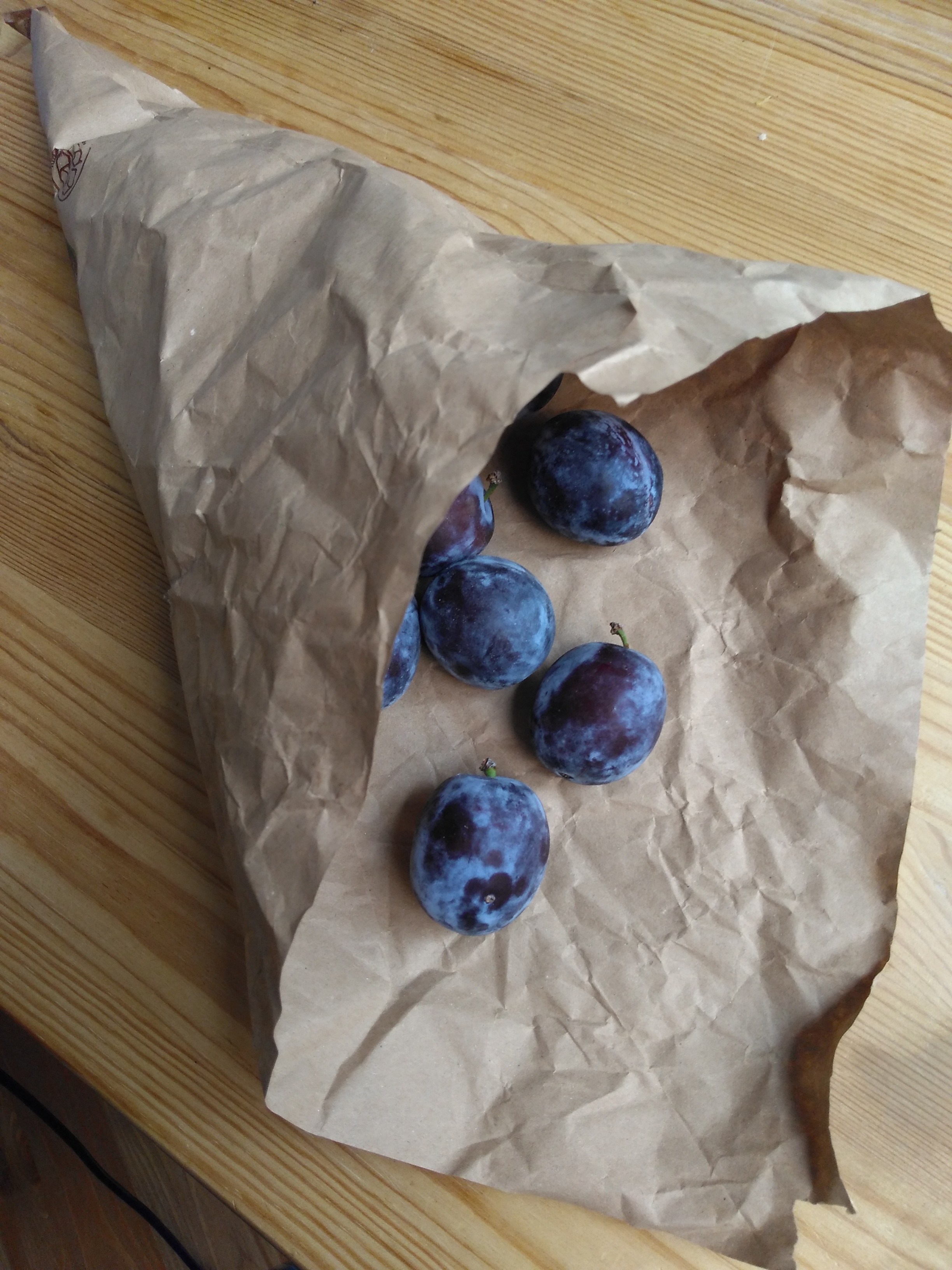
STALLHOLDERS AT THE weekly Lister Meile street market here in Hannover (Germany) sell fruit and vegetables in brown paper cones. At the last market, we picked up highly seasonal plums. As the photo shows, they are a type of damson.

We knew that Zwetschgenpflaume had just arrived on the market, because they featured on the specials board the night before at restaurant 11A Küche mit Garten (11A Kitchen with Garden). The name derives from its address, being in the square that translates as Kitchen Garden.

(Horror alert: creepiness coming).

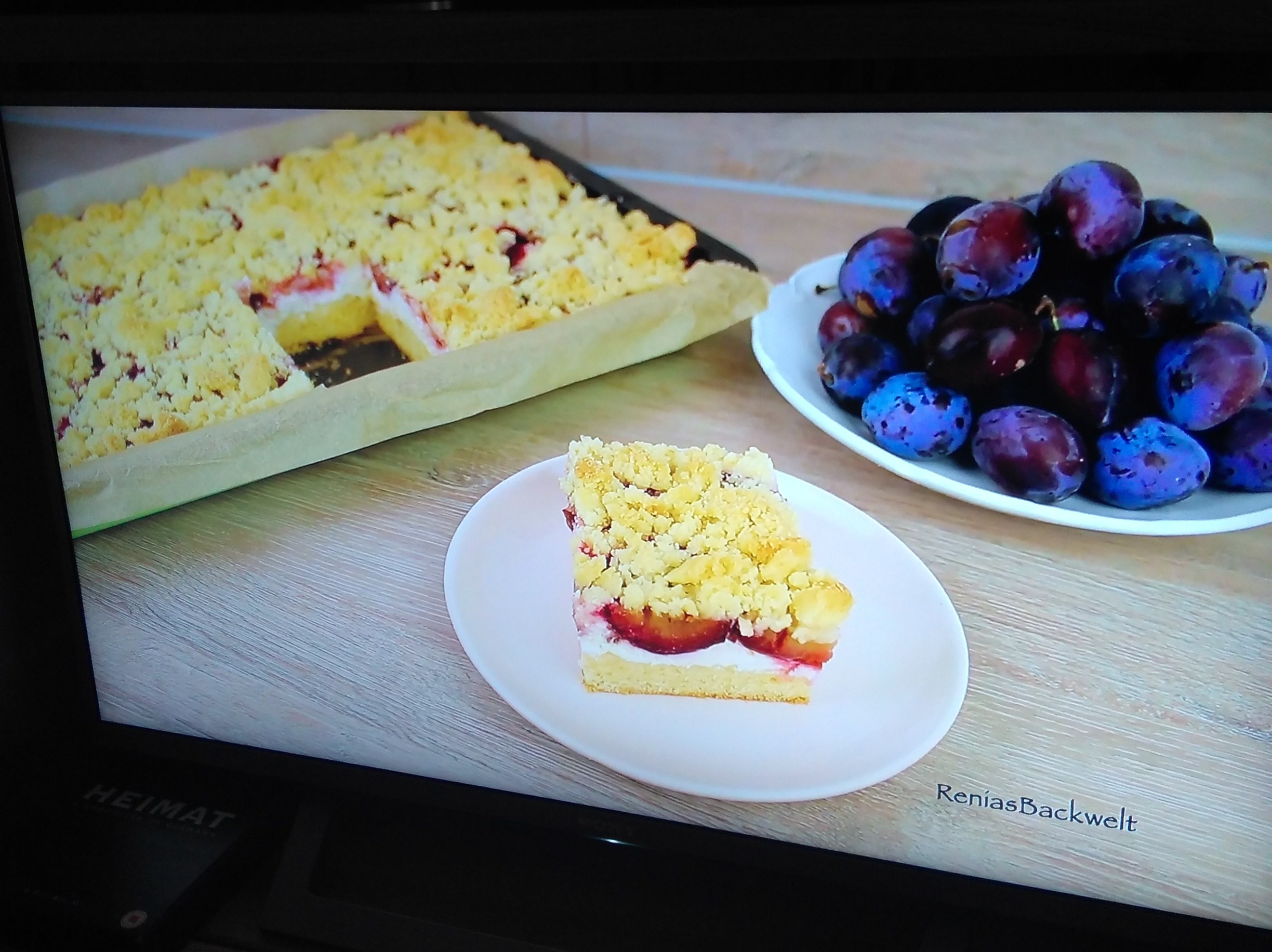
My mobile phone has taken to opening with a YouTube suggestion, and when we returned from the market, it proposed a demonstration of how to use the plums.

Plum video 2
Renias Backwelt demonstrates how to use Zwetschgenpflaume

How did it know? I can think of three possibilities: that it was coincidental, that google tracked us at the market and the plums are in season, or that google had eavesdropped, and heard the word.

That was so creepy that, as soon as I showed Marion the video running, I turned it off. To be correct, I thought I turned it off, because it disappeared from my phone and started on a television in the next room. We’d last turned on the tv the previous evening, making our way through dvds of the wondrous 1982 series of Heimat.

plum-video-1.jpg
The finished product (taken from Renias Backwelt)

Adding to the horror, Mozilla had only just sent a blog item about how you can’t believe even baking videos any more, with a link to Sydney dessert-influencer Ann Reardon showing how so-called “content farms” are crueling the internet.

A “content farm”, such as So Yummy, creates low-grade “how to” videos to game the algorithms and drag in advertising dollars. That reduces the income of more serious posters, such as “Renias Backwelt” (Renia’s Baking World) with her plums, or Ann with “How to Cook That”. While I cannot imagine who would make Ann’s novelty dessert items, including a Prince Harry chocolate sculpture that took her three days to make, So Yummy has more than 100 million views a month with videos that merely look like cooking videos with their boring bits speeded up. As Ann demonstrates, So Yummy’s cooking instructions are way post-fact. The recipes she attempts don’t merely fail, they plainly would never work.

Incidentally, I have retained quotes around “content farms” as maligning farms; they are content production lines.

The monolith at the top of surveillance capitalism, Google owns YouTube and so much more, but does it really listen in through microphones in homes, cafes, offices and therapists’ rooms?

The next day, I received another Mozilla post:

“Hi Michael,

“If you have a voice assistant in your home or on your phone, have you ever been concerned that someone from the company could listen to your voice recordings?

“Recent news coverage confirms that suspicion.”

According to the quoted sources (Mozilla Foundation, “What can you trust on the internet?“), eavesdropping is now banned in the EU, but I still worry.

Returning to humour might distract from the creepiness. The secret agent comedy series Get Smart had a device called the “cone of silence” – those inside the bubble couldn’t hear; those outside could.

Or I might also cheer us up by turning to a second highly seasonal German phenomenon on the streets the past day or two: the two-century-old tradition of the Schultüte (school cone). A Schultüte is sometimes also called a Zuckertüte (sugar cone), because it is a large cone, almost as big as a small child, that contains sweets, toys and school items.

School cone

The cone marks an important rite of passage – a child’s first day at school. Parents have made or purchased a cone, filled it with the items, and hung it on a tree at the school. The child carries it home to open at a family party.

We saw children carrying them home yesterday, and I snapped an illustration of one, in a line-up of first-day-of-school children’s books, each showing cones, in the window of the nearby library.


Borrowed kitchens

Toaster tongs

Restaurant dining teaches new dishes, and how much better ingredients can be than we thought. And civil behaviour. Working in someone else’s kitchen – perhaps house-sitting, leasing an apartment or just contributing a course – teaches about equipment.

A borrowed kitchen can show that other people don’t cook or, if they do, put up with thin saucepans and ineffective knives. But we often learn useful tips.

No doubt you have lifted out toast without burning your fingers using toaster tongs all your life. I only discovered them in a sunny apartment in Le Marais a few years ago.

See original image
Couvercle

Our present Latin Quarter studio provides more basic kitchen equipment. No toaster tongs, but why no ordinary kitchen tongs? I don’t really miss a microwave oven; the small, bench-top oven is handier.

We do have  “1 Couvercle (petit)” and “1 Couvercle (moyen)“, which translate on the inventory as “Cover (small)” and “Cover (big)”. These are interchangeable lids for the three sizes of “Casserole” (saucepan).

The name, “ouvreboîte camping“, puts the familiar can-opener in its place, as does the translation, “Military can-opener”.

clef-universelle
Clef universelle

The item, “1 Clef universelle” (shown left), translates as “Sardine tin key”. I recognised its purpose immediately, having grown up with smaller versions welded to such tins. Searching the supermarkets, we are yet to find a tin without its own ring-pull. We’ll hunt the specialty shops.

How weird is Andrew Leigh? As exposed by Annabel Crabb, culinary investigator

Kitchen Cabinet - New Season

LABOR FRONTBENCHER and “economics brain box” Andrew Leigh enjoys the same lunch every day in his Parliament House office, Canberra. A staff member, Jennifer Rayner, confirmed “it’s pretty well the only thing I’ve seen him eat.”

Training an average hour daily for marathons – he has run three so far this year – Leigh told television journalist Annabel Crabb: “I run a lot, so I can basically eat what I like.”

And so what is his “usual”? His daily indulgence is peanut butter. Every lunchtime, Andrew Leigh spreads his canola margarine and peanut butter on a white bread roll.

Why smooth rather than crunchy peanut butter? inquired Crabb. “I can eat it more quickly.”

The former economics professor organises his life according to cost-benefit analysis, he explained, and peanut butter “tastes good, and doesn’t take long to prepare”.

Why then devote so much time to running marathons? Crabb countered. He must get pleasure from them, he decided.

AKL_with_KBL_photo.jpg

The senior politician said his grandfather, Methodist minister Keith Leigh, had celebrated his 50th birthday by running 50 miles, which is almost two marathons, back-to-back. He died shortly after, running up Mount Wellington in the snow, a route that Andrew Leigh repeated in his grandfather’s honour on 17 November.

Leigh’s lunchtime interview is Episode 13 of Annabel Crabb’s Canberra Al Desko, which is an online companion to her Kitchen Cabinet, a series in which a politician cooks the main course, Crabb brings a dessert, and they chat.

Her culinary reports have been condemned as “fluff” that “humanises” politicians. But such a reading certainly does not work for de-humanised Leigh. He must come near the top of the list of politicians Crabb showed to be manifestly uncomfortable in the kitchen.

Under the heading, “Junk food journalism: Why Annabel Crabb’s Kitchen Cabinet is toxic”, Amy McQuire expressed her “disgust” (New Matilda, 29 October 2015). This was not my main complaint that Crabb’s vegetarianism unfairly narrows the menu. Rather, McQuire reported that the show was “about as nutrient rich as the majority of her desserts”.

For McQuire, the show represents the “insidious spread of propaganda, soft interviews with hard-line politicians”. The interviews coat “with sugar frosting” the “numerous acts of structural violence” by some of the most powerful Australians.

Agreed, her kitchen visit with former hardline border protector, now Treasurer, Scott Morrison, showed him to be not quite as freaky as I had originally thought, but that was pretty freaky. As usual, Crabb was much sharper than “fluffy”, leaving my companion fuming at Morrison’s shallow, self-satisfied theology. In her defence, Crabb does not over-grill her cooks in the manner of the 7:30 Report, but brings out their natural flavour. The politicians’ openness in the informal setting is Crabb’s own defence.

Incidentally, if we believe in “structural” forces, then Morrison surely showed himself to be victim of capitalism, authoritarianism and chauvinism, all wrapped up in the Shirelive church’s prosperity gospel.

Furthermore, Crabb’s “humanising” is indiscriminate, revealing Greens leader Richard di Natale to be a culinary star, reaching back into his Italian roots to make salami and pizze. Sharing Ricky Muir’s beloved campfire showed the four-wheel-drive and wheelie enthusiast to be an unusually earnest politician (for whom fellow Senator di Natale also admitted admiration).

Fairfax television critic Ben Pobjie found it “easy to be nauseated by last week’s KC [Kitchen Cabinet] episode, wherein Annabel had a spiffing old time cooking with Scott Morrison, trading amiable banter while carefully avoiding the topic of irredeemable evil. Crabb is generously acting as a bonus PR arm for Australia’s parliamentarians.” I go along with Crabb’s belief that she’s helping democracy, rather than joining in its typical trashing.

Law academic Sarah Keenan discovered that the show “reproduces a culture of white Australian entitlement to master and consume any and every cultural product, regardless of who it belongs to”. She went on: “As Crabb and Morrison joyfully prepare and eat the food [samosas] of the very people Morrison prevented from entering Australia, they perform their white Australian entitlement to own and consume what does not belong to them.”

Anticipating the bush tucker of Indigenous politician Nova Peris, Keenan predicted: “Crabb will devour the food hungrily, remark upon its delicious flavour and allow the nation to keep unsavoury topics like structural racist violence off the table.”

Like many of the show’s politicians, these critics reveal frighteningly little appreciation of the gastronomic basis of life. They have fallen victim to the same dehumanising institutions and inhospitable policies as the ascetic Andrew Leigh, spreading his peanut butter, not offering any to his guest, and then even refusing to eat in front of the camera because eating would not look “attractive”.

Mercury_Front_Page.jpg