
The missing analysis: How money trumps people

STEALING FREEDOM, CAPITALISM trounces liberals.

In the recent U.S. Presidential election, whichever side you voted for, money won.

One party was aligned to neoliberal rationality and the other, the victors, represented maverick disruption. Either way, corporations won.

For more than two centuries, money stole liberty from the people. Corporate apologists eroded individual integrity in favour of laissez-faire, free enterprise, and neoliberal capitalism.

After the Cold War, promoting “liberty” for money world-wide, corporations gained neoliberal outsourcing, de-regulation and tax reduction. As a quid pro quo, newly-educated worker/consumers sought various forms of social and cultural liberation.

However, with states captured, rule by supposed rational “elites” has been giving way to rampant oligarchy.

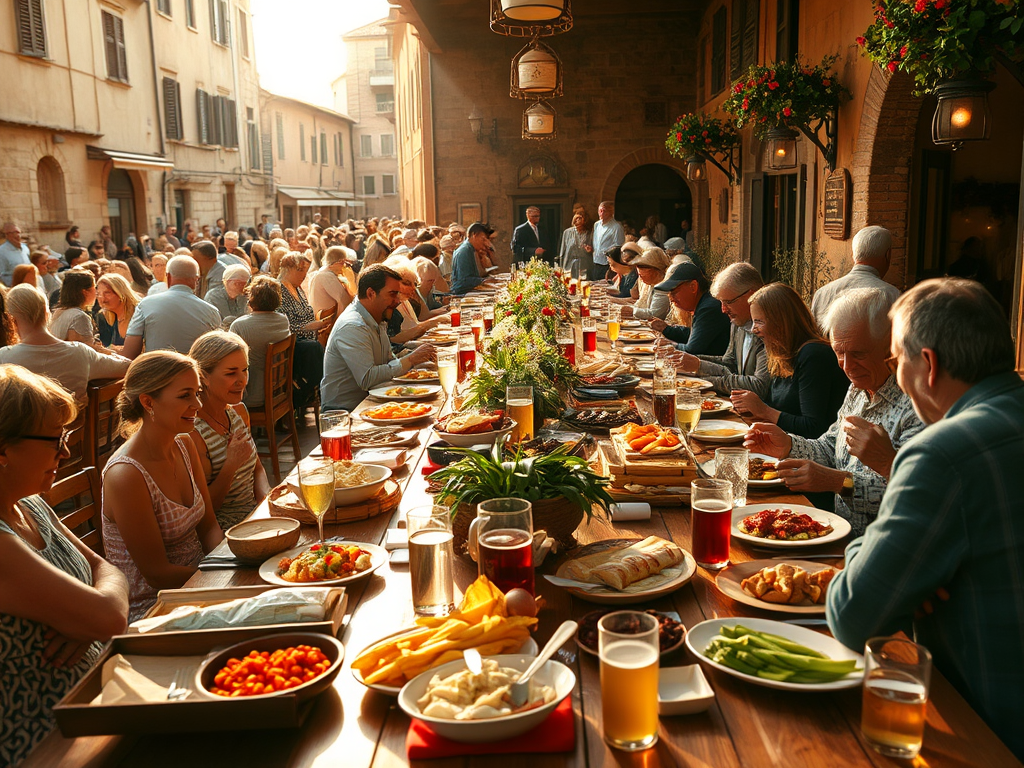
The Democrats and similar parties need to “get back to the grassroots”. More than that, left- and social-liberals must rediscover the Enlightenment understanding of liberty belonging not to corporations but to the “preservation” of all individuals through meal-sharing.

Let the global banquet begin!

For more, read Meals Matter: A radical economics (Columbia University Press, 2020).

Doomed to disruption

Capitalism has abandoned neoliberalism and gone disruptive

FOLLOWING perestroika and glasnost and the collapse of the Soviet Union in 1991, capitalism’s boosters trumpeted “liberty” worldwide. Demanding liberation for all, a new Pax Americana would make everywhere safe for corporations.

Under big money’s global message of freedom, such left-liberal political leaders as David Lange, Paul Keating, Bill Clinton, Tony Blair, Helen Clark, Kevin Rudd and Barack Obama pushed progressive cultural reforms with particular support for racial, women’s, gay and other rights.

The trap was that the “rights revolution” in such areas as feminism and multiculturalism provided cover for the corporate capture of government. Under the banner of neoliberalism, the same leaders pushed through deregulation, fiscal “rectitude”, lower corporate taxes, “flexible” job markets, outsourcing, lower trade “barriers”, individual responsibility, etc.

In the flurry of freedom, cultural liberation was outmatched by the bolstering of corporate power.

With governments now firmly in its grip, capitalism moved from neoliberalism to “disruption”. Facebook boss Mark Zuckerberg instructed: “Move fast and break things”. Powerful corporate leaders from Zuckerberg, Musk and down asserted their sacred right to do what they wanted – AI, rockets to Mars, armaments, opioids, drill, baby, drill…

Writing about the “disruption machine” in the New Yorker in 2014, Jill Lepore observed that innovation had become “the idea of progress stripped of the aspirations of the Enlightenment, scrubbed clean of the horrors of the twentieth century, and relieved of its critics”.

Long-time Silicon Valley reporter Kara Swisher (Washington Post, 15/02/24) had “watched founders transform from young, idealistic strivers in a scrappy upstart industry into leaders of some of America’s largest and most influential businesses.” With few exceptions, “the richer and more powerful people grew, the more compromised they became.”

Upon Trump’s election as President, digital CEOs rushed for an audience, Swisher reported:

“There was a heap of money at stake, and they wanted to avoid a lot of damage the incoming Trump administration could do to the tech sector. … they also wanted contracts with the new government, especially the military. … More than anything, they wanted to be shielded from regulation, which they had neatly and completely avoided.”

The “invisible hand” of money unleashed disruption (and corruption), and broke pay parity, democracy and civility (not forgetting nature). Along with that, fewer and fewer billionaires supported left-liberal causes, preferring to boost their own fortunes by backing think-tanks and increasingly authoritarian ideologies.

Right-wing populists blamed the “politically correct”, the “woke”, university-educated “elites”, and mysterious liberals who controlled the “deep state”. Raising the “cloud of confusion”, Murdoch opinion-leaders baited their opponents until seeming actually to believe environmental degradation was an esoteric belief, and supporting women of colour impoverished white men.

Historian Ellen Schrecker has charted how the unprecedented invigoration of American universities during the Sixties eventually rebounded, when the right both attacked universities’ “liberalism” and corporatised them (in her studies of universities’ Lost Promise (2021) and Lost Soul (2010)).

Those endeavouring to save the welfare state, worker rights, universities, democracy and the environment have been tempted to display militancy. Israel’s brutality has now prompted campus protests in the Sixties manner.

Caution is warranted, nonetheless. Given how abusive politics suits aspiring demagogues, supporters of left/progressive/Green politics should prefer exposing the sin of over-commitment over indulging in it. Rather than shout back, the liberal left could usefully resort to honesty and openness, and appreciate complexity.

Arguing the benefits of civilised society also means understanding politics more deeply than as just warfare (“class struggle” already proved insufficient).

Contesting the authoritarian appeal of “the strong always win” means re-discovering lost principles. Countering disruption requires a return to something more like Enlightenment political philosophy, seized and shattered by capitalism.

The pre-capitalist basis of radicalism is described in Meals Matter: A radical economics through gastronomy (Columbia UP, 2020). The book also shows how money’s polemicists borrowed selectively from liberal-democratic arguments, and trampled on them.

Grassroots change comes from care and conversation at and about meals (at their different levels)

Australian Blak activist Natalie Cromb has just advocated, with “violence all around us”, for “reimagining our communities to be as they should be – caring, nurturing, healthy, happy and with enough”.

Cultural density clash

See original imageParis has relatively high cultural density. Even modest cafes, bistros and restaurants are meant to be run correctly, I argued the other day.

Crowded, pedestrian-friendly streets and stair-filled buildings help keep people slim. I can add that significant social solidarity – more dining together – protects not only against sugar-snacking, but also against competitive individualism, which provokes mental harm and binge eating.

Such observations provide a contrast with Australia, which might have let more sunlight in when it was the land of the “fair go”,  when lucky country inhabitants would say, “she’ll be right, mate”, when the cuisine was “one continuous picnic”, and when waiters were notoriously slack. But a loose Australia was left comparatively exposed to a hazardous new regime.

Paris is the capital of a relatively tight French republic that demonstrates that any future Australian republic cannot merely banish the monarch, but has to put real power into the hands of the people through a strong state. Here in France, for both good and ill, people gather relatively keenly behind the tricolour, and take seriously “Liberté, égalité, fraternité” (“liberty, equality, conviviality”).

Australians have an embarrassing flag, carrying four Christian crosses that signify colonialism, theocracy and beer-swilling. It’s symbolic of a less committed polity, which has its attractions, but which leaves Australia a wide-open marketing opportunity. In recent decades, we have had insufficient cultural bulk to resist the neoliberal agenda of let-profit-rule. Certainly, French food is being corporatised, too, but less thoroughly than in Australia, where business pressures intensify relatively uncontested just about everywhere – through the internet, on the sport-grounds, in privatised émigré gulags, and across the arts, where the common good is being replaced by the sponsor’s. If audiences don’t flock, then the “market” has spoken.

That is more or less the complaint in an article, “Culture crisis: The arts funding cuts are just a symptom of a broader malaise in Australia”, in the latest Monthly.

Writer and critic Alison Croggon is worried principally by attacks on a more elevated culture – “the yarts” – but she makes a similar comparison.

“The past three years have seen an unremitting ideological war on knowledge, inquiry and, significantly, cultural memory,” she writes, citing cuts to scientific bodies, universities, research programs, museums, archives, galleries, the ABC, National Library’s Trove, and, of her special concern, grants to small arts companies, and individual practitioners.

Right from the start, Prime Minister Turnbull announced a ruthlessly neoliberal agenda, promising “a thoroughly Liberal Government committed to freedom, the individual and the market.” That’s liberty for business, and hostility to égalité and fraternité. He wants a nation “that is agile, that is innovative, that is creative”, which the context makes clear means financially creative, even financially disruptive, as he later added.

While Turnbull’s government might flounder with set-pieces, his Ministers have gone to town using administrative methods to prosecute the culture war against Australia Council recipients and the like.

As Croggon explodes:

The forces of convention have slammed down again. Just as the arts funding debacle is seeing a new conservatism rise on our main stages, so too our critical culture has returned to its default chitchat.

She then reveals: “I’m writing this at La Chartreuse, a former monastery in the south of France… In the 17th century, this room belonged to monks. Now that La Chartreuse is the headquarters of Le centre national des écritures du spectacle (National Centre for Theatre Writers), or CNES, it’s occupied by artists.”

See original imageShe couldn’t imagine a similar institution in Australia – “a centre with comparable resources, devoted solely to the development of writing for theatre … The imagination stops dead. It is simply an impossible thought.”


I have figures to demonstrate France’s more financially assertive collectivity. According to a survey for 2014, general government spending as a proportion of GDP in France was 57.3%, which ranked second highest of 29 OECD countries. Australian expenditure of 36.2% was second lowest. We were even worse than the U.S., also in the bottom bunch, on 38.0%. A huge chunk of the Australian budget goes, through outsourcing, not to socially or culturally useful spending but to corporations.

More specific figures for public funding on the arts are harder to locate, so I gave up after clicking on a Canadian report from 2005, quoting older British data. For what they’re worth, France then spent £37.8 per head on the arts (or 0.26% of GDP), while Australia spent £16.4 per head (or 0.14% of GDP).

Croggon bemoans the collapse of critical, let alone angry, arts in Australia and, along with those, the decline in arts criticism in newspapers and apparently now even in blogs. If that’s the case, we need to protect and enhance serious criticism around the dinner-table. We also need conversations about a republic that puts the people more in charge of their fate through a sizeable, non-capitalist state.

Good news for Monbiot

https://i.guim.co.uk/img/static/sys-images/Guardian/Pix/contributor/2015/7/9/1436429159376/George-Monbiot-L.png?w=331&q=55&auto=format&usm=12&fit=max&s=8dd062dda2f381557895b5da26e473e1
George Monbiot

THE PREVAILING IDEOLOGY is so overpowering that it’s rarely named. So suggests George Monbiot in the UK Guardian. His recent column must have struck a chord, since it has been shared online 233,000 times with comments closed after 3964.

Monbiot identifies the “coherent philosophy” as neoliberalism.

According to the headline, neoliberalism is “the ideology at the root of all our problems”, and his new book How Did We Get Into This Mess? collects earlier columns that survey the devastation.

In Monbiot’s account, neoliberalism portrays “competition as the defining characteristic of human relations”. Among consequences, competition relies on quantification and ranking, which lead to a “stifling regime of assessment and monitoring, designed to identify the winners and punish the losers”.

As “something admirable” about the neoliberal project, Monbiot nominates the patient organising of a network of thinkers and activists, ready with a clear plan when the inadequacies of Keynesianism became apparent in the 1970s.

In turn, John Maynard Keynes made a comprehensive economic theory available when laissez-faire economics led to catastrophe in 1929.

From the success of both Keynesianism and neoliberalism, Monbiot draws a lesson that “it’s not enough to oppose a broken system. A coherent alternative has to be proposed.”

And so what is neoliberalism’s replacement? It’s not Keynesianism, which recommends stimulating consumer demand to promote economic growth, and consumer demand and economic growth are the “the motors of environmental destruction”.

Disturbingly, Monbiot finds that the “left and centre have produced no new general framework of economic thought for 80 years.” So, he issues a call:

For Labour, the Democrats and the wider left, the central task should be to develop an economic Apollo programme, a conscious attempt to design a new system tailored to the demands of the 21st century

This is where I step in.

I have come up with a general framework of economic thought. Taking an embarrassing number of years, the task has indeed felt like an Apollo program.

Astronaut Buzz Aldrin stands on the Moon
Apollo person

Seriously, I know a lot about neoliberalism, and have a sound response – to the extent of 100,000 words. If I haven’t posted on this blog for a while, it’s been putting the finishing touches to a complete draft.

Where to begin? The working title: Gastronomics: Because Meals Matter More than Money.

The book is a critique of not merely neoliberalism, because neoliberalism essentially institutionalises the narrow assumptions of mainstream economics. These axioms have become so ingrained that even leftish political philosophers and economists have difficulty breaking through the illusion, and my list of offenders spreads beyond the familiar Hayek and Friedman. As Monbiot ruefully observes: “We are all neoliberals now.”

Even Monbiot under-estimates neoliberalism’s capture of ideas, so that, to most of us, economics can seem to be something they do, when it is potentially the most caring of all disciplines.

Not that I have invented much. Instead, I offer the twin advantages of persuasiveness and surprise – by bringing a gastronomic focus to reasonably established economic and social theory, political philosophy, and intellectual history.

The answer to market fundamentalism is not some other fundamentalism, but is intrinsically complex. Not that this prevents clarifying the meanings to words and re-formulating basics.

To encapsulate the answer in one word, liberalism. Liberalism, not neoliberalism.

This is the liberalism of Hobbes, Locke, Smith, Brillat-Savarin and many others who used to know that meals matter.

Now to find a publisher …

POSTSCRIPT: Columbia University Press published Meals Matter: A radical economics through gastronomy in 2020. For how to purchase, see elsewhere on this blog.

Gastronomics
Meals matter more than money