

Flipping dietary guidelines

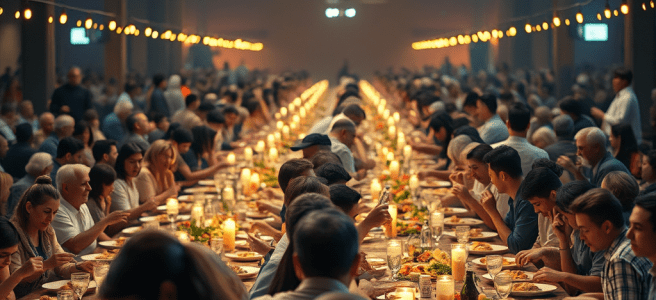
AI fantasy of Trump toasting

THE TRUMP Administration is “reclaiming the food pyramid” by turning the once familiar nutritional advice upside-down so as to laud meat and dairy. Whole grains and pulses are now squeezed into the sharp end balancing everything else precariously above.

The provocatively flipped dietary guidelines (7 January 2026) seek to dramatise the often fringe views of Trump’s Secretary of Health Robert F. Kennedy, Jr. Here, he gets the chance to encourage beef tallow, which McDonald’s abandoned in 1990 under health pressures (to the detriment of their fries).
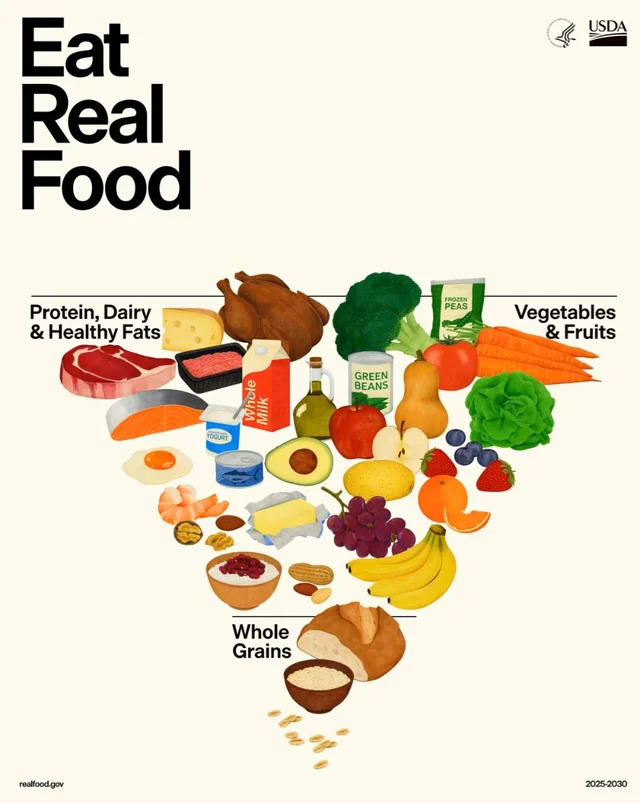
The inverted hierarchy might snub mainstream nutrition but, in many way, the advice comes closer to foodie views. It’s hard to complain about the new instruction “The message is simple: eat real food.”

We can endorse a “dramatic reduction in highly processed foods laden with refined carbohydrates, added sugars, excess sodium, unhealthy fats, and chemical additives.” They also recommend: “Avoid sugar-sweetened beverages, such as sodas, fruit drinks, and energy drinks.”

Let’s not get carried away, because the guidelines continue to promote the idea of “good” and “bad” foods with next to no mention of social circumstances. The closest to advocacy of home cooking is the declaration: “Swap deep-fried cooking methods with baked, broiled, roasted, stir-fried, or grilled cooking methods.”

The advice has dropped any mention of alcohol’s involvement in cancer, because it’s “a social lubricant that brings people together”, medical influencer Dr Mehmet Oz explained at a White House briefing. He added that, while in “the best-case scenario, I don’t think you should drink alcohol,” it provides “an excuse to bond and socialize, and there’s probably nothing healthier than having a good time with friends in a safe way.”

Mind you, he might well be excusing after-hours drinks with the boys, rather than extolling the established health benefits of meals together.

Interestingly in this context, both Trump and Kennedy are teetotalers; Trump has never had a sip of alcohol – on the dying advice his older, alcoholic brother; and Kennedy finally sobered up after his arrest for heroin possession in 1983.

“Under President Trump’s leadership, we are restoring common sense, scientific integrity, and accountability to federal food and health policy,” the new guidelines boast. This hints at Trump’s original backing of Kennedy for campaigns that conspicuously repudiate “elites”.

Trump has delighted in offending experts. Yet just as Kennedy’s fringe medical views have often had some justification, even MAGA’s “deep state” conspiracy theories contain grains of truth. The reality here is the so-called state capture by moneyed interests. Corporations rule through armies of consultants and lobbyists, which has greatly compromised Democrat and other centre-left governments world-wide.

Free enterprise took over under the cover of “neoliberalism”, which let leftish leaders embrace racial, women’s, gay, scholarly, arts and other liberal causes. Unfortunately, the fundamental liberation was financial. With money unleashed globally, neoliberalism has given way to the ideology of winning.

Backed by formidable military power at home and abroad, Trump believes that the strong always win. He respects Putin and Netanyahu, but not wannabe strongman Maduro. Simply put, Trump is a fascist.

The imperial president is right about the strong winning, but the real response is strength in numbers. We need to restore John Locke’s plans for democratic republics, where the rule of law would displace the “state of war”. Locke envisaged physiological beings cooperating on mutual preservation through democratic economies. I have argued for this food-based radicalism in Meals Matter.

Locke’s arguments have been maligned and misapplied for three centuries. His common sense needs reinvigorating. Unlikely? To adapt Miley Cyrus, no pretending it’s not ending.
The missing analysis: How money trumps people

STEALING FREEDOM, CAPITALISM trounces liberals.

In the recent U.S. Presidential election, whichever side you voted for, money won.

One party was aligned to neoliberal rationality and the other, the victors, represented maverick disruption. Either way, corporations won.

For more than two centuries, money stole liberty from the people. Corporate apologists eroded individual integrity in favour of laissez-faire, free enterprise, and neoliberal capitalism.

After the Cold War, promoting “liberty” for money world-wide, corporations gained neoliberal outsourcing, de-regulation and tax reduction. As a quid pro quo, newly-educated worker/consumers sought various forms of social and cultural liberation.

However, with states captured, rule by supposed rational “elites” has been giving way to rampant oligarchy.

The Democrats and similar parties need to “get back to the grassroots”. More than that, left- and social-liberals must rediscover the Enlightenment understanding of liberty belonging not to corporations but to the “preservation” of all individuals through meal-sharing.

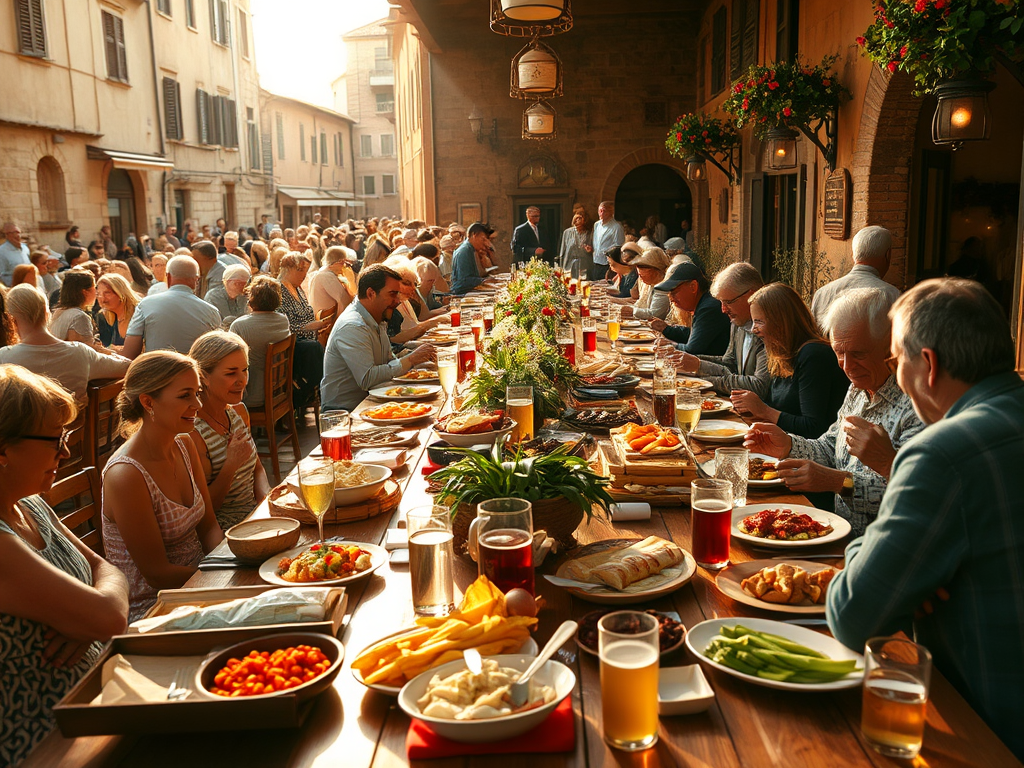
Let the global banquet begin!

For more, read Meals Matter: A radical economics (Columbia University Press, 2020).

How our “consolation of profit” thesis helps understand restaurants, megachurches, and Trump

MARION MADDOX AND I have just published a paper, “The consolation of profit”,* in New Formations, a journal of contemporary culture and politics.

Perhaps the quickest introduction is bottled water. Why do people pay for something they can get out of the tap?

Marion and Michael 3
At Max Walloschke, Hannover

Certainly, the hefty marketing promises health and status. But to those familiar explanations, we add another: the insistent hawking itself arouses a reasonable expectation that sellers are so desperate for profit that they will risk no other complication. If it’s outside the market economy, can it really be safe?

The “consolation of profit” arose from attempts to understand consumer anxiety when Jennifer Hillier and I ran the Uraidla Aristologist restaurant more according to our own earnest ideas than the Market’s.


Along with a funny name, the Aristologist had no piped music, no Coca-Cola, no smoking (except in a special room or outside), and otherwise signalled more than mere profit-seeking. The precipitating incident was a sweet, young couple looking at the menu, and asking if they might repair instead to a nearby restaurant. Our food would be “too spicy”, they explained, although, in reality, this would have applied more to the other place.

A more likely explanation was that the Aristologist might seem to require savoir-faire, an unfamiliar wine, reflection on the experience, or any number of other interactions.

McDonald’s redoubles the assurances. Their so-called “restaurants” advertise utterly predictable food – “Do you want fries with that?” – and stilted interactions – “Have a nice day”. The hammering of cheapness backs the warranty: no any other demand.

As a religious studies scholar, Marion added the second case-study. Why have megachurches been on the rise, when mainline churches have generally declined? Megachurches have replaced old liturgies with the forms of rock concerts and television tonight shows. Theirs is “Jesus lite”.

The “consolation of profit” thesis adds that, whereas a tight, more traditional congregation might threaten personal, social or deep theological challenges, these “growth churches” preach a simple message, “we want your money.” The merchandising in the foyer, donation buttons on web-pages, repeated onstage appeals shout out the safety of profit-seeking. The upfront demand for money could risk no challenge.

Our third case study asks how could anyone vote for such a shallow charlatan as Donald Trump? Together with lies and racism, his heavily-funded election campaign came with the “consolation of profit”. Trump never pretended to be anything more than a super-salesman with advertising slogans in place of policies.

This self-professed artist of “the deal” grew up in the congregation of prosperity gospel preacher, Dr Norman Vincent Peale, author of a string of business self-help titles, most famously, The Power of Positive Thinking (1952). Peale officiated at Trump’s first wedding.

Voting for the celebrity money-maker guarded against any untoward governmental decisions. Selling himself as the greatest, Trump offered no “deep state” threats. Denouncing elite expertise, he ostentatiously ruled through Fox News tweets.

With the pandemic, the Symons-Maddox thesis sees a hard-selling, anti-intellectual braggart struggling with an unanticipated crisis. “We’re prepared, and we’re doing a great job with it”; “I like this stuff. I really get it,” etc, shows he has nothing to sell but himself.

How enduring the consolation proves against obvious lack of social commitment, we’ll find out in November.

*Michael Symons and Marion Maddox (2020), “The consolation of profit,” New Formations 99: 110-126

99: Cultures of Compensation