THE HEAD CHEF and co-founder of Noma, René Redzepi, resigned yesterday, after 35 former employees had gone public with his workplace abuse from 2009 to 2017.
Everyone seemed unusually friendly when we dined there at the end of May 2007. I even noted Redzepi’s sweet smile, as he worked at a bench overlooking the dining room.
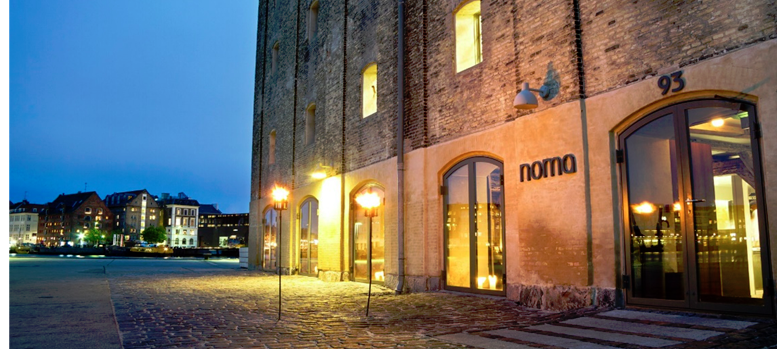
Redzepi had opened Noma with a partner in 2003 in an old Copenhagen warehouse, which was being transformed into “North Atlantic House”, so they were to celebrate ingredients from Denmark, Iceland, Greenland and the Faroe Islands.
I remember numerous snips of this and that by way of found grasses, flowers, etc, before such additions became more common. I particularly recall tiny, cold, dense oysters.
The meal was unforgettable for its completeness, which means not just the food, but also that port location, and more. Our daughter and I sat outside in the late-afternoon sun waiting for Marion to cycle around the docks from her conference. My beautiful German Riesling seemed to be made for gazing at the city centre across the harbour, or back at the spiral church tower that Dorothy had just climbed.
And there was the exemplary kindliness. One notable instance was that, after they had found somewhere to stow Marion’s bike, they let us linger with her beside the water, bringing out an extra round of marvelous crisps of fish and chicken skin.
The thing we could never forget, however, concerned our severely disabled son left back in New Zealand. Marion and Dorothy were keen to phone him. Since this evening was an appropriate time to call, we inquired about a nearby public phone. They insisted on using theirs. But you don’t understand, we said, this is a phone call to New Zealand.
Given Lawrence’s brain damage, “phoning” really meant singing to him. When we were back together, a little emotional, the waiters slipped us small, black, textile handkerchiefs.
Noma proved much “less” – friendlier and more intimate – than might have been imagined from the hype, which, of course, was working up to it being named world No. 1 restaurant for several years (2010, 2011, 2012, 2014 and 2021). In 2007, I witnessed nothing but serious care and concern.
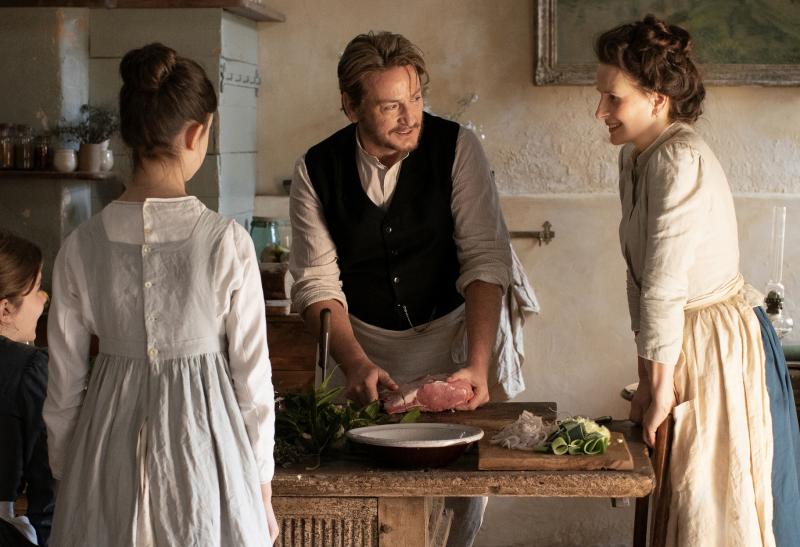
FOR TWO HOURS AND 14 MINUTES, the French movie The Taste of Things observes the preparation and eating of something like nine dishes.
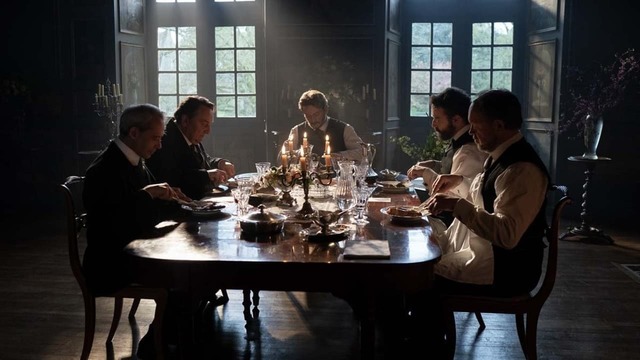
The setting is a provincial chateau in the year 1885, and the focus is gourmet Dodin Bouffant and his cook, Eugenie – played by two considerable actors (and former partners), Benoît Magimel and Juliette Binoche.
Negative reviewers react against privilege and indulgence. The first kitchen scene of 40 minutes introduces an “extremely boring movie showing pots and pans and cooking complicated French recipes” (online comment). Some of the audience walk out.
It’s not perfect – I was mildly irritated by characters informing the audience by telling each other things they would surely already know. Some occurrences seem random – why introduce “electroculture” garden antennae?
Yet the movie is far more than foodie excess or cooking show. The great majority of reviewers are positive. What’s going on?
Musical clue
A clue comes from the absence of music – only used over the credits. Mind you, the Boston Globe reviewer was so seduced, he heard “a romantic score”, though conceding “everything you need to know is conveyed in actors’ eyes.”
The soundtrack relies on clink, clunk, chop, bubble, sizzle, footsteps, birds out the door and window, and occasional words, sometimes among Eugenie, Dodin and helper, as they move between garden, stoves and benches, and among Dodin’s select group of male gourmets, who love the cooking, and the host’s cellar.
“I never before had to direct a film with as much substantiality,” writer/director Trần Anh Hùng answered an interviewer.* “All that material reality is so compellingly expressive, it firmly anchors our characters in daily life. Music would have undermined that.”
Hùng normally likes music, he said, but here it would “bring something that is a little bit fabricated… I wanted it to be very real.”
(Please note, all you restaurateurs who think loud music and noise denote a good time.)
Materialist film-making
Instead of music instructing viewers how to feel, they form their own interpretations. Similarly, Hùng chose long takes, he said, as a way to slow down the pace and give the audience the chance to be a kind of writer, gaining “time to formulate several things” in their mind.
I describe the approach as materialistic, in that the movie carefully shows what’s actually happening at the physical level, among intimates. Emotions arise from mundane cooperation.
“Everything that you see on the screen is real, and everything that we cook for the film, we ate it. Absolutely everything,” Hùng said. He was advised by Parisian chef, Pierre Gagnaire, and the actors were assisted on-set by Gagnaire’s retired colleague, Michel Nave.
“For the crew, it was unusual, because they have done some movies with food. Most of the time it’s fake. To make it very beautiful, you add some different things in it to make it have different texture, color, everything. But here, for this movie, I didn’t want that. Because it’s not about the beauty of the food. But it’s more about showing man and woman at work in that kind of harmony.”
He told the crew the long opening cooking sequence was “my car chase scene”.
Hùng’s wife, Trần Nữ Yên Khê, an actor and this movie’s art director and costume designer, explained the need to just get the setting “right”, and leave the beauty to emerge. “Try to do something beautiful, and it comes across as decorative.”
Happiness
The movie sounds and looks beautiful, allows time for reflection, and so what is it “about”? The Taste of Things gets to the core of cooking and enjoying meals. Hùng extolls Brillat-Savarin, as does my chapter, “Brillat-Savarin’s quest for table-pleasure” in Meals Matter (2020).
Homeliness was suggested by the working title, Pot au Feu (changed in the French to Le Passion de Dodin Bouffant, after the Marcel Rouff novel on which the film is loosely based). Domestic bliss in some present-day kitchen might well have become boring, but French protagonists at the time of Escoffier could believably be immersed in good cooking.
Hùng wanted to “explore something rare in the cinema: conjugality. And even rarer when it works.” With kitchen movements choreographed like a ballet, he sought to show “harmony”.
The 20-year relationship of well-to-do gourmet and cook has confused some movie-goers, particularly since it really doesn’t develop. But the pair are contented with their lives, and Dodin is presumably not surprised when Eugenie refuses proposals of marriage. She only leaves her bedroom door unlocked when she chooses. She gains them the perfect daughter through other means.
The Taste of Things does move steadily towards inevitable sadness, but never with the forced highs and lows of an action movie or even romantic comedy, let alone “reality” tv.
Harmony without drama marks this movie out as beautifully unconventional. Nonetheless, it has a strong motive to show “merely” cooking, eating and companionship, even if that passes. It’s about happiness.
Time passes in a pair of small country towns 20 minutes from Adelaide centre
Once upon a time (more than forty years ago), Jennifer Hillier and I opened the Uraidla Aristologist in the Adelaide Hills. Still a long time ago (2016), I promised a blog post, reporting on its namesake, the then new Summertown Aristologist, just down the road.
We’ve dined there several times since, which might be all I need to say. But here are a few quick, belated reflections, and a few memories.
Summertown Aristologist (with apologies to Vermeer)
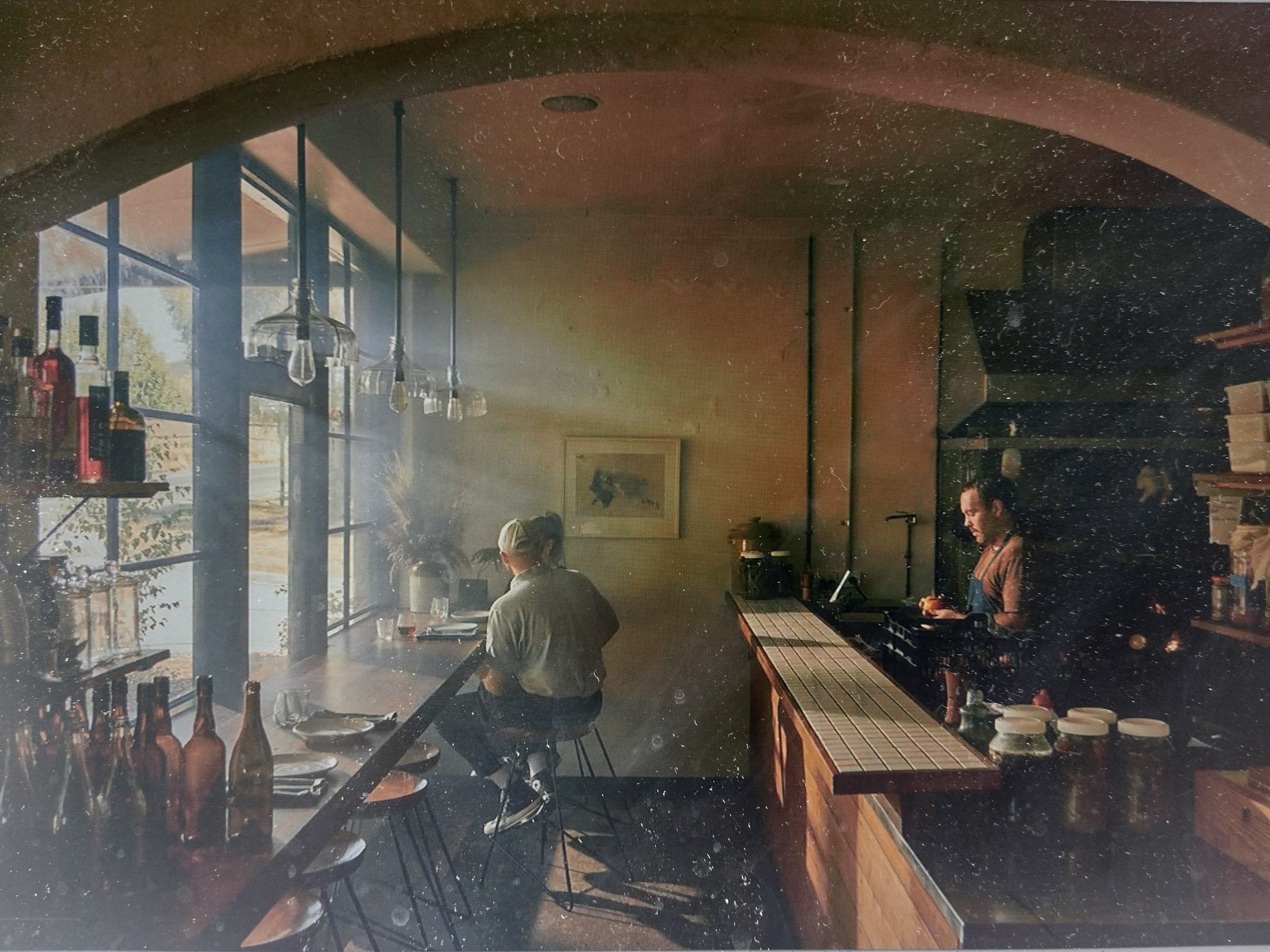
While individual expressions, the two restaurants have also been products of their times. Our dining room had a provincial feel, with linen and white plates and simple cutlery, in an old stone building in a garden. The Summertown version is more hip wine bar with long shared central table, benches, a booth and outdoor tables.
In Uraidla, we went for a three-course, fixed-price menu, opening with a glass of sparkling wine and cheese savouries with around four choices in each course, and closing with coffee. Those cheese savouries lasted from the first meal at our Cantina di Toia in Tuscany until our last meal at Uraidla.
We decided that the fixed price was a “licence to generosity”, and we asked $38 for some years – seemingly little these days.
The cooking was our version of Italian and French – always a pasta, often a soufflé – an eclectic mix that might appeal to foodies hankering after simple meals in those countries back then.
The Summertown Aristologist offers a collection of dishes (sample menu below), usually centred on one ingredient, so that one can snack, share plates or submit to the chefs’ collection, and cooked more professionally. While a series of chefs have taken charge, their food has remained surprisingly consistent.
Both places set out similarly focussed on local ingredients in changing circumstances, given how we ran through the 1980s into the mid-1990s (Jennifer held on a couple of years longer).
We chose a hidden paradise of market gardeners for our location, although the small growers were already then getting big or out. I would go around the district each summer morning extracting zucchini flowers, and also picked up vegetables from one or two remaining old-style market gardeners. The cherry varieties were extraordinary (including from Julie Bishop’s parents). We were able to get English gooseberries from Basket range, sour cherries, quinces, foraged blackberries. A young family started farming Basket Range trout. Basil from a film maker. Avocados from a nearby valley. Locally farmed quail.
We grew plenty in our large garden, including globe artichokes in spring (only cut when ordered), an over-abundance of raspberries through December… and eggs throughout.
Jennifer always baked our bread rolls, and made preserves. We did cure prosciutto and salami, relying on local Italian expertise, but relied mostly on Vari’s deli and then Marino’s in the Central Market..
While strawberry growers have kept up, and orchardists with cherries and apples are somewhere to be found, the Summertown operation could name several prized suppliers the other day, although often at a relative distance, while they boasted growing all their own vegetables. Otherwise, it’s simple ingredients sympathetically considered, the old trick.
Since Jennifer and I were doing a restaurant for its own sake, and eschewing prevalent commercial approaches, we turned out often to have been ahead of our time. Perhaps the simplest example was the grumbles (and thanks) we attracted for “inviting” guests to smoke cigarettes away from the dining-room in a special room or outside. The Summertown A. has no fights on that score.
Perhaps little indicates the changes like wine.
The quick profit from brussels sprouts was ruining land back then. Fortunately, grapes were coming in: Petaluma had planted in 1979, and Ashton Hills would break ground in 1982.
I organised the first Adelaide Hills Wine Show. To get it going, I simply went around to Geoff Trenorden’s – the secretary of the excellent Uraidla Show – and he said “sounds good”, and what section did we want? Since “W” was available, we became Section W: Wine.
Winemakers Brian Croser and Stephen George joined in, and decided that judging should be done by the exhibitors themselves, sitting around in a circle at the Aristologist. The show started with possibly half-dozen wines, including from backyard makers, but within a few years Croser and George were joined by other notables, not least Stephen and Prue Henschke and Geoff Weaver. Those were the days.
While they now have vineyards in all directions, the Summertown restaurant owners are natural winemakers, the restaurant doubling as their cellar doors.
The changed cost of wines is remarkable; fancy wine prices have responded to increased global demand. For example, from a 1985 winelist, we sold Krug champagne for $36 (about $116 in present dollars). By way of comparison, Dan Murphy’s retails the equivalent bottle for $363. It gets worse. Our Petaluma Chardonnay 1981 was on the list for $20. At Rockpool Bar and Grill, an equivalent year is $380. We had the Wendouree Shiraz 1978 for $11, and Rockpool asks $750 for something with a similar age. You’d have to be really in the know to get Mt Mary Cabernets (now called Quintet), which I wasn’t alone in considering the finest Australian red, but we asked $25; Rockpool seeks $390. Chateau Coutet 1980 was $25, whereas $325 now.
To explain (not for the first time) the reason for “Aristologist”, a London writer Thomas Walker coined “aristologist” for “student of dining” in 1835, and the early Australian cookery book author Edward Abbott used it as his nom-de-plume in 1864. The eccentric name provided a warning that the old (and presumably new) restaurant cared about dining, yet did its own thing.
SOMETHING WAS revealed about my choice of restaurants, or my friend’s, the other day, when he said he was unfamiliar with “natural wines”.
For a few years, almost everywhere I’ve dined that’s warranted a sommelier has thought its food warranted natural wines.
Defined with appropriate imprecision, natural wines require the least possible intervention from growing to bottling (with only sulphur likely to be added). It is more than organic, since the actual making is also minimal interference, and can often be biodynamic.
In ABC’s Landline coverage of three years ago, Adelaide professor of oenology Vladimir Jiranek lost me by defending added yeast as “only” like using dried bread yeast from the supermarket. Had he never appreciated carefully-made sourdough bread?
Many higher-tech makers are inclined to scoff that natural wines have “faults”, and command undeserved prices, although others appreciate the variety, and satisfying texture.
Before I explain the Aladdin’s cave reference, here’s Anton van Klopper of Lucy Margaux wines in the Adelaide Hills.
What do I think of his wines?
They definitely feel crafted, and made from grapes, which is saying more than might seem, because conventional wine can taste more like, well, wine. These edge a little towards craft beer or cider. Having opened only two bottles so far, I can confirm their deliciousness, which is again saying more than might first appear. They are really nice to drink. Whatever the faults, I failed to notice them (not minding some cloudiness). Whether they would ever reach the sublimity of a great Bordeaux, I am not sure, but, then, old Bordeaux were made more this way.
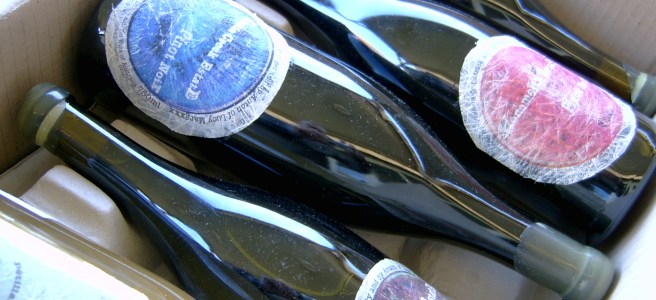
I should confess how I came by a veritable cave of Lucy Margaux wines. Anton and colleagues are about to open a restaurant a short drive out of Adelaide. It’s called the Summertown Aristologist.
You might be aware that Jennifer Hillier and I used to operate the Uraidla Aristologist, a little further (1.4 kms) up Greenhill Road. Anton recently sent us a box each as a goodwill gesture.
Since I anticipate getting across not long after the new Aristologist’s opening, I shall report further.


 SOMETHING WAS revealed about my choice of restaurants, or my friend’s, the other day, when he said he was unfamiliar with “natural wines”.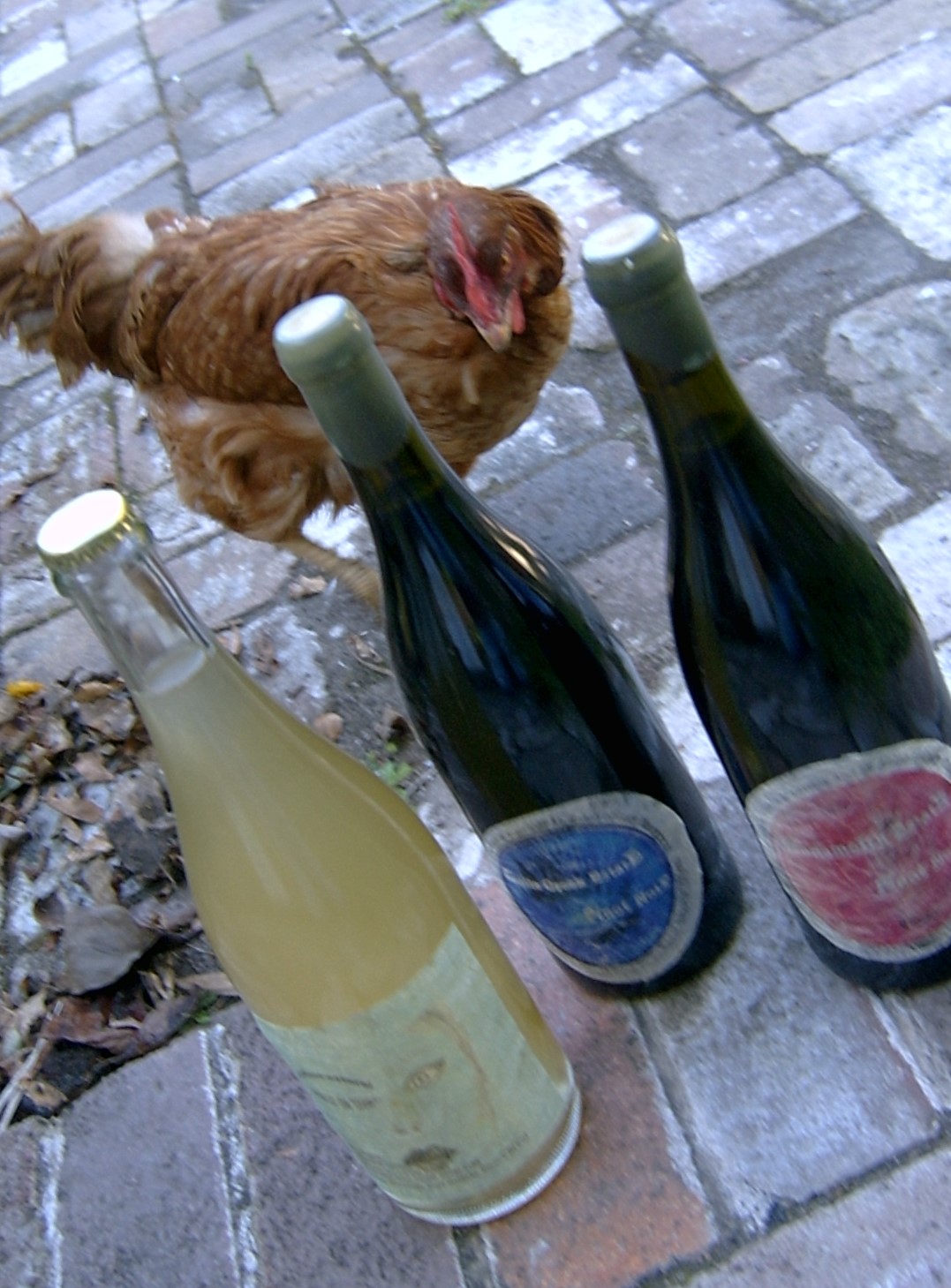
 Meals Matter