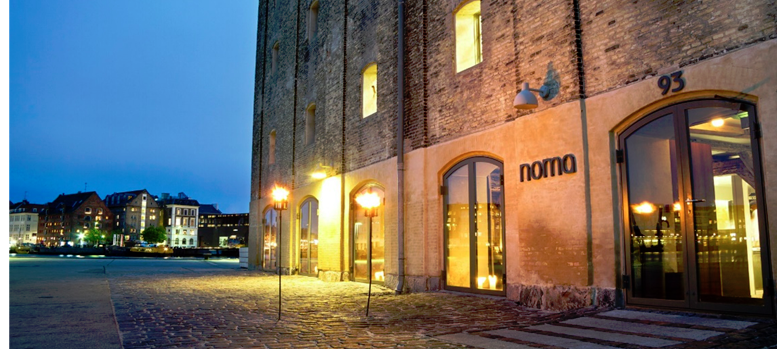
THE HEAD CHEF and co-founder of Noma, René Redzepi, resigned yesterday, after 35 former employees had gone public with his workplace abuse from 2009 to 2017.
Everyone seemed unusually friendly when we dined there at the end of May 2007. I even noted Redzepi’s sweet smile, as he worked at a bench overlooking the dining room.
Redzepi had opened Noma with a partner in 2003 in an old Copenhagen warehouse, which was being transformed into “North Atlantic House”, so they were to celebrate ingredients from Denmark, Iceland, Greenland and the Faroe Islands.
I remember numerous snips of this and that by way of found grasses, flowers, etc, before such additions became more common. I particularly recall tiny, cold, dense oysters.
The meal was unforgettable for its completeness, which means not just the food, but also that port location, and more. Our daughter and I sat outside in the late-afternoon sun waiting for Marion to cycle around the docks from her conference. My beautiful German Riesling seemed to be made for gazing at the city centre across the harbour, or back at the spiral church tower that Dorothy had just climbed.
And there was the exemplary kindliness. One notable instance was that, after they had found somewhere to stow Marion’s bike, they let us linger with her beside the water, bringing out an extra round of marvelous crisps of fish and chicken skin.
The thing we could never forget, however, concerned our severely disabled son left back in New Zealand. Marion and Dorothy were keen to phone him. Since this evening was an appropriate time to call, we inquired about a nearby public phone. They insisted on using theirs. But you don’t understand, we said, this is a phone call to New Zealand.
Given Lawrence’s brain damage, “phoning” really meant singing to him. When we were back together, a little emotional, the waiters slipped us small, black, textile handkerchiefs.
Noma proved much “less” – friendlier and more intimate – than might have been imagined from the hype, which, of course, was working up to it being named world No. 1 restaurant for several years (2010, 2011, 2012, 2014 and 2021). In 2007, I witnessed nothing but serious care and concern.
I WAS FORTUNATE TO DINE OUT frequently for nearly six decades with journalist David Dale (27 March 1948-6 August 2025). This was often along with Suzie Anthony.
Our paths crossed early, when he was still a student and I was starting to make a name at the Sydney Morning Herald. He wrote me a long letter arguing that I didn’t understand guitarist Eric Clapton (or something like that).
I was the paper’s first or maybe second deliberate hire of a university graduate (my degree was in maths, and they had a “new maths” education supplement to bring out). When David and Suzie joined, they became “graduate cadets”, who were required to learn shorthand. I always reckoned he had the world’s most useless skill, shorthand slower than his long.
As young journalists at the Sydney Morning Herald, the three of us had lunch and dinner out many times a week for four or five years.
Later, in 1975, after a particularly beautiful lunch at Watson’s Bay, we three sat on a wall above the sand, and swore lifelong allegiance, which we honoured. We kept up meals together with a few unavoidable interruptions, such as living in different countries.
From my perspective, David seemed to lead a compartmentalised life. Early on, he had a girlfriend that Suzie and I never met. Mischievously, we knocked at his address, and were welcomed by a mother desperate to meet some of her boy’s friends, and she laid some of her concerns before us . Never met his father.
He also deliberately shied away from deep thoughts. When we met, he had completed Honours in Psychology, but was keener on Mad magazine, and turning to early Woody Allen movies.
David and my paths crossed more than once in Italy – and he never let me forget about revealing to both him and my father where to find the key to our ancient Tuscan watermill during one of Jennifer Hillier and my absences; David terrified my father in bed asleep, with Christopher demanding: “Do you know Bob Hope?” This was someone (the partner of colleague Julie Rigg’s expatriate mother) whom we all got to know well over there.
By then, he had joined the classy little gang putting out the radical media critic, the New Journalist (which I had co-founded with Leo Chapman and another old colleague who died this year, Paul Brennan).
Without hesitation, David became a third partner (along with Gabriel Gaté) in Duck Press that published my One Continuous Picnic in 1982. He leapt in as its editor.
In the late 1980s, I was invited to lunch in Adelaide, at his suggestion, by a visiting Bulletin journalist, Susan Williams, who grilled me about her editor. They married in Paris, without guests! When I married Marion Maddox in 1995, Suzie was my best person and David her assistant.
Towards the end, David increasingly talked streaming tv (that I never watch). Suzie and I found him reluctant for Friday lunches, but he was, we now imagine, in considerable pain. Our last get-together at La Riviera, he came with a walking frame.
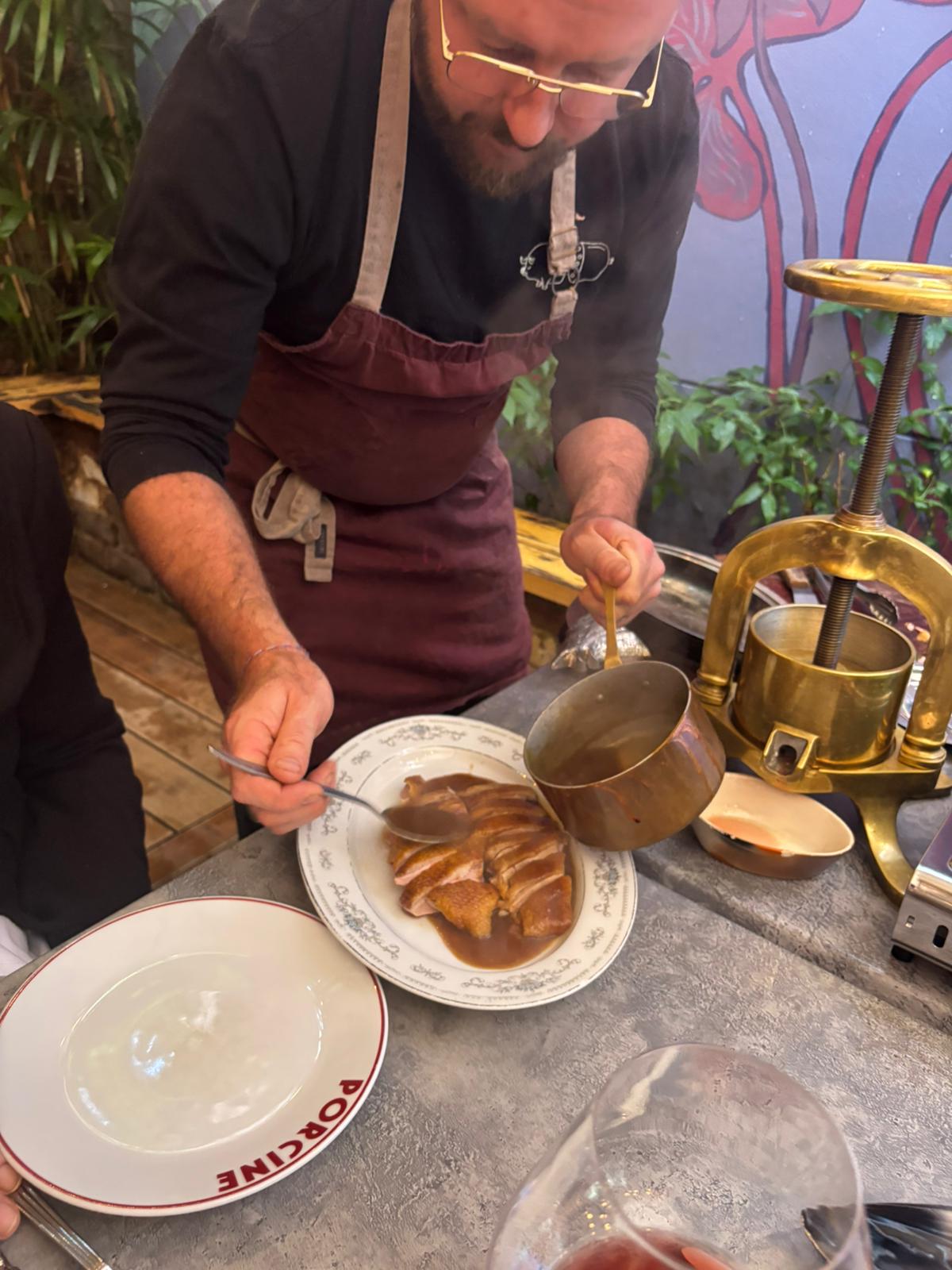
He’d enjoyed sauce from a duck press at Tour D’Argent (I think that was when he secretly got married). Not only the name of our publishing house, it remains my email address, but I hadn’t experienced a duck press.
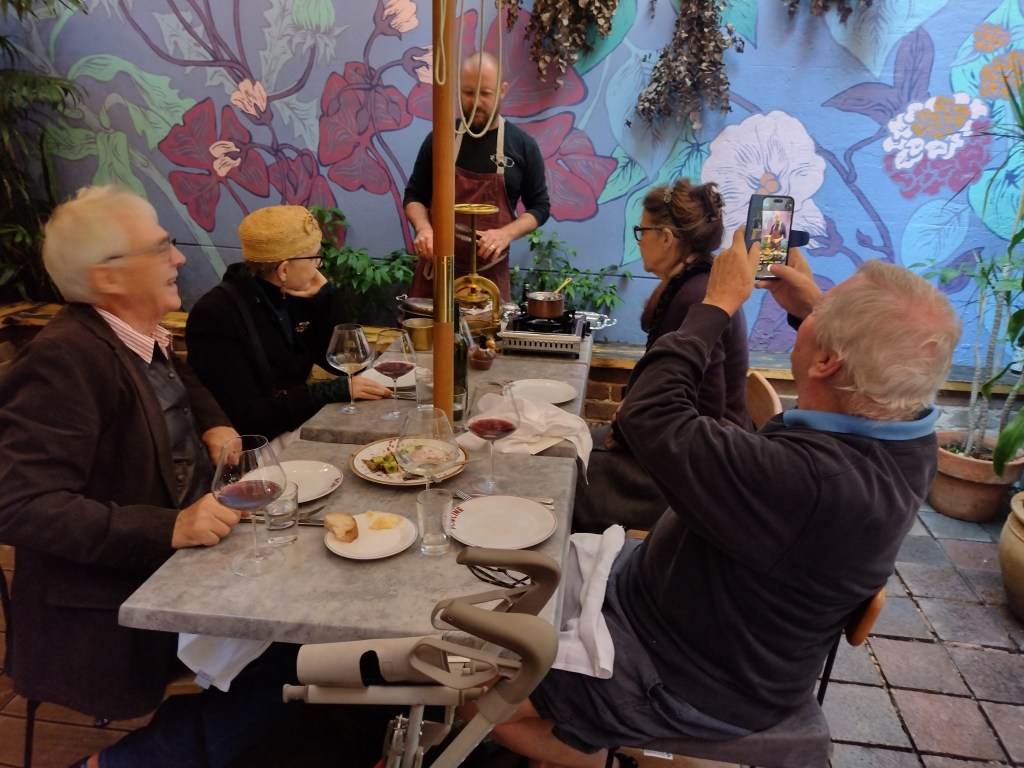
Accordingly, for our little lunch group’s celebration of my 80th this year, we dined with a duck press at Porcine in Paddington. David needed a walking frame, and my wife a wheelchair; when we discovered the restaurant was up a flight of stairs; the chef generously offered to bring the paraphernalia down to a table set up in the wineshop below.
That was in May. It would be our final meal together. Our paths crossed a last time not many days ago. Marion had two recent stays at the Chris O’Brien Lifehouse. Only on the second, we learned David was in a nearby room all the time. Being a small world, Porcine chef Nik Hill’s wife Milly is a palliative care nurse there. (In an accumulating tragedy, Marion died on 16 September, back there again, two rooms from where David had been.)
When I popped in, he was true to himself, avoiding thoughts of imminent death. On another quick visit, I offered to bring some wine the next night. He was unable to drink, he said, on account of his nausea. He did admit, nevertheless, to wanting the best possible red to be his last mouthful.
That led me to recount how yet another friend with cancer had a few months ago quietly shared an aged burgundy that she happened to “just find in the cellar”. Fortunately, I thanked her profusely for a genuinely amazing experience. Only later, I discovered a bottle online for an equivalently amazing price. Definitely worth a last mouthful and, within days, our friend disappeared forever from our tables.
GREAT POLITICAL excitement! After years of neglect, a new team has taken over. That’s not just in Canberra, but also, not that far away, in the town of Gundagai.
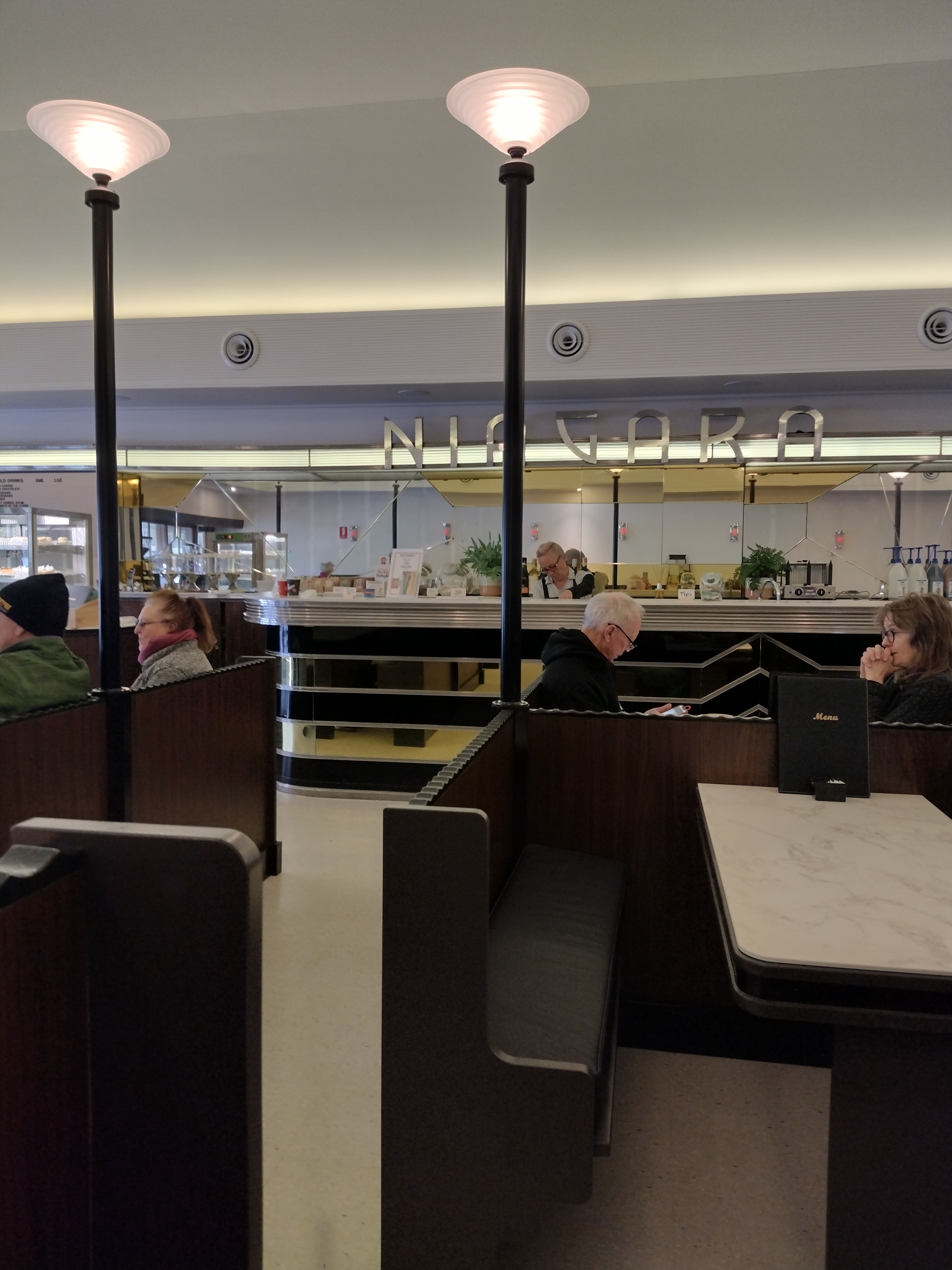
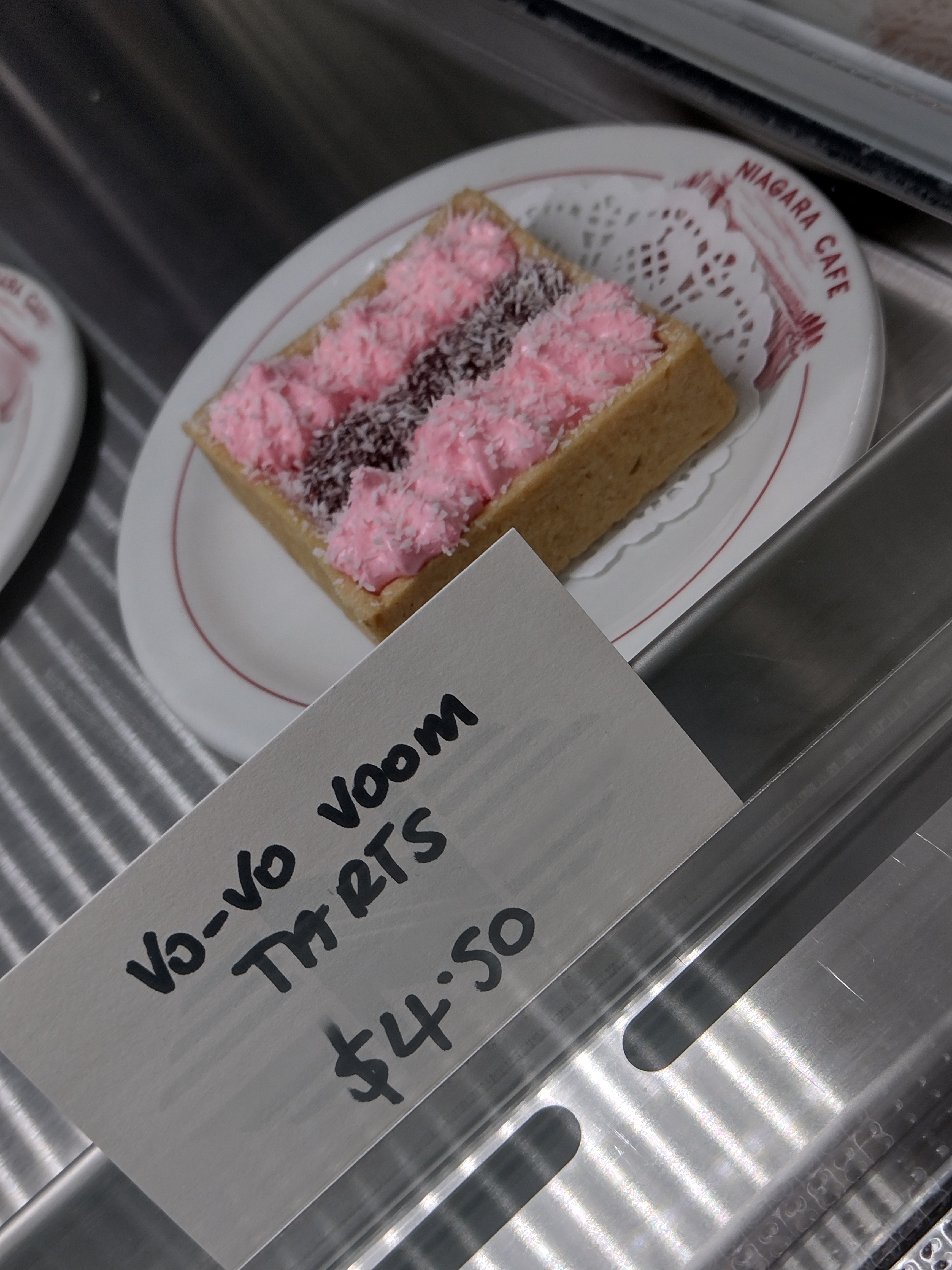
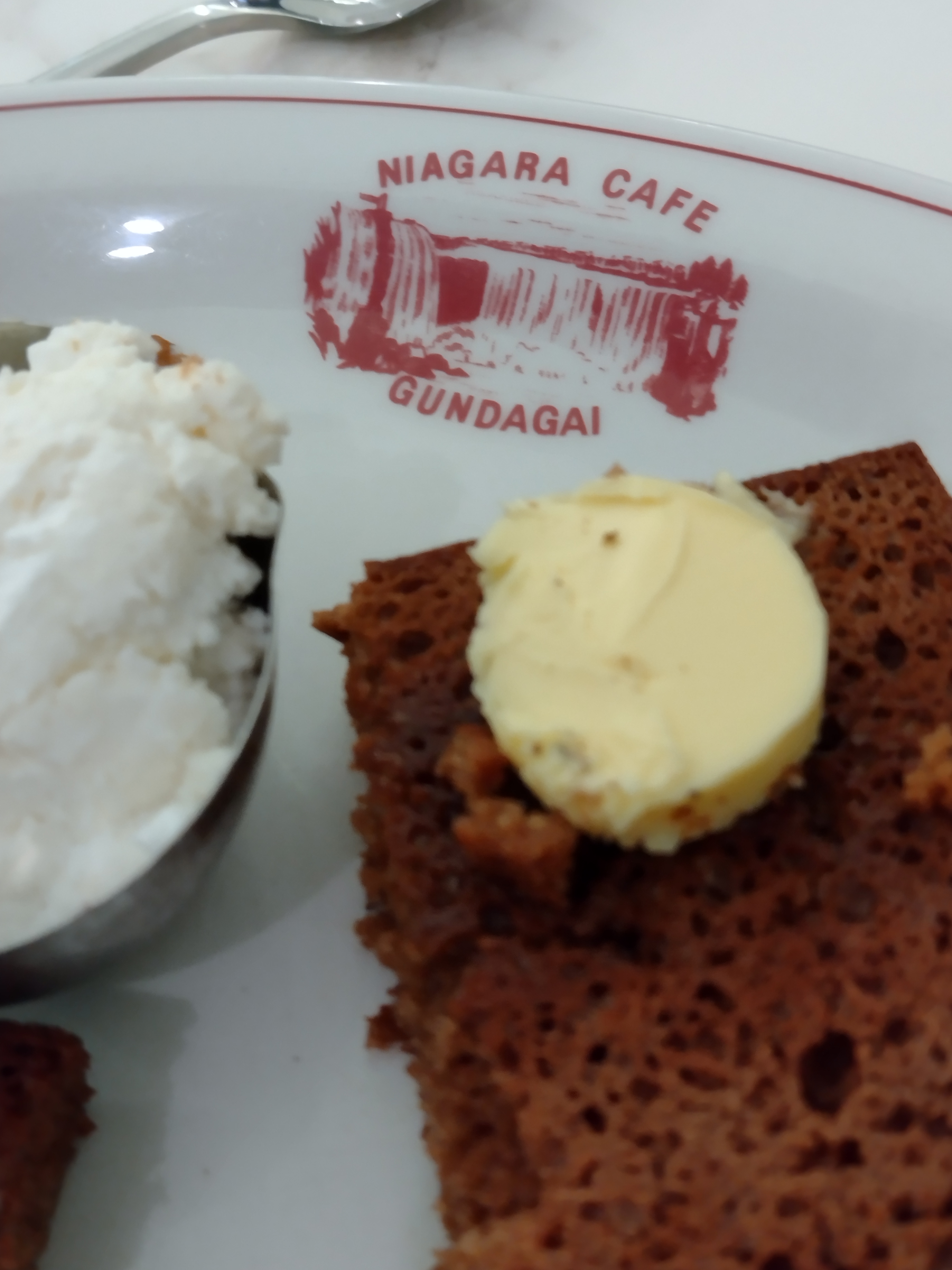
We chanced to breakfast at the renowned Niagara cafe in the first week of the art deco gem’s reopening. The new owners have done a great job, restoring the booths and all.
Suddenly, Luke and Kym have gone from paying tradespeople to paying customers.
Families with Greek heritage got early into refrigerated foods in Australia, and specialised in fish, icecream (including Peter’s and Paul’s) and milkbars.
And so, successively, the Notara, Castrission and Loukissas families owned and ran the place from 1902, through the wondrous art deco modernisation in 1938, until it became too much a few years ago.
After opening up for a midnight meal for Prime Minister John Curtin and team in 1942, the place became a Labor Party shrine, accumulating signed photos commemorating the visit, and showing off the crockery used.
The new owners have stored the memorabilia, and promise to soon return it to display.
Postscript: Two years later, and the new owners are still to show the old Labor crockery and other memorabilia. Perhaps a metaphor?
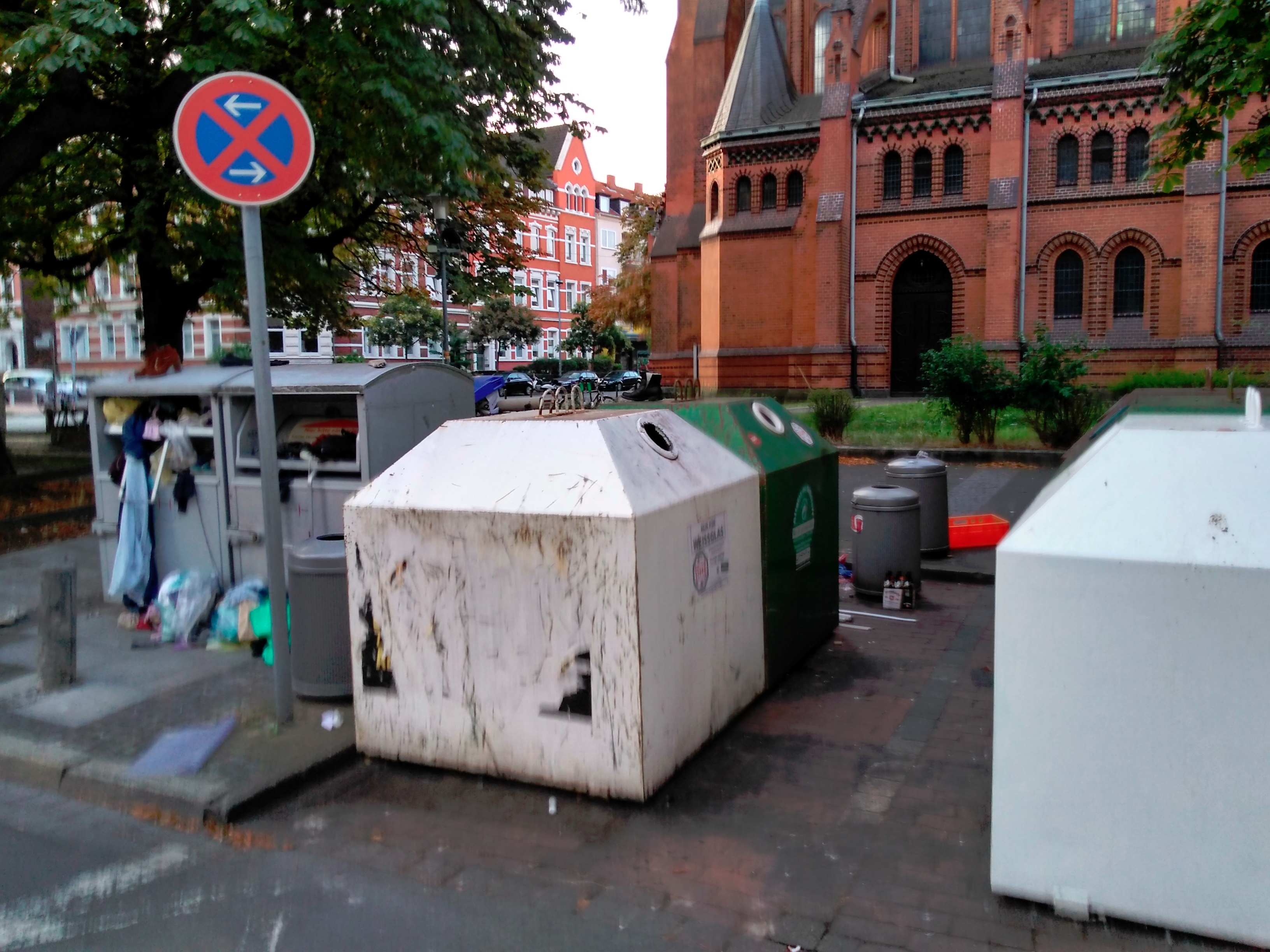
Recycling bottles (clear, green and brown, separately), also clothing, and various, Hannover, Germany
MY EARLIEST school years taught me, before crossing a road, to “look right, look left and look right again.” Or was it the other way around … ? And does any rule apply world-wide? I must have learned to cycle on the left, because keeping to the “wrong” side of the road still bewilders me. High concentrations of silent-cyclists-from-nowhere on criss-crossing lanes add to the hazards. That’s Germany.
Lately, I’ve been wishing school taught me another life skill, namely, how to recycle. What goes in what colour bin? What about mixed materials? What happens to other stuff?
I try my best, but what precisely are “soft plastics”? If I collect aluminium foil, where does it go? Am I just keeping wine-bottle corks to make another cork-board? I hear that an electric toothbrush divides in two directions.
On what will perhaps prove our last global trip, we stayed in several different houses in a few different countries, and (confession) I’ve basically given up.
Different nations, different parts of cities, and even different households make confusingly different demands.
I would like to suggest more global action. Where’s world government when we need it? Business already relies on considerable international coordination. Why can’t it standardise recycling?
Recycling makes the streets of Spain, Germany, China and elsewhere in Australia look, and also sound, gloriously exotic, given the different systems, so I eventually started taking photographs.
In Barcelona, for example, the green bin took “glass” (here, green is for garden organics); blue meant “paper” (going into our yellow general recycling; and I haven’t noticed blue bins in Sydney); and grey was for “non-recyclable” (red for us; and I haven’t noticed grey here either). The only possible match might be brown, for “organic” in Barcelona, and I think being used for a kitchen scraps trial in Sydney.
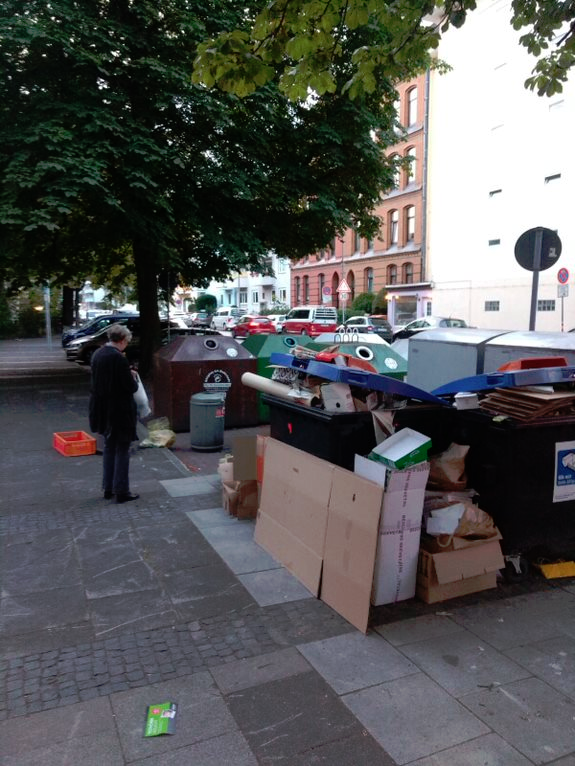
In Hannover, the church bells across the road would stop after 10 pm and resume at the same ungodly hour as builders. But bottles never stopped clinking into large recycling containers alongside the church. Fascinatingly for us, designated bins took different glass colours: green, brown, and clear. A huge, suitably compartmentalised truck hoisted the bins and dropped the bottles out the bottom with a massive, weekly clatter. That’s the bottles the supermarket – across from the front of the church – wouldn’t take .
More street furniture, Hannover
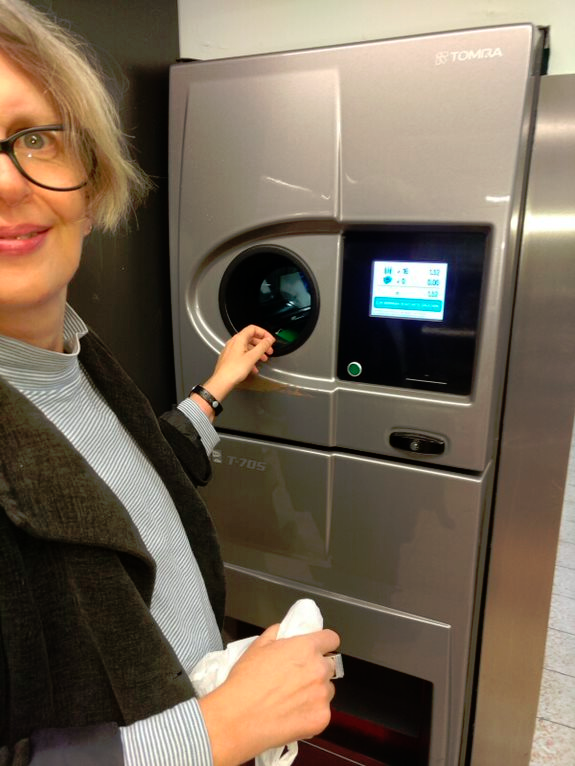
For, at the supermarket, you inserted empty bottles singly into a roller to read the bar code. The reverse automat might then send some back out, but accept others for a redeemable deposit at the check-out.
Automatic refund detection in supermarket, Hannover
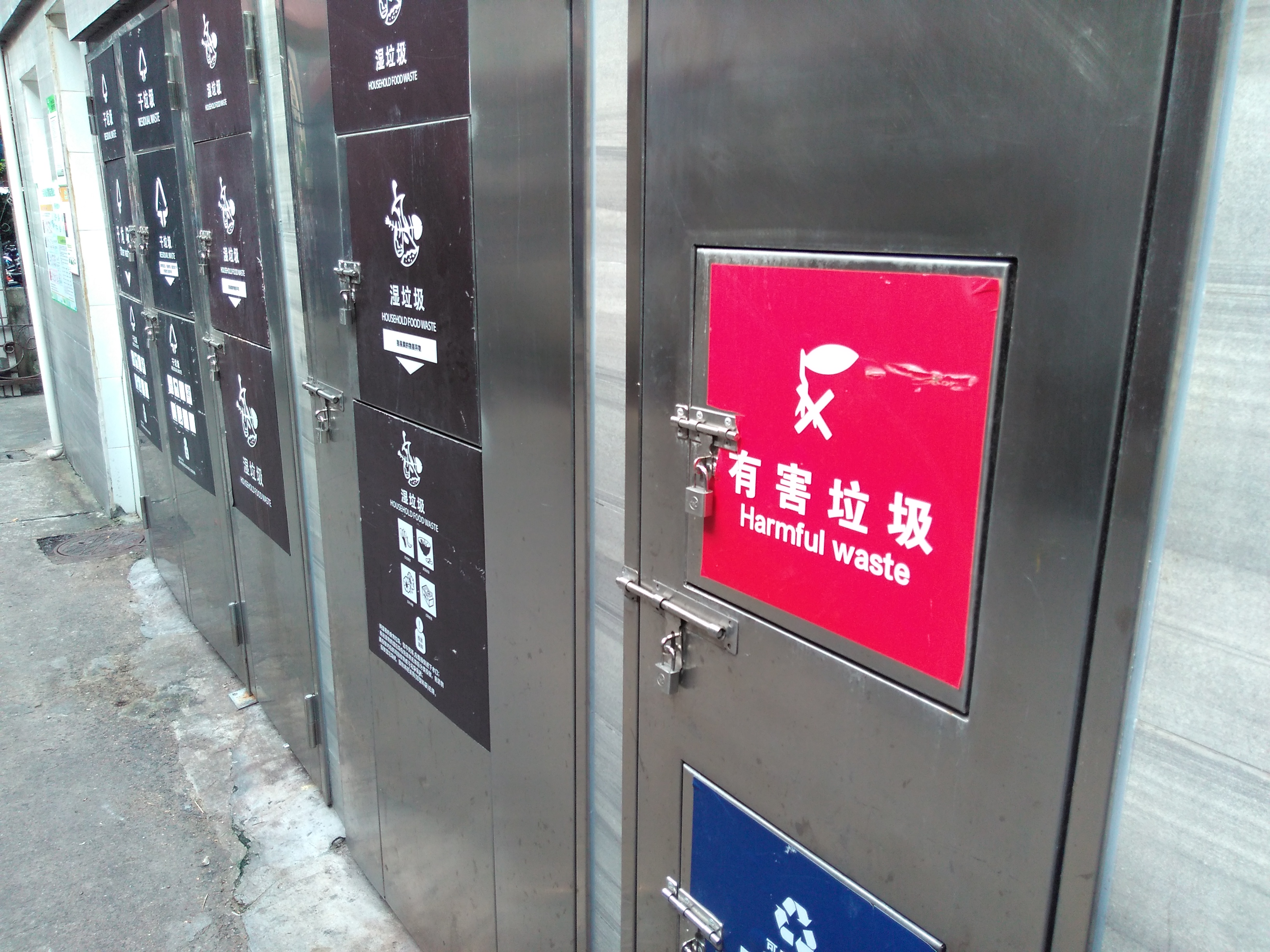
Blocks of apartments in Hannover often seemed to share a locked cage for garbage bins, sometimes on the front of the building or on the footpath. It wasn’t the neatest or quietest solution. In Shanghai, recycling could seem much slicker, and more padlocks presumably restricted these bins to nearby households.
Shanghai, China
I’m trying to recall where garbage collection was paid for by requiring official plastic bags, sold through supermarkets. Such “pay-as-you-waste” schemes ostensibly encourage waste reduction (although sometimes dumping). Inevitably, the schemes have a confusing number of names, including Pay as you throw (PAYT), variable rate pricing, trash metering, unit pricing, and user-pays.
If we travelled less, the confusion could just remain a cute distraction. Still, it’s telling that we can’t standardise recycling.
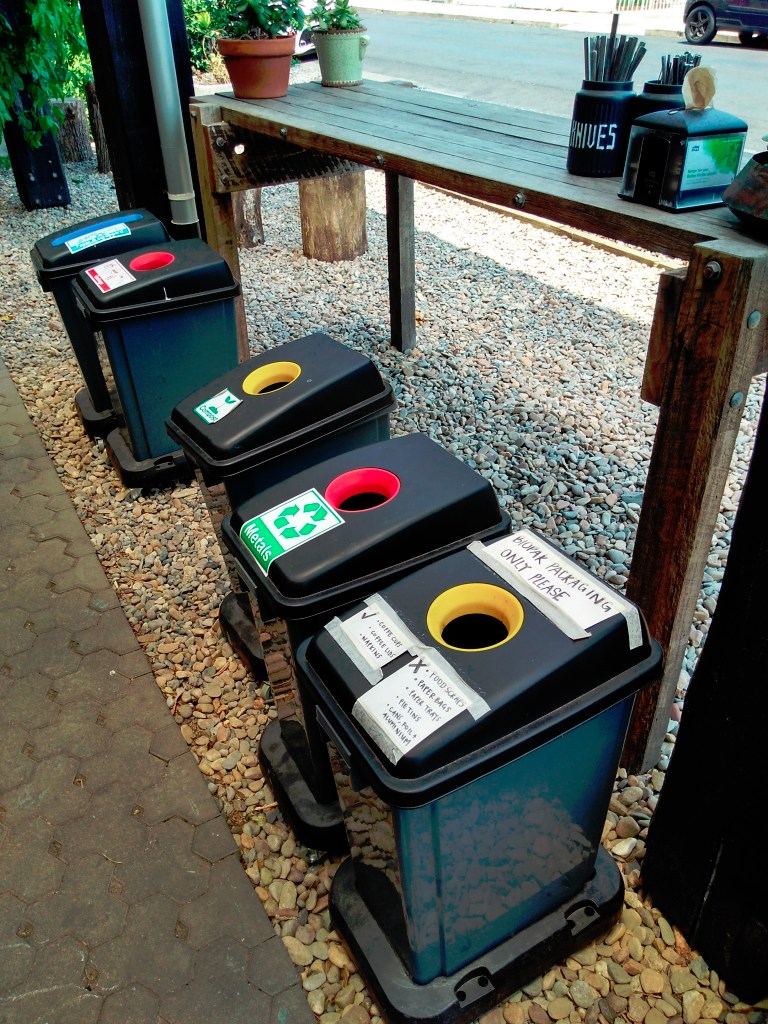
A cafe in Newcastle, NSW, seemed to have invented yet another colour scheme.
We arrived here at our apartment in Bern, Switzerland, conveniently across the road from the conference venue, amid crowds celebrating the opening of the World Cup. Our second-floor accommodation is above a bar-restaurant, circled on four sides by huge screens and temporary outdoor seating. Our host apologised that he had hired a dj for the rest of that night. And so the matches have progressed…
The joke is that the thump-thump beat from below that first evening did not stop me getting to sleep. Instead, I was awoken by huge bells chiming 6 am. The nearby Pauluskirche counts each hour, and notes each passing quarter, and there it goes again. Much, much louder than the huge, sixteenth-century Zytglogge in the city centre with its mechanical jester getting in early every hour with his own bells, and the mechanical cock crowing three times. At least the local chimes shut down between 10 pm and 6 am.
The further joke is that I write in praise of Bern’s quiet. This is in the restaurants.
For several weeks we have moved (for Marion’s work) from Fremantle through Glasgow to here, and I have dined to much thumping beat, the seemingly necessary boost to meals these days. (I’m the old fogie in the corner.)
In Fremantle, we seemed lucky to stay adjacent to Bread in Common, to name a name. Quite good food in a vast warehouse conversion, so popular that you can’t hear yourself think. The thump never lets up, except if managing a coffee during the day at an outdoor seat. Fortunately, Fremantle is awash with great spots, albeit mostly also with monotonous mood-lifting.
Much the same in trendy Glasgow, although I must boast that our flat was between the Aragon and Lismore pubs (the video is from the Lismore), both with traditional musicians gathering in varying numbers on selected nights with their fiddles, flutes/whistles, underarm bagpipes, accordions, guitars, and bodhrán (Irish drum). Usually a fiddler starts off, and away they go, the leader mouthing key changes. I kept waiting for a cellist to come back; he’d led them in a wonderfully mournful selection. On another occasion, a tenor came out of the crowd, some notes wobbly, but he knew he had to hit the last one, and did. All determinedly acoustic.
A fellow whisky-drinker (no, I think he had an ale) explained that an Edinburgh conservatorium course in traditional music had generated something of a glut of young professionals.
Heavy “background” music obliterates the clink of cutlery and murmur of conversation. Accordingly, I recommend a couple of old-style places near here (warning: Bern is not cheap).
Being an unusually warm night, filling the outdoor tables, I was the only person inside at Zum Blauen Engel (Blue Angel). With no music whatsoever, I did get a distant exhaust fan. Otherwise, the dull thud of fridge door, clink of bottles, shaking of pans, sizzling from beyond the bench, occasional waiter exchange, old-fashioned clank of heavy glasses and crockery, my own knife and fork … I even heard the chef cut off a tranche of something. All satisfying.
Waldheim
I felt part of the place, belonging to humanity, the world. Not some shouting cosmopolite out for a good time.
Around at the Waldheim, I lunched again almost alone inside, with just another four old fogies at seemingly their regular table, and across an enormous window-sill to those in the garden. The sound of people chatting outdoors, and birds… I could be dreaming (I don’t think so, even about the birds).
Again, a few clinks, waiter exchanges, the espresso being ground and a puck being bashed out, and people enjoying the peak of civilisation. The only odd note was the occasional phone-call announcing itself to a chirrup of Vivaldi.
Restaurant dining teaches new dishes, and how much better ingredients can be than we thought. And civil behaviour. Working in someone else’s kitchen – perhaps house-sitting, leasing an apartment or just contributing a course – teaches about equipment.
A borrowed kitchen can show that other people don’t cook or, if they do, put up with thin saucepans and ineffective knives. But we often learn useful tips.
No doubt you have lifted out toast without burning your fingers using toaster tongs all your life. I only discovered them in a sunny apartment in Le Marais a few years ago.
Couvercle
Our present Latin Quarter studio provides more basic kitchen equipment. No toaster tongs, but why no ordinary kitchen tongs? I don’t really miss a microwave oven; the small, bench-top oven is handier.
We do have “1 Couvercle (petit)” and “1 Couvercle (moyen)“, which translate on the inventory as “Cover (small)” and “Cover (big)”. These are interchangeable lids for the three sizes of “Casserole” (saucepan).
The name, “ouvre–boîte camping“, puts the familiar can-opener in its place, as does the translation, “Military can-opener”.
Clef universelle
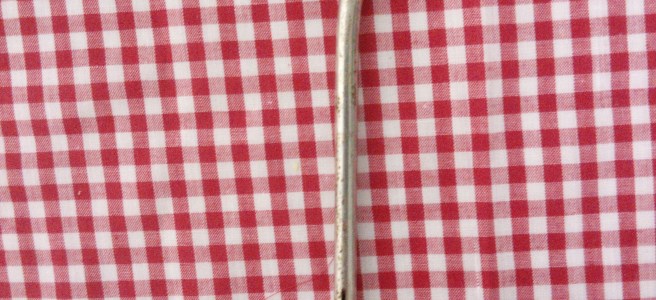
The item, “1 Clef universelle” (shown left), translates as “Sardine tin key”. I recognised its purpose immediately, having grown up with smaller versions welded to such tins. Searching the supermarkets, we are yet to find a tin without its own ring-pull. We’ll hunt the specialty shops.
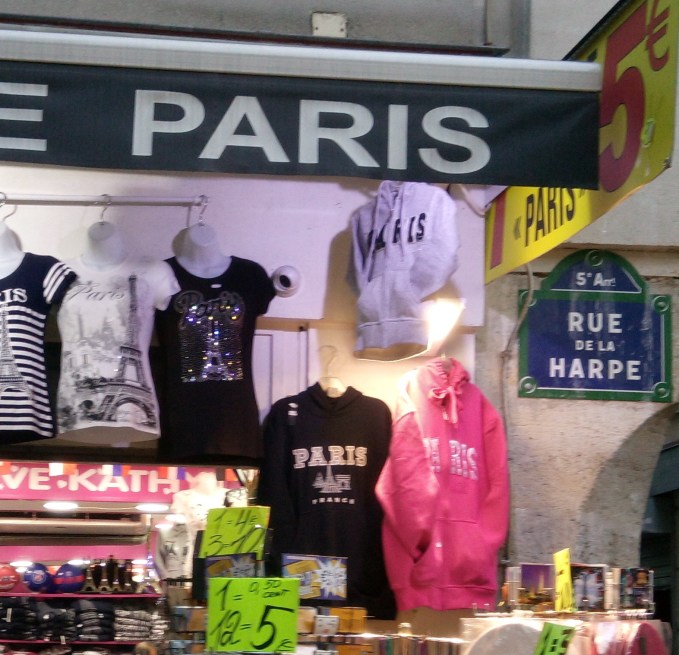
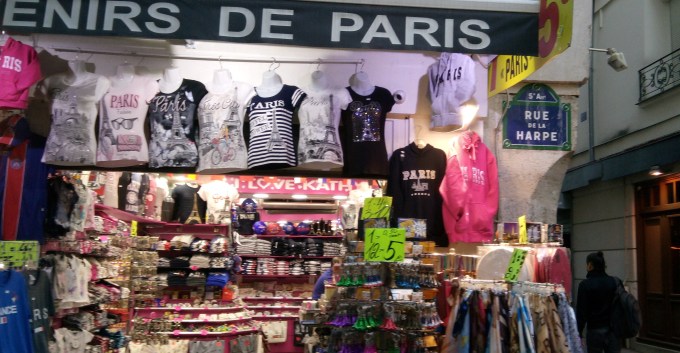
PARIS IS ONE WORD worth more than a thousand pictures.
My long-time friend Paul, an acute observer of the human condition, emailed we were leaving for “nearly everybody’s favourite city”.
That line, too, is probably not original, but explains why a thousand photographs are being snapped right now in front of Notre Dame and other monuments. And every picture is stimulated by, and reinforces, the intensely evocative, single word, Paris.
This might be the Paris of Francofonia, the new movie about protecting the Louvre’s own plunders during the Nazi occupation. Or the Paris of Toulouse-Lautrec, or of Sartre. Mine is the Paris of mid-twentieth century Hollywood movies, starring either Leslie Caron (An American in Paris, 1955; Gigi, 1956) or Audrey Hepburn (Sabrina, 1954; Funny Face, 1956).
That’s the Paris of civilised modernity – of pushbikes, the Métro (now more than 4 million passengers daily), baguettes, Michelin guides, Coco Chanel, cafes, and restaurants.
We have arrived in a studio in the Latin Quarter, with sun in the middle of the day, and the sound of young schoolchildren in a courtyard throughout.
On my first visits, even the most ordinary meals seemed shockingly superior to most in Australia.
Despite improvements back home, and Nordic, Spanish and other restaurants also proclaimed top rank, and with the boulevards suffering American chains, Paris still holds its own.
The milk might taste strangely cooked (the microfiltré option has helped), but how good is the cheese. The coffee might remain disappointing, but the croissants more than make up.
Lunch at Comptoir du Relais has been at a recognised destination (might write about that later). More tellingly, we merely followed our nose and chose Tunisian tajines at Chez Hammadi on our first night. The waiter talked about our lamb and fig order with a man in the kitchen, who took a plastic box from a fridge and looked into it, seemingly puzzled. Another man arrived and showed something on his phone. Perhaps they were googling the recipe.
Seemingly by magic, the lids were soon flourished off bubbling tagines. Excellent, and as to the cous-cous … we’ll be back. A succession of presumably other Tunisians joined in, supporting our host, as the place filled up. It was only overnight that I decided the actual kitchen must have been downstairs. And how could I have doubted the pervasive culinary dedication in this country.
We’re around the corner from another string of alleged tourist traps, competing on price, often two courses for 12 euros or lower. I stumbled upon and then out of Vins et Terroirs, whose formule provided a salad with blue cheese and walnuts, and then steak, béarnaise and chips, with a quarter pichet of wine, and another friendly and efficient waiter. My unsteadiness came from leaving via the uneven cobbles of the arcade opposite.
I developed a theory that you scarcely need a restaurant guidebook in Paris, owing to the intensity of gastronomic purpose. Almost everywhere seems to carry the weight of cultural responsibility.
The city is physically big enough to cope with the tourists. The five-storey buildings might constrain the children to courtyards, but sufficiently tightly that people climb stairs, and walk lots, so it’s not just the diet that keeps them slim.
It’s not just demographic density that bears down on everyone, but also the exceptional cultural weight. Again, I do not speak principally of the Louvre or the Académie française. A relatively tight culture pervades every centimetre of the Métro, the narrow streets, the echoing voices, the formal gardens and parks … A visitor has immediately to submit, furiously deny or, like me, risk romanticising the city.
Things have got to be done correctly, which some French people might so stifling as to leave. Some seem concerned by dilution by immigration. Others might worry about the inroads by American fast-food. But a coherent culture infuses dining spots, from the most modest, up.




 PARIS IS ONE WORD worth more than a thousand pictures.
 Meals Matter