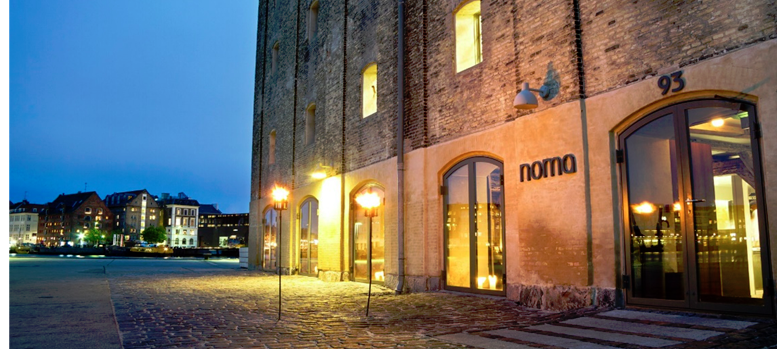
THE HEAD CHEF and co-founder of Noma, René Redzepi, resigned yesterday, after 35 former employees had gone public with his workplace abuse from 2009 to 2017.
Everyone seemed unusually friendly when we dined there at the end of May 2007. I even noted Redzepi’s sweet smile, as he worked at a bench overlooking the dining room.
Redzepi had opened Noma with a partner in 2003 in an old Copenhagen warehouse, which was being transformed into “North Atlantic House”, so they were to celebrate ingredients from Denmark, Iceland, Greenland and the Faroe Islands.
I remember numerous snips of this and that by way of found grasses, flowers, etc, before such additions became more common. I particularly recall tiny, cold, dense oysters.
The meal was unforgettable for its completeness, which means not just the food, but also that port location, and more. Our daughter and I sat outside in the late-afternoon sun waiting for Marion to cycle around the docks from her conference. My beautiful German Riesling seemed to be made for gazing at the city centre across the harbour, or back at the spiral church tower that Dorothy had just climbed.
And there was the exemplary kindliness. One notable instance was that, after they had found somewhere to stow Marion’s bike, they let us linger with her beside the water, bringing out an extra round of marvelous crisps of fish and chicken skin.
The thing we could never forget, however, concerned our severely disabled son left back in New Zealand. Marion and Dorothy were keen to phone him. Since this evening was an appropriate time to call, we inquired about a nearby public phone. They insisted on using theirs. But you don’t understand, we said, this is a phone call to New Zealand.
Given Lawrence’s brain damage, “phoning” really meant singing to him. When we were back together, a little emotional, the waiters slipped us small, black, textile handkerchiefs.
Noma proved much “less” – friendlier and more intimate – than might have been imagined from the hype, which, of course, was working up to it being named world No. 1 restaurant for several years (2010, 2011, 2012, 2014 and 2021). In 2007, I witnessed nothing but serious care and concern.
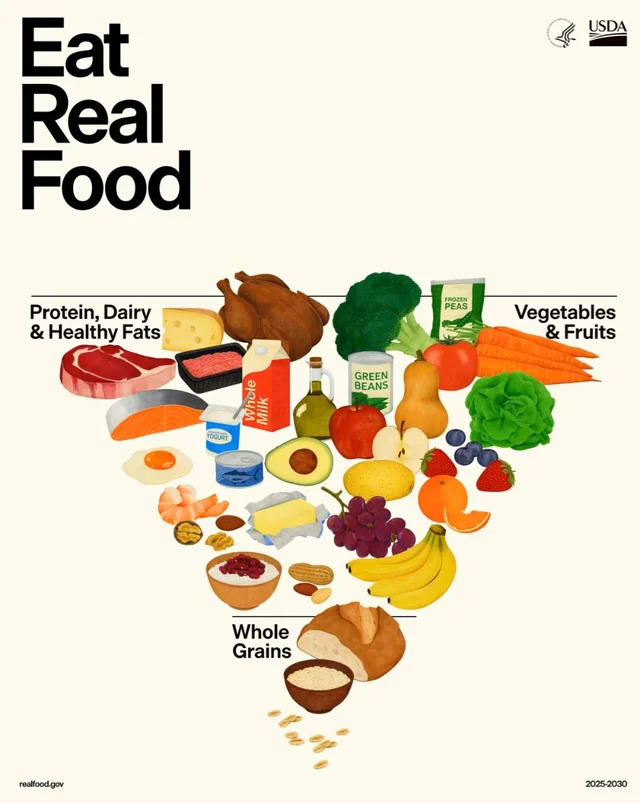
THE TRUMP Administration is “reclaiming the food pyramid” by turning the once familiar nutritional advice upside-down so as to laud meat and dairy. Whole grains and pulses are now squeezed into the sharp end balancing everything else precariously above.
The provocatively flipped dietary guidelines (7 January 2026) seek to dramatise the often fringe views of Trump’s Secretary of Health Robert F. Kennedy, Jr. Here, he gets the chance to encourage beef tallow, which McDonald’s abandoned in 1990 under health pressures (to the detriment of their fries).
The inverted hierarchy might snub mainstream nutrition but, in many way, the advice comes closer to foodie views. It’s hard to complain about the new instruction “The message is simple: eat real food.”
We can endorse a “dramatic reduction in highly processed foods laden with refined carbohydrates, added sugars, excess sodium, unhealthy fats, and chemical additives.” They also recommend: “Avoid sugar-sweetened beverages, such as sodas, fruit drinks, and energy drinks.”
Let’s not get carried away, because the guidelines continue to promote the idea of “good” and “bad” foods with next to no mention of social circumstances. The closest to advocacy of home cooking is the declaration: “Swap deep-fried cooking methods with baked, broiled, roasted, stir-fried, or grilled cooking methods.”
The advice has dropped any mention of alcohol’s involvement in cancer, because it’s “a social lubricant that brings people together”, medical influencer Dr Mehmet Oz explained at a White House briefing. He added that, while in “the best-case scenario, I don’t think you should drink alcohol,” it provides “an excuse to bond and socialize, and there’s probably nothing healthier than having a good time with friends in a safe way.”
Mind you, he might well be excusing after-hours drinks with the boys, rather than extolling the established health benefits of meals together.
Interestingly in this context, both Trump and Kennedy are teetotalers; Trump has never had a sip of alcohol – on the dying advice his older, alcoholic brother; and Kennedy finally sobered up after his arrest for heroin possession in 1983.
“Under President Trump’s leadership, we are restoring common sense, scientific integrity, and accountability to federal food and health policy,” the new guidelines boast. This hints at Trump’s original backing of Kennedy for campaigns that conspicuously repudiate “elites”.
Trump has delighted in offending experts. Yet just as Kennedy’s fringe medical views have often had some justification, even MAGA’s “deep state” conspiracy theories contain grains of truth. The reality here is the so-called state capture by moneyed interests. Corporations rule through armies of consultants and lobbyists, which has greatly compromised Democrat and other centre-left governments world-wide.
Free enterprise took over under the cover of “neoliberalism”, which let leftish leaders embrace racial, women’s, gay, scholarly, arts and other liberal causes. Unfortunately, the fundamental liberation was financial. With money unleashed globally, neoliberalism has given way to the ideology of winning.
Backed by formidable military power at home and abroad, Trump believes that the strong always win. He respects Putin and Netanyahu, but not wannabe strongman Maduro. Simply put, Trump is a fascist.
The imperial president is right about the strong winning, but the real response is strength in numbers. We need to restore John Locke’s plans for democratic republics, where the rule of law would displace the “state of war”. Locke envisaged physiological beings cooperating on mutual preservation through democratic economies. I have argued for this food-based radicalism in Meals Matter.
Locke’s arguments have been maligned and misapplied for three centuries. His common sense needs reinvigorating. Unlikely? To adapt Miley Cyrus, no pretending it’s not ending.
I WAS FORTUNATE TO DINE OUT frequently for nearly six decades with journalist David Dale (27 March 1948-6 August 2025). This was often along with Suzie Anthony.
Our paths crossed early, when he was still a student and I was starting to make a name at the Sydney Morning Herald. He wrote me a long letter arguing that I didn’t understand guitarist Eric Clapton (or something like that).
I was the paper’s first or maybe second deliberate hire of a university graduate (my degree was in maths, and they had a “new maths” education supplement to bring out). When David and Suzie joined, they became “graduate cadets”, who were required to learn shorthand. I always reckoned he had the world’s most useless skill, shorthand slower than his long.
As young journalists at the Sydney Morning Herald, the three of us had lunch and dinner out many times a week for four or five years.
Later, in 1975, after a particularly beautiful lunch at Watson’s Bay, we three sat on a wall above the sand, and swore lifelong allegiance, which we honoured. We kept up meals together with a few unavoidable interruptions, such as living in different countries.
From my perspective, David seemed to lead a compartmentalised life. Early on, he had a girlfriend that Suzie and I never met. Mischievously, we knocked at his address, and were welcomed by a mother desperate to meet some of her boy’s friends, and she laid some of her concerns before us . Never met his father.
He also deliberately shied away from deep thoughts. When we met, he had completed Honours in Psychology, but was keener on Mad magazine, and turning to early Woody Allen movies.
David and my paths crossed more than once in Italy – and he never let me forget about revealing to both him and my father where to find the key to our ancient Tuscan watermill during one of Jennifer Hillier and my absences; David terrified my father in bed asleep, with Christopher demanding: “Do you know Bob Hope?” This was someone (the partner of colleague Julie Rigg’s expatriate mother) whom we all got to know well over there.
By then, he had joined the classy little gang putting out the radical media critic, the New Journalist (which I had co-founded with Leo Chapman and another old colleague who died this year, Paul Brennan).
Without hesitation, David became a third partner (along with Gabriel Gaté) in Duck Press that published my One Continuous Picnic in 1982. He leapt in as its editor.
In the late 1980s, I was invited to lunch in Adelaide, at his suggestion, by a visiting Bulletin journalist, Susan Williams, who grilled me about her editor. They married in Paris, without guests! When I married Marion Maddox in 1995, Suzie was my best person and David her assistant.
Towards the end, David increasingly talked streaming tv (that I never watch). Suzie and I found him reluctant for Friday lunches, but he was, we now imagine, in considerable pain. Our last get-together at La Riviera, he came with a walking frame.
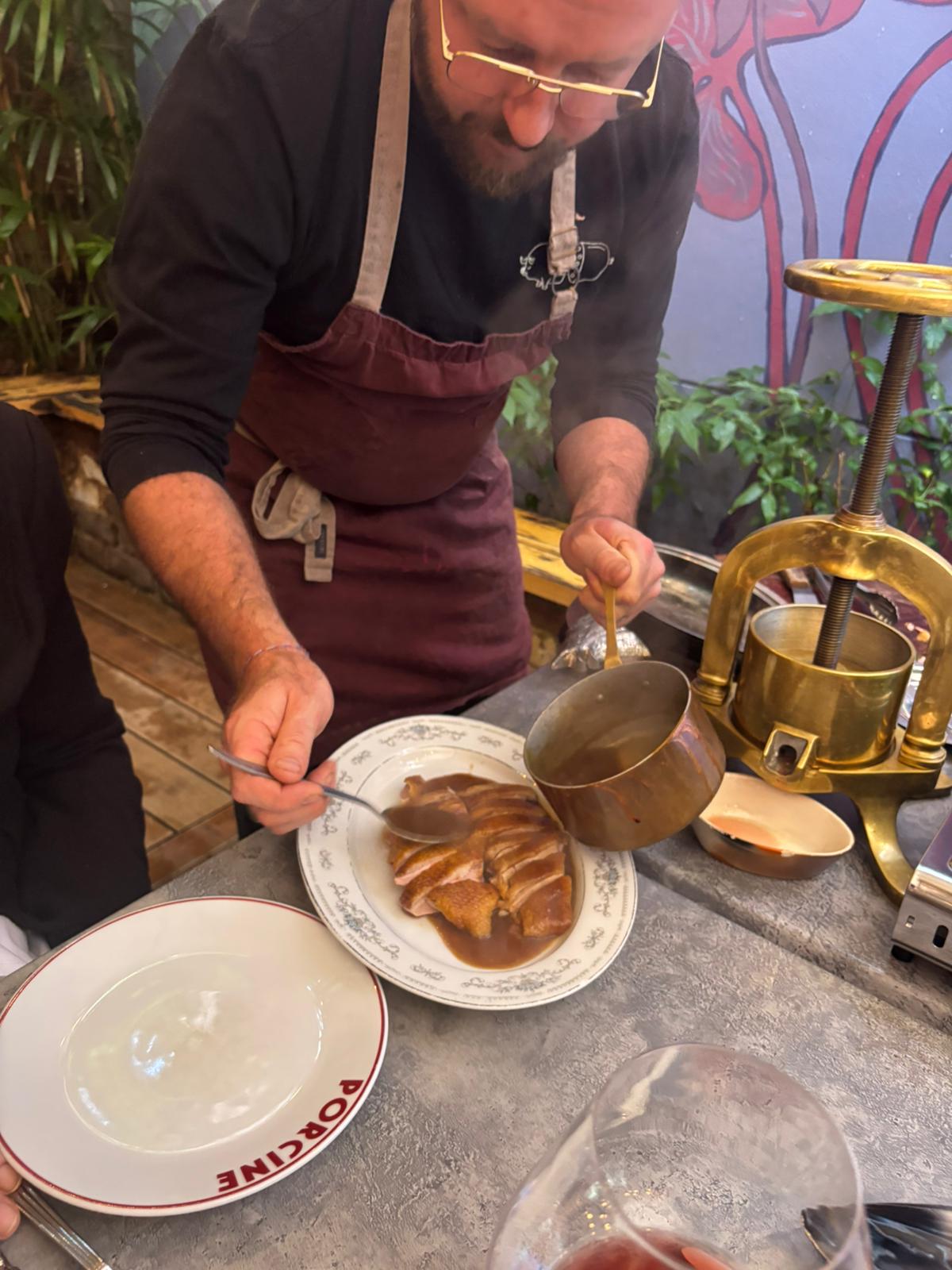
He’d enjoyed sauce from a duck press at Tour D’Argent (I think that was when he secretly got married). Not only the name of our publishing house, it remains my email address, but I hadn’t experienced a duck press.
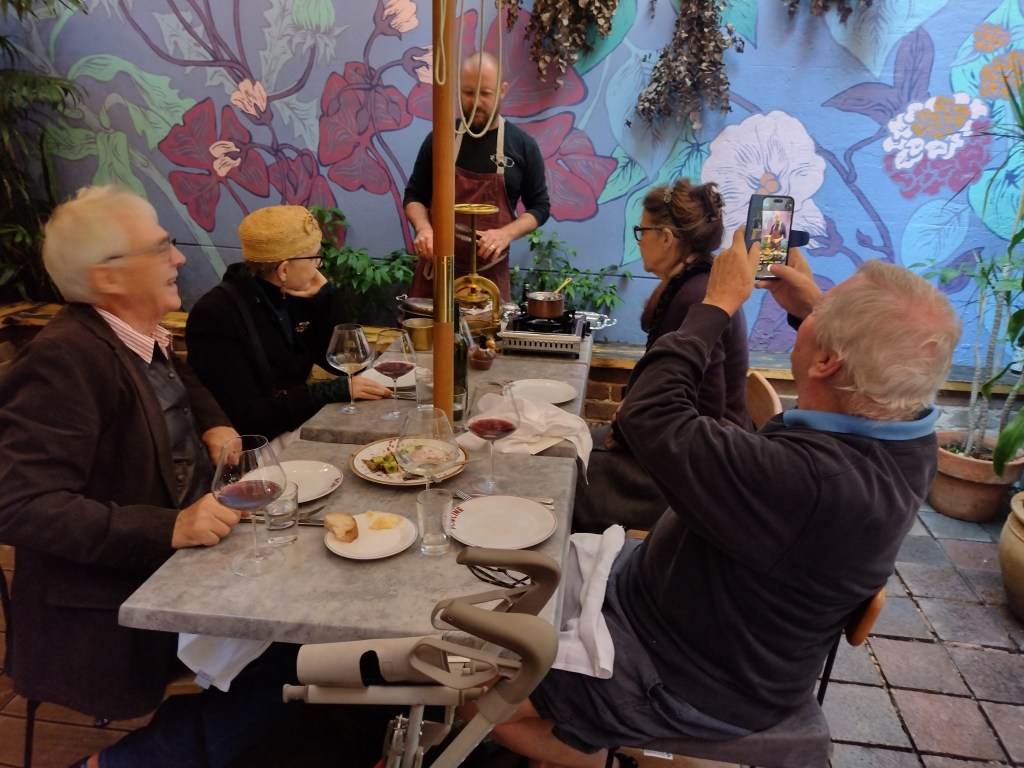
Accordingly, for our little lunch group’s celebration of my 80th this year, we dined with a duck press at Porcine in Paddington. David needed a walking frame, and my wife a wheelchair; when we discovered the restaurant was up a flight of stairs; the chef generously offered to bring the paraphernalia down to a table set up in the wineshop below.
That was in May. It would be our final meal together. Our paths crossed a last time not many days ago. Marion had two recent stays at the Chris O’Brien Lifehouse. Only on the second, we learned David was in a nearby room all the time. Being a small world, Porcine chef Nik Hill’s wife Milly is a palliative care nurse there. (In an accumulating tragedy, Marion died on 16 September, back there again, two rooms from where David had been.)
When I popped in, he was true to himself, avoiding thoughts of imminent death. On another quick visit, I offered to bring some wine the next night. He was unable to drink, he said, on account of his nausea. He did admit, nevertheless, to wanting the best possible red to be his last mouthful.
That led me to recount how yet another friend with cancer had a few months ago quietly shared an aged burgundy that she happened to “just find in the cellar”. Fortunately, I thanked her profusely for a genuinely amazing experience. Only later, I discovered a bottle online for an equivalently amazing price. Definitely worth a last mouthful and, within days, our friend disappeared forever from our tables.
Cooking therapy might help a person for whom the kitchen was a dangerous place when a child. Our bodies carry memories and meanings, including of meals. Couples can benefit.
More generally, chopping onions and listening to pots encourage mindfulness. Kitchen activities even work for aphantasics (like me), who do not visualise flowing streams for relaxation. Slicing potatoes keeps us in the here-and-now.
Counselling academic, and foodie, Michael Kocet taught a course on culinary therapy in Chicago in 2014. By then, cooking had also moved beyond psychotherapy. Psychosocial gains include socialisation, self-esteem and mental health.
Cookery schools promise improved health and welfare. Self-help books now include Charlotte Hastings. Kitchen Therapy: How to Become a Conscious Cook, and Debra Borden, Cooking as Therapy: A beginner’s guide to building mental wellness in the kitchen.
To quote Hastings: “The power of conscious cooking can shift us from the isolation of the individual journey into the security of human experience.”
Food therapy goes beyond the kitchen. Gardening proves beneficial, and the senses are even more involved when dining. The Epicurean “pleasure of the stomach” derives not least from the gut being the source of 95% of the body’s mood-lifting serotonin.
Beneath all this, cooking is the pivot of gathering up and sharing meals and so the basis of society, culture and civilisation. I have writtenbooks on that.
Meals put people back in touch with reality, which means ideologies necessarily put meals down. The early Christian Church persecuted Epicureans. Capitalism subordinates life to profit.
To re-ground health, welfare and happiness, we need meal therapy, society-wide!
Our forthcoming Republic demands more than banishing a foreign monarch
OUR RECENT PUBLIC holiday to celebrate the King’s birthday reminded yet again that Australia needs to move to a democratic Commonwealth with a grown-up Constitution. The existing arrangements merely sign up Australian colonies under the Crown, rather than make a careful social contract between citizens.
AS a suggestion, a preamble might begin: Finding ourselves in an industrial civilisation, imposed violently on Indigenous nations, we each agree to cooperate in this Commonwealth. Obedient to ourselves, we remain wary of rule from above, whether by kings, ideologies, autocrats or big money. We, the People, organise ourselves. The Constitution inspires, while it sets out formal principles.
As citizens of the Commonwealth, we submit to the rule of law, democratically established by an informed citizenship, and managed by the state (government and bureaucracy), overlooked by a mindful judiciary. And there’s more.
But, before getting too far, a quick note that our King’s Birthday weekend is being followed immediately by the U.S. “No Kings” day. And this leads to an admission that conservatives make a reasonable point about a king or queen possibly providing stability, unlike what’s happening in a famous republic.
Neither a poet, nor a honed legal mind, but a meal-centred scholar, let me propose some essentials for our forthcoming Constitution.
As individuals and social beings, we respect the laws of nature, notably the ecological requirements of generation and preservation. We also obey laws, democratically achieved. That more or less paraphrases seventeenth-century English political philosopher John Locke’s arguments against paternalism, particularly monarchical, and for democracy.
Thinkers in his day understood a Commonwealth as a political economy, with, traditionally, a monarch organising food-centred infrastructure and services, such as irrigation, roads, art, science and welfare.
Replacing kings and queens, Locke envisaged a Commonwealth enhancing citizens’ “natural rights”, which were tolife, liberty and property. We achieve well-being through access to food and water, gardens and seashores, to housing and livable towns, to health through good medical care, knowledge gained through schools and research, and all embellished and reinforced through the arts.
The world has changed since Locke, and not only because powerful forces have abstracted “Bills of Rights” from natural realities.
The big problem now – worse than being subject to a king and queen – is Corporations. They rule more intricately, and more ideologically, than ever any monarch.
As explained in Meals Matter (2020), for-profit corporations essentially emerged after the modern republican pattern had been set. Lacking Constitutional legitimacy, corporations nonetheless gained legal support through such devices as “limited liability” and “corporate personhood”. They then appropriated rights, especially “liberty”, which supported “laissez-faire”, “free enterprise”, “neoliberalism” and lately “disruption”.
Corporate capitalist theory reassigned sovereignty to money. The system has now remodeled all in the corporate image, turning universities into businesses, and people into buying-and-selling machines.
Corporations supply our cars, and build the roads. Their advertising funds news dissemination. Their factories supply food, and armaments. This means having to engage closely with government through lobbying, consultation, outsourcing, and two-way personnel exchange. Who “understands” war better than military suppliers?
Invidiously, I mention just one of numerous experts now running the place: former SA Senator and Cabinet Minister, Christopher Pyne. To quote Wikipedia:
Since late 2020, Pyne has taken on roles in the Australian defence industry. He is chairman of the advisory board of Australia’s largest Australian owned small arms and munitions company Nioa, and chairman of the advisory board of the Australian Missile Corporation. He also sits on the board of ASX Listed, Xtek Ltd, a Canberra-based body armour and unmanned Vehicle manufacturer and supplier globally.
Lacking Constitutional status, corporations have captured government. They push politicians to the fringes, where they take photo opportunities. The frustrated electorate are expected to blame … “the government”!
In our serious Constitution, corporations lose “rights” and gain licences or something of the kind.
The loss of the Voice Referendum in Australia a year ago pointed to an uninspiring, irrelevant-seeming Constitution. Additionally, the perceived need for a consultative body highlighted the lack of power of actual citizens, in this case Indigenous people.
In the new Republic, I reckon the democratically-elected parliament might elect a President, who forms a Cabinet and outer Ministry from both elected members and from representatives of registered consultative bodies.
As recognised economic tools with government oversight, corporations might provide recommendations this way. All lobbying would be public through recorded debates and publications of registered representative assemblies.
Likewise, a wide collection of interests make their case. Trade unions make useful representations. And so on, through various advocacy groups, all overseen by a commission.
This commission is appointed by the parliament with reference to the bodies themselves. As well as collating submissions, the commission would support consultative bodies. The commission provides financial and logistical support, where appropriate.
Think of it as like a royal court of old, whose lively gossip, intelligence, opinion, and learning advised the ruler. In ridding ourselves of kings and queens in favour of parliaments, we need to replace not only monarchs, but also their clever courtiers.
In the recent U.S. Presidential election, whichever side you voted for, money won.
One party was aligned to neoliberal rationality and the other, the victors, represented maverick disruption. Either way, corporations won.
For more than two centuries, money stole liberty from the people. Corporate apologists eroded individual integrity in favour of laissez-faire, free enterprise, and neoliberal capitalism.
After the Cold War, promoting “liberty” for money world-wide, corporations gained neoliberal outsourcing, de-regulation and tax reduction. As a quid pro quo, newly-educated worker/consumers sought various forms of social and cultural liberation.
However, with states captured, rule by supposed rational “elites” has been giving way to rampant oligarchy.
The Democrats and similar parties need to “get back to the grassroots”. More than that, left- and social-liberals must rediscover the Enlightenment understanding of liberty belonging not to corporations but to the “preservation” of all individuals through meal-sharing.
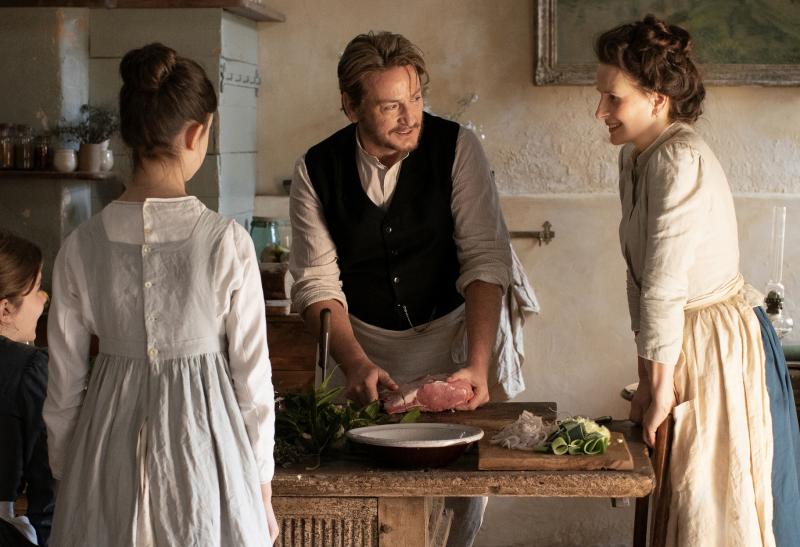
FOR TWO HOURS AND 14 MINUTES, the French movie The Taste of Things observes the preparation and eating of something like nine dishes.
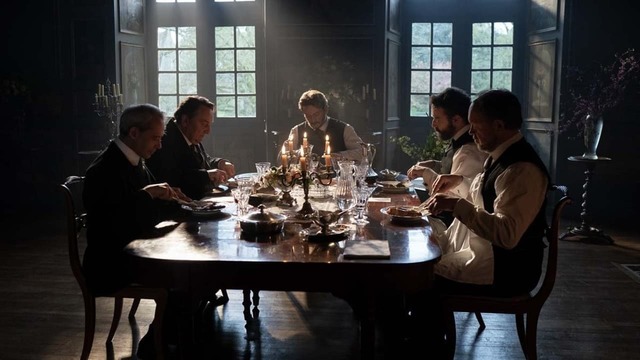
The setting is a provincial chateau in the year 1885, and the focus is gourmet Dodin Bouffant and his cook, Eugenie – played by two considerable actors (and former partners), Benoît Magimel and Juliette Binoche.
Negative reviewers react against privilege and indulgence. The first kitchen scene of 40 minutes introduces an “extremely boring movie showing pots and pans and cooking complicated French recipes” (online comment). Some of the audience walk out.
It’s not perfect – I was mildly irritated by characters informing the audience by telling each other things they would surely already know. Some occurrences seem random – why introduce “electroculture” garden antennae?
Yet the movie is far more than foodie excess or cooking show. The great majority of reviewers are positive. What’s going on?
Musical clue
A clue comes from the absence of music – only used over the credits. Mind you, the Boston Globe reviewer was so seduced, he heard “a romantic score”, though conceding “everything you need to know is conveyed in actors’ eyes.”
The soundtrack relies on clink, clunk, chop, bubble, sizzle, footsteps, birds out the door and window, and occasional words, sometimes among Eugenie, Dodin and helper, as they move between garden, stoves and benches, and among Dodin’s select group of male gourmets, who love the cooking, and the host’s cellar.
“I never before had to direct a film with as much substantiality,” writer/director Trần Anh Hùng answered an interviewer.* “All that material reality is so compellingly expressive, it firmly anchors our characters in daily life. Music would have undermined that.”
Hùng normally likes music, he said, but here it would “bring something that is a little bit fabricated… I wanted it to be very real.”
(Please note, all you restaurateurs who think loud music and noise denote a good time.)
Materialist film-making
Instead of music instructing viewers how to feel, they form their own interpretations. Similarly, Hùng chose long takes, he said, as a way to slow down the pace and give the audience the chance to be a kind of writer, gaining “time to formulate several things” in their mind.
I describe the approach as materialistic, in that the movie carefully shows what’s actually happening at the physical level, among intimates. Emotions arise from mundane cooperation.
“Everything that you see on the screen is real, and everything that we cook for the film, we ate it. Absolutely everything,” Hùng said. He was advised by Parisian chef, Pierre Gagnaire, and the actors were assisted on-set by Gagnaire’s retired colleague, Michel Nave.
“For the crew, it was unusual, because they have done some movies with food. Most of the time it’s fake. To make it very beautiful, you add some different things in it to make it have different texture, color, everything. But here, for this movie, I didn’t want that. Because it’s not about the beauty of the food. But it’s more about showing man and woman at work in that kind of harmony.”
He told the crew the long opening cooking sequence was “my car chase scene”.
Hùng’s wife, Trần Nữ Yên Khê, an actor and this movie’s art director and costume designer, explained the need to just get the setting “right”, and leave the beauty to emerge. “Try to do something beautiful, and it comes across as decorative.”
Happiness
The movie sounds and looks beautiful, allows time for reflection, and so what is it “about”? The Taste of Things gets to the core of cooking and enjoying meals. Hùng extolls Brillat-Savarin, as does my chapter, “Brillat-Savarin’s quest for table-pleasure” in Meals Matter (2020).
Homeliness was suggested by the working title, Pot au Feu (changed in the French to Le Passion de Dodin Bouffant, after the Marcel Rouff novel on which the film is loosely based). Domestic bliss in some present-day kitchen might well have become boring, but French protagonists at the time of Escoffier could believably be immersed in good cooking.
Hùng wanted to “explore something rare in the cinema: conjugality. And even rarer when it works.” With kitchen movements choreographed like a ballet, he sought to show “harmony”.
The 20-year relationship of well-to-do gourmet and cook has confused some movie-goers, particularly since it really doesn’t develop. But the pair are contented with their lives, and Dodin is presumably not surprised when Eugenie refuses proposals of marriage. She only leaves her bedroom door unlocked when she chooses. She gains them the perfect daughter through other means.
The Taste of Things does move steadily towards inevitable sadness, but never with the forced highs and lows of an action movie or even romantic comedy, let alone “reality” tv.
Harmony without drama marks this movie out as beautifully unconventional. Nonetheless, it has a strong motive to show “merely” cooking, eating and companionship, even if that passes. It’s about happiness.
Capitalism has abandoned neoliberalism and gone disruptive
FOLLOWING perestroika and glasnost and the collapse of the Soviet Union in 1991, capitalism’s boosters trumpeted “liberty” worldwide. Demanding liberation for all, a new Pax Americana would make everywhere safe for corporations.
Under big money’s global message of freedom, such left-liberal political leaders as David Lange, Paul Keating, Bill Clinton, Tony Blair, Helen Clark, Kevin Rudd and Barack Obama pushed progressive cultural reforms with particular support for racial, women’s, gay and other rights.
The trap was that the “rights revolution” in such areas as feminism and multiculturalism provided cover for the corporate capture of government. Under the banner of neoliberalism, the same leaders pushed through deregulation, fiscal “rectitude”, lower corporate taxes, “flexible” job markets, outsourcing, lower trade “barriers”, individual responsibility, etc.
In the flurry of freedom, cultural liberation was outmatched by the bolstering of corporate power.
With governments now firmly in its grip, capitalism moved from neoliberalism to “disruption”. Facebook boss Mark Zuckerberg instructed: “Move fast and break things”. Powerful corporate leaders from Zuckerberg, Musk and down asserted their sacred right to do what they wanted – AI, rockets to Mars, armaments, opioids, drill, baby, drill…
Writing about the “disruption machine” in the New Yorker in 2014, Jill Lepore observed that innovation had become “the idea of progress stripped of the aspirations of the Enlightenment, scrubbed clean of the horrors of the twentieth century, and relieved of its critics”.
Long-time Silicon Valley reporter Kara Swisher (Washington Post, 15/02/24) had “watched founders transform from young, idealistic strivers in a scrappy upstart industry into leaders of some of America’s largest and most influential businesses.” With few exceptions, “the richer and more powerful people grew, the more compromised they became.”
Upon Trump’s election as President, digital CEOs rushed for an audience, Swisher reported:
“There was a heap of money at stake, and they wanted to avoid a lot of damage the incoming Trump administration could do to the tech sector. … they also wanted contracts with the new government, especially the military. … More than anything, they wanted to be shielded from regulation, which they had neatly and completely avoided.”
The “invisible hand” of money unleashed disruption (and corruption), and broke pay parity, democracy and civility (not forgetting nature). Along with that, fewer and fewer billionaires supported left-liberal causes, preferring to boost their own fortunes by backing think-tanks and increasingly authoritarian ideologies.
Right-wing populists blamed the “politically correct”, the “woke”, university-educated “elites”, and mysterious liberals who controlled the “deep state”. Raising the “cloud of confusion”, Murdoch opinion-leaders baited their opponents until seeming actually to believe environmental degradation was an esoteric belief, and supporting women of colour impoverished white men.
Historian Ellen Schrecker has charted how the unprecedented invigoration of American universities during the Sixties eventually rebounded, when the right both attacked universities’ “liberalism” and corporatised them (in her studies of universities’ Lost Promise (2021) and Lost Soul (2010)).
Those endeavouring to save the welfare state, worker rights, universities, democracy and the environment have been tempted to display militancy. Israel’s brutality has now prompted campus protests in the Sixties manner.
Caution is warranted, nonetheless. Given how abusive politics suits aspiring demagogues, supporters of left/progressive/Green politics should prefer exposing the sin of over-commitment over indulging in it. Rather than shout back, the liberal left could usefully resort to honesty and openness, and appreciate complexity.
Arguing the benefits of civilised society also means understanding politics more deeply than as just warfare (“class struggle” already proved insufficient).
Contesting the authoritarian appeal of “the strong always win” means re-discovering lost principles. Countering disruption requires a return to something more like Enlightenment political philosophy, seized and shattered by capitalism.
The pre-capitalist basis of radicalism is described in Meals Matter: A radical economics through gastronomy (Columbia UP, 2020). The book also shows how money’s polemicists borrowed selectively from liberal-democratic arguments, and trampled on them.
Grassroots change comes from care and conversation at and about meals (at their different levels)
Australian Blak activist Natalie Cromb has just advocated, with “violence all around us”, for “reimagining our communities to be as they should be – caring, nurturing, healthy, happy and with enough”.
So much rancour of recent times has been hardened by over-simplification – and examples are to be found on all sides
IN RECENT YEARS, numerous governments and institutions accepted the International Holocaust Remembrance Alliance’s definition of antisemitism. While its opening statement is widely regarded as reasonable, the definition then gives examples that suggest that criticism of the state of Israel is antisemitic.
Antisemitism is exhibited by, for example, denying “the Jewish people their right to self-determination, e.g., by claiming that the existence of a State of Israel is a racist endeavour”.
Leaving aside the trickiness of whether Jews comprise a people, race, religion, culturaltradition or nation, the stricture nevertheless comes close to shutting down debate about Zionism.
This is despite many Jews themselves being anti-Zionist, sometimes on firmly religious grounds. “Jewish is defined by what Torah commands. Making our own state, or oppressing other people, is forbidden by Judaism and cannot be considered ‘Jewish,’” said Rabbi Yisroel Meir Hirsch (quoted in The Times of Israel, 23 May 2020).
Another example of antisemitism was: “Drawing comparisons of contemporary Israeli policy to that of the Nazis.”
Reference to National Socialism might be painfully pointed, but that of itself would not invalidate such a denunciation.
The so-called “settlements” in the West Bank, throwing Palestinians off their land at gunpoint, certainly head in that direction. Likewise, many Jews worldwide decry the Netanyahu government’s campaign “to flatten” Gaza (President Macron’s description) or “genocide” (South Africa’s case in the World Court).
A definition of “antisemitism” overly protective of Israel and its policies risks rebounding, and many people now oppose Israel’s assaults without feeling particularly anti-Jewish, and resist campaigns to insist otherwise.
I have asked around about the name of a spurious argument of the type “anti-Israel = anti-Semitic”. My friend David suggested “false syllogism”, in that necessary are not always sufficient conditions. Any thoughts?
Let’s settle for the moment on saying it’s a classic case of over-commitment, in which powerful assertions foreclose qualifications and ambiguities. And over-commitment is a widespread sin.
While the authoritarian right specialises in zealotry, including provocative sneering, abuse, and inventive conspiracy theories, the liberal-left itself provides many examples.
Loss of “Voice” Referendum
An Australian instance of the sin of over-commitment has been a widespread claim that the loss of the Referendum on a Constitutional “Voice” for Indigenous people revealed the nation’s “embarrassing” racism, and set back the Indigenous cause.
Indigenous lawyer and “Yes” campaigner Noel Pearson had warned the voters: “There’s one choice that’s morally correct, and the other one will bring shame upon us, and we will have to wear that shame and dishonour for a long time to come” (The Guardian, 10 October, 2023).
Afterwards, campaign director for Yes23 Dean Parkin suggested that “the Australian people voted against recognising Aboriginal and Torres Strait Islander people as the first peoples of our nation” (Guardian, 26 January 2024).
The history of Australian government Indigenous policy is not happy, to say the least. But overly committed proponents simplified the Referendum to “Yes”/”No” on Indigenous recognition and support, over-riding complications concerning the approach and the Constitution itself.
One Indigenous Senator (Jacinta Nampijinpa Price) had described the proposed advisory assembly as patently unnecessary, while another (Lidia Thorpe) saw it as grossly insufficient. That’s a span of views.
The Referendum debate revealed widespread ignorance of the Australian Constitution, it was said. That’s not surprising for an uninspiring foundation narrative of colonial governments wrangling a federation.
Rather than resemble an intergovernmental memorandum, a Constitution would desirably set out a persuasive social contract, to which each member assents.
Even Constitutional experts stuck with narrow legalism rather than promote the need for a Constitution that actually sets out why and how we, the People, run this place for our own well-being.
As much as Anthony Albanese might have expected to emerge as a great, visionary Prime Minister, he mishandled a weak cop-out, a non-Treaty and non-Truth-telling way of slipping Indigenous recognition into an inadequate Constitution. Embarrassingly, the former “Rudd government’s street fighter” (Tony Wright, SMH, 23/02/10) failed to transcend narrow party sniping.
Out of the muddle, claims about a single “morally correct” vote arguably became over-commitment to the point of being self-defeating (in that, for instance, Albanese went quiet on the Indigenous cause).
Blame for housing unaffordability
In another Australian example, more than 40 housing, homelessness and community service organisations wrote to the Prime Minister and Opposition leader expressing concern that immigrants were being blamed for the prohibitive price and scarcity of housing.
“Migrant communities are being scapegoated for Australia’s housing crisis,” said Everybody’s Home spokesperson, Maiy Azize (19 December, 2023). “Governments have given handouts to investors, allowed unlimited rent increases, and stopped building homes for the people who need them. It’s a distraction to suggest that migrants are to blame.”
The letter acknowledged elsewhere that “migrant communities are being scapegoated as the primary reason for the housing crisis” (added italics). But why should migrants accept any responsibility whatsoever for the housing crisis?
Population pressures affect housing availability, but that’s not the migrants’ fault. Rather, the pressure results from immigration programs.
Selling immigration as “boosting the economy”, business lobbyists have pushed for cheaper workers, bigger markets, more construction projects, and other sources of “growth”.
Business lobbyists are happy to see migrants take the blame, just as they are not overly concerned that young people get locked out of the slow-motion housing bubble.
Just as alarm at Israeli policy about Palestine is not necessarily anti-Jewish, and disconnect with Albanese’s uninspiring Referendum can be far from racist, querying immigration policy is not querying migrants themselves.
The sins of over-committed simplification, hyperbole, sloganising, indignation, and disparagement have multiple causes.
Newspapers have long resorted to often ingenious, attention-grabbing headlines, with qualifications buried beneath. More and more, advertisers and influencers use half-truths to compete for “likes” and “going viral”. On top of that, competing political factions get shoutier.
Beyond increasing political rancour lies a major shift in capitalism, which is the topic of my next Meals Matter post, Doomed to disruption. We’ve farewelled the neoliberal era. Welcome to the age of disruption!
THOSE NOW fearful of AI would seem to assume that human intelligence has built a civilisation equipped with philosophy, art, and labour saving, which AI will now destroy.
The embarrassment here is that human intelligence is already killing things. Tied to the profit motive, we’re disrupting ourselves to death.
With an original degree in maths and physics, then as a science journalist in the late 1960s, I came to fear where scientists naively led. Nervousness with computing power back then was captured in 2001: A Space Odyssey (1968).
But as I left science behind, I learned not to over-rate rationality, and also to accept that some research is genuinely useful, such as warnings of environmental collapse. And just maybe computers will opt for a more fact-based civilisation. They might even understand intelligence better than we seem to do.
Intelligence is over-rated, for one thing (nothing that carries society off a cliff seems smart).
Referring back to Douglas Hofstadter’s essay, “The shallowness of Google Translate” (The Atlantic, January, 2018), New York Times columnist David Brooks expressed alarm that Hofstadter had recently changed his mind, and expected “human beings are soon going to be eclipsed.”
Brooks admitted to being shaken, yet remained an “AI limitationist”, believing that:
while A.I. will be an amazing tool for, say, tutoring children all around the world, or summarizing meetings, it is no match for human intelligence. It doesn’t possess understanding, self-awareness, concepts, emotions, desires, a body or biology.
The key point for me is the lack of “desires, a body or biology”. AI is a machine relatively detached from the world, whereas human intelligence is enmeshed in physiologies and ecologies. I go further and say that human intelligence is essentially directed at eating better.
But that’s before the powerful proclaim their ideologies, which have for two centuries been money-making.
If they are truly super-intelligent, big computers might even read my Meals Matter: A radical economics through gastronomy (2020), and wind back capitalism.
When AI reaches page 6, it will learn that Intelligence (as rationality) belongs to the human “second brain”, with the gut microbiota being the “first brain”. We are directed by our appetites, and other interoception, with the second brain helping find and organise meals.
Thinking has to remain thoroughly embedded in nature, and not destroyed by “superior” powers. If it knows what it’s doing, Intelligence will support thoughtful, pleasurable, healthy, well-resourced and sustainable meals.






 Meals Matter